
Kostenlose Rückgabegarantie
Free & Easy Returns
Free & Easy Returns

Beim Kauf eines Tischoszilloskops ist die Bandbreite eines der ersten Merkmale, auf die man achtet. Reicht ein 100-MHz-Oszilloskop für Ihre Projekte aus oder benötigen Sie wirklich ein 200-MHz- Gerät? Der Unterschied ist nicht immer so groß, wie er scheint, aber die Wahl des richtigen Oszilloskops kann die Messgenauigkeit deutlich verbessern, insbesondere bei schnelleren Signalen.
In diesem Leitfaden zur Bandbreite von Oszilloskopen erklären wir Ihnen, was Bandbreite genau bedeutet, vergleichen die Leistung von 100-MHz- und 200-MHz-Oszilloskopen und helfen Ihnen anhand von Anwendungsbeispielen aus der Praxis bei Ihrer Entscheidung. Außerdem stellen wir Ihnen einige beliebte Hanmatek-Modelle vor, die in diesen Bandbreitenbereichen ein hervorragendes Preis-Leistungs-Verhältnis bieten.
Die Bandbreite bezeichnet den Frequenzbereich, den ein Oszilloskop präzise erfassen und darstellen kann – genauer gesagt den Punkt, an dem die Signalamplitude auf -3 dB (etwa 70,7 % des wahren Wertes) abfällt. Es handelt sich nicht um eine strikte Grenze, aber Signale nahe oder oberhalb der Bandbreite verlieren an Amplitude und Detailreichtum.
Bei Sinuswellen kann ein Oszilloskop mit passender Bandbreite die Frequenz recht genau messen. Die meisten realen Signale – insbesondere digitale wie Rechteckwellen, Impulse oder Taktsignale – enthalten jedoch Oberwellen höherer Frequenz. Diese Oberwellen bestimmen die Flankensteilheit (Anstiegs- und Abfallzeit).
Eine gängige Faustregel (die „Fünf-mal-Regel“) empfiehlt, eine Bandbreite zu wählen, die mindestens 5× der höchsten Grundfrequenz oder der Komponente mit der schnellsten Anstiegszeit entspricht, um eine genaue Wellenformwiedergabe zu gewährleisten (typischerweise < ±2% Fehler).
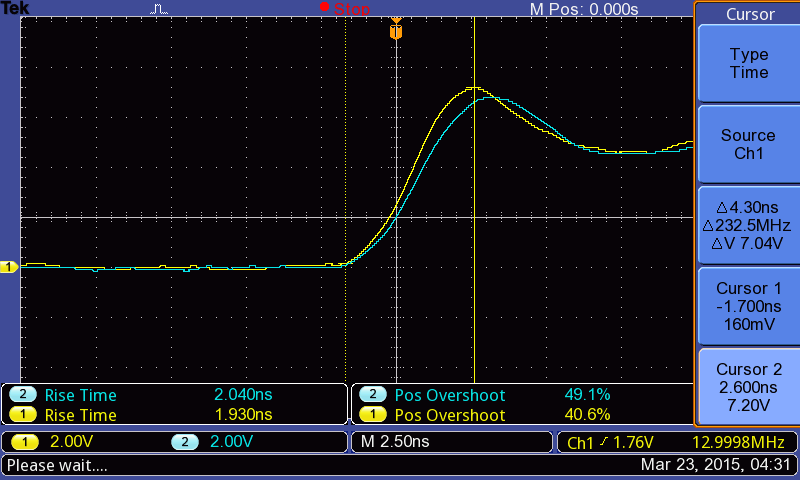
Diese Bilder zeigen, wie eine begrenzte Bandbreite Kanten abrundet und Rechteckwellen verzerrt – ein 100-MHz-Oszilloskop kann eine schnelle Flanke glatter erscheinen lassen als in Wirklichkeit, während eine höhere Bandbreite ein Klingeln oder Überschwingen offenbart.
Fazit : Die Bandbreite des Oszilloskops definiert die obere Frequenzgrenze für eine präzise Signalerfassung. Die Amplitude sinkt am -3-dB-Punkt auf 70,7 %. Daten/Fallbeispiel : Gemäß der in der Fachliteratur häufig zitierten „Fünf-fachen-Regel“ sollte die Bandbreite mindestens das Fünffache der höchsten Grundfrequenz betragen, um den Wiedergabefehler der Signalform unter ±2 % zu halten. Beispielsweise bietet ein 100-MHz-Oszilloskop eine theoretische Anstiegszeit von ca. 3,5 ns, während 200 MHz eine Anstiegszeit von ca. 1,75 ns für eine schärfere Flankenerfassung ermöglichen.
Viele Ingenieure stellen fest, dass der Sprung von 100 MHz auf 200 MHz im Vergleich zu beispielsweise 50 MHz auf 100 MHz oder 200 MHz auf über 500 MHz nur eine geringfügige Verbesserung darstellt. Liegen die Anstiegszeiten jedoch im Bereich von 2–4 ns, reduziert die 200-MHz-Option die Verzerrungen spürbar.
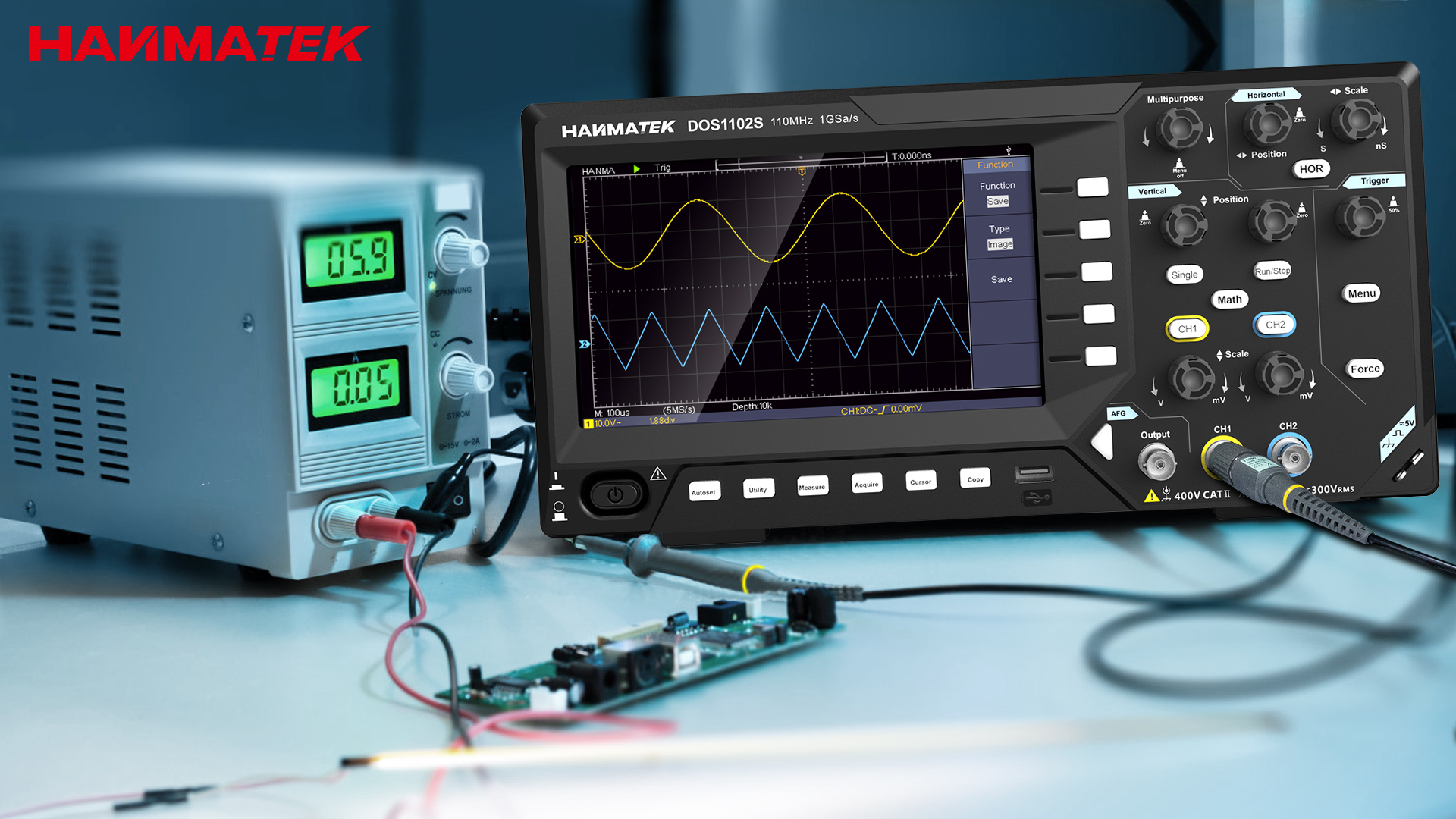
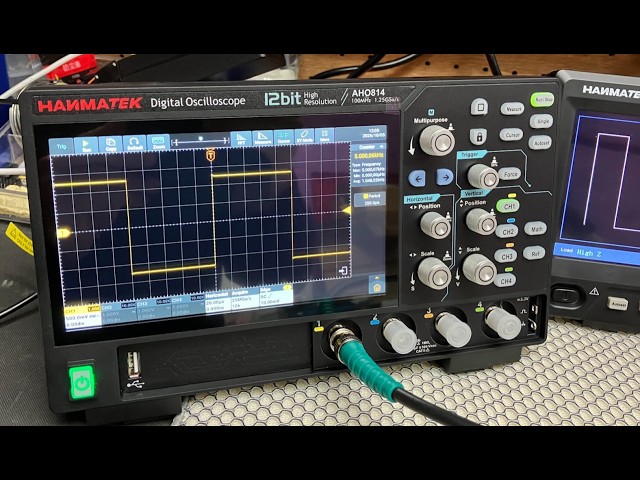
Hier sind Beispiele für Tischoszilloskope in diesen Kategorien – die schärfere Wellenform auf der rechten Seite zeigt, was eine höhere Bandbreite offenbaren kann.
Fazit : Für die meisten Signale unter 20–30 MHz ist ein 100-MHz-Oszilloskop ausreichend, während 200 MHz bei schnelleren Flanken eine höhere Genauigkeit bieten. Anwendungsfall : Für Hobbyanwendungen wie Arduino-Debugging oder Audioanalyse ist der Leistungsunterschied zu 200 MHz vernachlässigbar. Bei Taktsignalen von 50–100 MHz oder Schaltnetzteilen mit Anstiegszeiten von 2–4 ns bewahrt die 200-MHz-Bandbreite jedoch kritische Oberwellen und reduziert Verzerrungen, wie praktische Tests auf Plattformen wie EEVblog bestätigen.
Hanmatek bietet zuverlässige, funktionsreiche Tischoszilloskope, die Leistung und Preis optimal ausbalancieren. Wie der Oszilloskop-Marktbericht 2025 von Fortune Business Insights zeigt, wächst die Nachfrage nach erschwinglichen Tischmodellen im Frequenzbereich unter 500 MHz weiterhin stark – insbesondere für den Bildungsbereich, Hobbyanwender und Einsteiger im professionellen Bereich. Hanmatek-Geräte werden unter strengen Qualitätskontrollstandards gefertigt, um gleichbleibende Leistung und Zuverlässigkeit zu gewährleisten.
100-MHz-Optionen – Ein hervorragender Ausgangspunkt für die meisten Anwender:
200-MHz-Option – Wenn Sie mehr Leistungsreserven für schnellere Arbeitsabläufe benötigen:
Ausführliche Erfahrungsberichte zu Hanmatek-Modellen finden Sie in den Diskussionen auf EEVblog (einem führenden Forum für Elektronik-Testgeräte): https://www.eevblog.com/forum/testgear/wow!-$123-hanmatek-dos1102-initial-comments/ Dort lobten die Nutzer die Leistung im praktischen Einsatz und das Preis-Leistungs-Verhältnis.
Fazit : Die 100-MHz- und 200-MHz-Oszilloskope von Hanmatek bieten ein hervorragendes Preis-Leistungs-Verhältnis für unterschiedlichste Anwenderbedürfnisse. Daten/Anwendungsbeispiele : Das DOS1102 bietet 2 Kanäle, 110 MHz Bandbreite und 1 GSa/s Abtastrate für allgemeine Fehlersuche; das DOS1202 bietet 200 MHz für eine verbesserte Hochfrequenzwiedergabe bei schnellen Transienten; und das DOS1104 mit seinen 4 Kanälen eignet sich hervorragend für die Überwachung mehrerer Signale. Diese Modelle genießen daher in Tests von Budget-Oszilloskopen hohes Ansehen.
Frage dich selbst:
Für die meisten Hobbyisten, Studenten und Ingenieure mit Berufserfahrung bietet ein 100-MHz-Oszilloskop wie das Hanmatek DOS1102 oder DOS1104 ein hervorragendes Preis-Leistungs-Verhältnis. Wer in Zukunft schnellere digitale Schaltungen entwickeln oder zukunftssicher aufgestellt sein möchte, findet im DOS1202 mit 200 MHz die nötige Präzision zu einem erschwinglichen Preis.
Immer noch unsicher? Beginnen Sie mit 100 MHz – Sie können später jederzeit aufrüsten, aber Sie werden wahrscheinlich feststellen, dass es die meisten Laborarbeiten hervorragend bewältigt.
Welche Bandbreite bevorzugen Sie? Hinterlassen Sie unten einen Kommentar oder sehen Sie sich die vollständige Hanmatek-Produktpalette für weitere Details an!
{"one"=>"Wählen Sie 2 oder 3 Artikel zum Vergleichen aus", "other"=>"{{ count }} von 3 Elementen ausgewählt"}
Wählen Sie das erste zu vergleichende Element aus
Wählen Sie das zweite zu vergleichende Element aus
Wählen Sie das dritte Element zum Vergleichen aus





Einen Kommentar hinterlassen