
Free Returns Guarantee
Free & Easy Returns
Free & Easy Returns

If you're shopping for a benchtop oscilloscope in 2025–2026, you're in a golden era for value. Modern digital scopes under $200–$400 deliver features that once cost thousands: large color screens, 1 GSa/s sampling, built-in waveform generators on some models, and solid performance for hobby, repair, education, and light professional use.
This ultimate digital oscilloscope buying guide covers everything you need to choose wisely—without hype or outdated advice. We'll break down key specs, compare 2 vs 4 channels, explain bandwidth, share budget tips, look at brands, and recommend top models (including standout budget performers).
Benchtop models offer:
They're ideal for electronics repair, automotive diagnostics, audio work, power supply debugging, Arduino/Raspberry Pi projects, and more.
Bandwidth determines the highest frequency your scope can accurately measure. Rule of thumb: Pick 5× the highest frequency component in your signals (for good fidelity on edges/harmonics). For digital signals, 3–5× the clock rate works.
In 2025, 100–110 MHz is the sweet spot for budget buyers—plenty for most users without overpaying.
If you work with microcontrollers, serial protocols, or complex circuits, go 4-channel. The price difference is often small in 2025.
Most budget models hit 1 GSa/s with adequate memory for everyday use.
| Brand | Price Range | Strengths | Weaknesses | Best For |
|---|---|---|---|---|
| Hanmatek | $170–$200 | Huge 7" screen, low noise, AWG on some, great value | Shallower memory vs premium | Budget buyers, beginners |
| Rigol | $300–$500 | Deep memory, hackable bandwidth, reliable | Higher cost for entry models | Mid-range, future-proof |
| Siglent | $300–$600 | Excellent FFT/decoding, high waveform capture | Slightly pricier | Serial protocol work |
| Tektronix | $400+ | Premium build, software ecosystem | Expensive for basics | Professional/education |
| Others (FNIRSI, Hantek) | $50–$300 | Very cheap | Lower quality, noisy signals | Ultra-budget only |
In 2025, budget Chinese brands like Hanmatek offer incredible value—often outperforming older Rigol models in screen size and features at half the price.
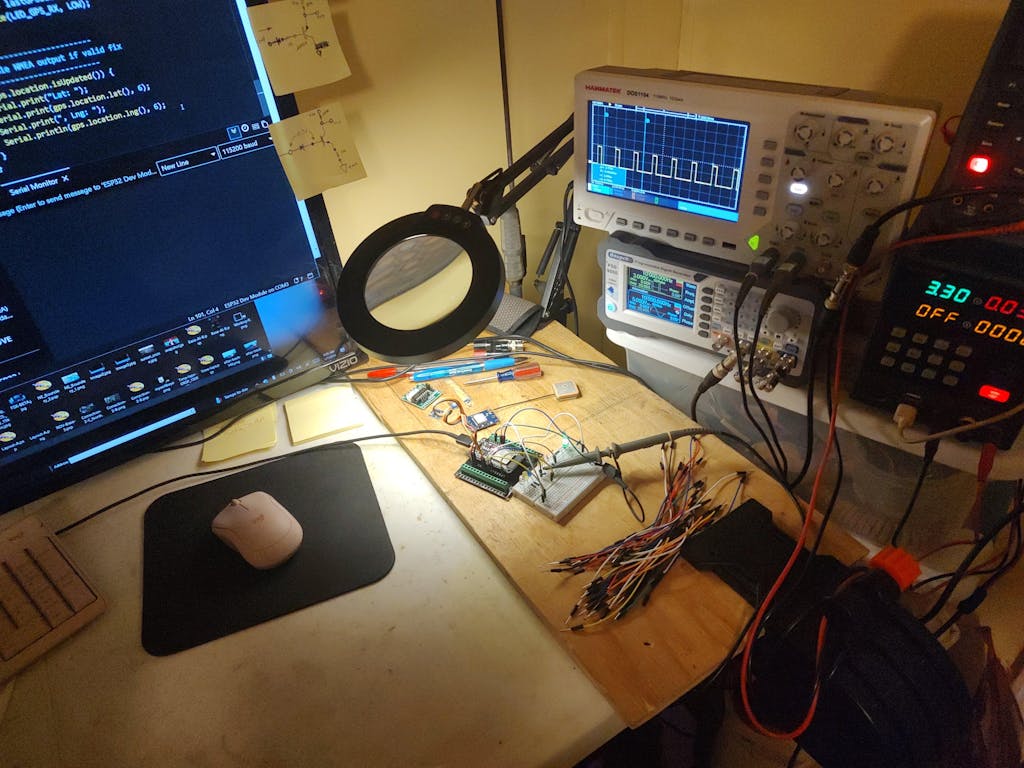
Best Overall Budget Pick: Hanmatek DOS1102 (110 MHz, 2CH, 1 GSa/s, 7" display) Perfect starter. Clean waveforms, intuitive interface, huge screen beats older models. Ideal for general electronics.
Best 2-in-1: Hanmatek DOS1102S (110 MHz, 2CH + 10 MHz AWG) Generate test signals while measuring—no extra generator needed. Great for filter/amplifier testing.
Best 4-Channel Value: Hanmatek DOS1104 (110 MHz, 4CH, 1 GSa/s) Multi-bus debugging (I2C/SPI/CAN) without compromise. Same great screen and performance.
These Hanmatek models lead in value for most users—large displays, solid specs, and positive real-world feedback.
The Hanmatek DOS series delivers pro-level features at budget prices—making them a top choice for buy benchtop oscilloscope searches in 2025.
Ready to upgrade? Check these out today:
Happy measuring! 🔧📈
{"one"=>"Select 2 or 3 items to compare", "other"=>"{{ count }} of 3 items selected"}

Leave a comment