
Free Returns Guarantee
Free & Easy Returns
Free & Easy Returns

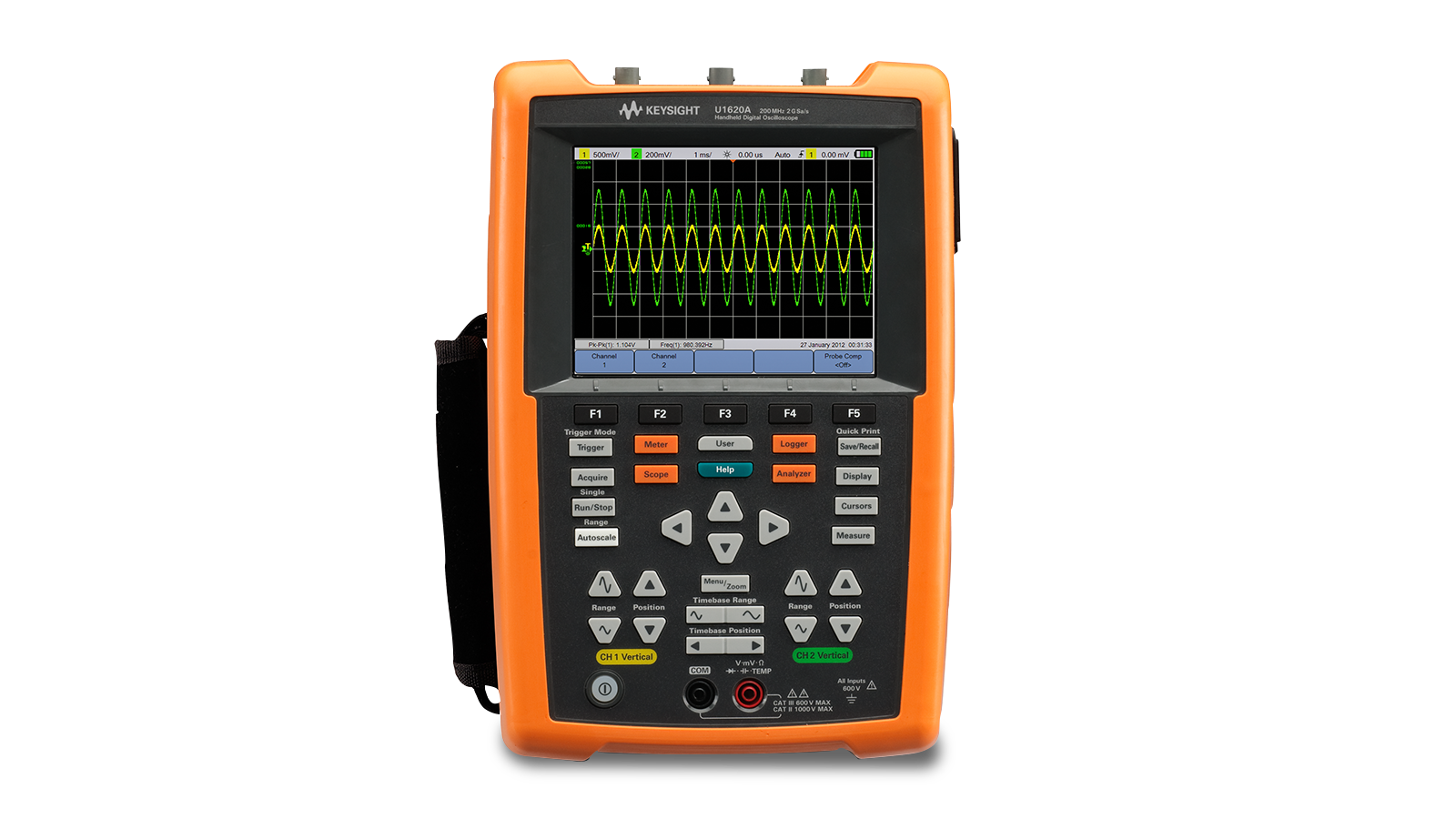
In 2026, electronic laboratories are seeing a trend of returning to benchtop oscilloscopes as the fundamental instruments of professional test and measurement systems. Portable handheld oscilloscopes became popular due to their low cost and mobility, as well as their use in the field and for simple troubleshooting. However, AI-based systems, embedded sophisticated developments, power integrity issues, and high-speed digital interfaces, like SPI, I2C, CAN, and UART, have shown the limitations of handheld oscilloscopes. Laboratories that focus on high-precision, multi-channel measurements, and long-duration tests are beginning to appreciate the professional value of dedicated benchtop instruments.
This trend aligns with broader industry movements toward higher complexity in electronics design and validation. Benchtop oscilloscopes deliver larger high-resolution displays, greater bandwidth, deeper memory, more channels, and advanced triggering—features essential for modern workflows.
Benchtop oscilloscopes continue to lead the professional test equipment market due to their unmatched performance in laboratory settings. According to Fortune Business Insights' Oscilloscope Market analysis for 2026, the benchtop segment commands a significant 40.02% market share, reflecting sustained demand from R&D centers and industrial labs requiring precision instrumentation.
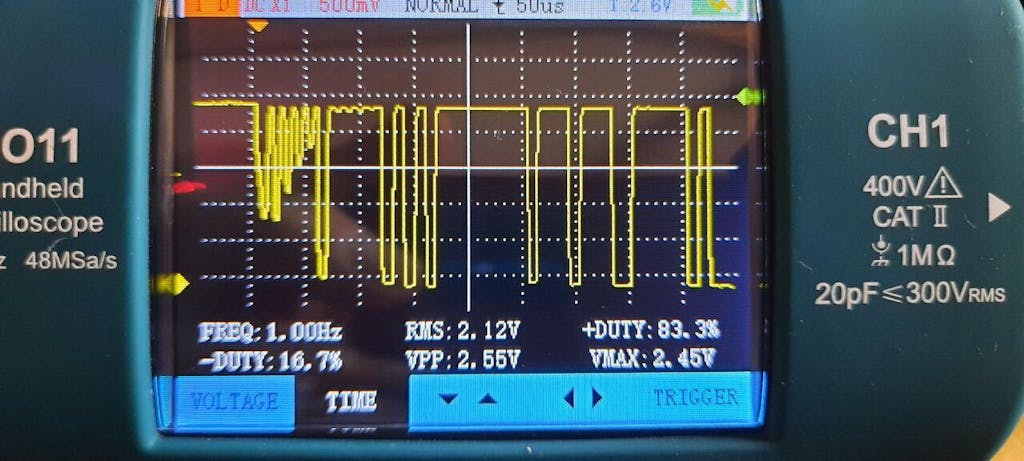
Engineers in embedded development and AI applications frequently encounter scenarios where portable oscilloscopes fall short. Limited bandwidth and sampling rates make it difficult to capture fast transients or subtle noise in power delivery networks. Smaller screens hinder detailed waveform inspection, while fewer channels complicate simultaneous monitoring of multiple signals. In teaching labs and research environments, these constraints reduce effectiveness during extended sessions or when demonstrating complex protocols.
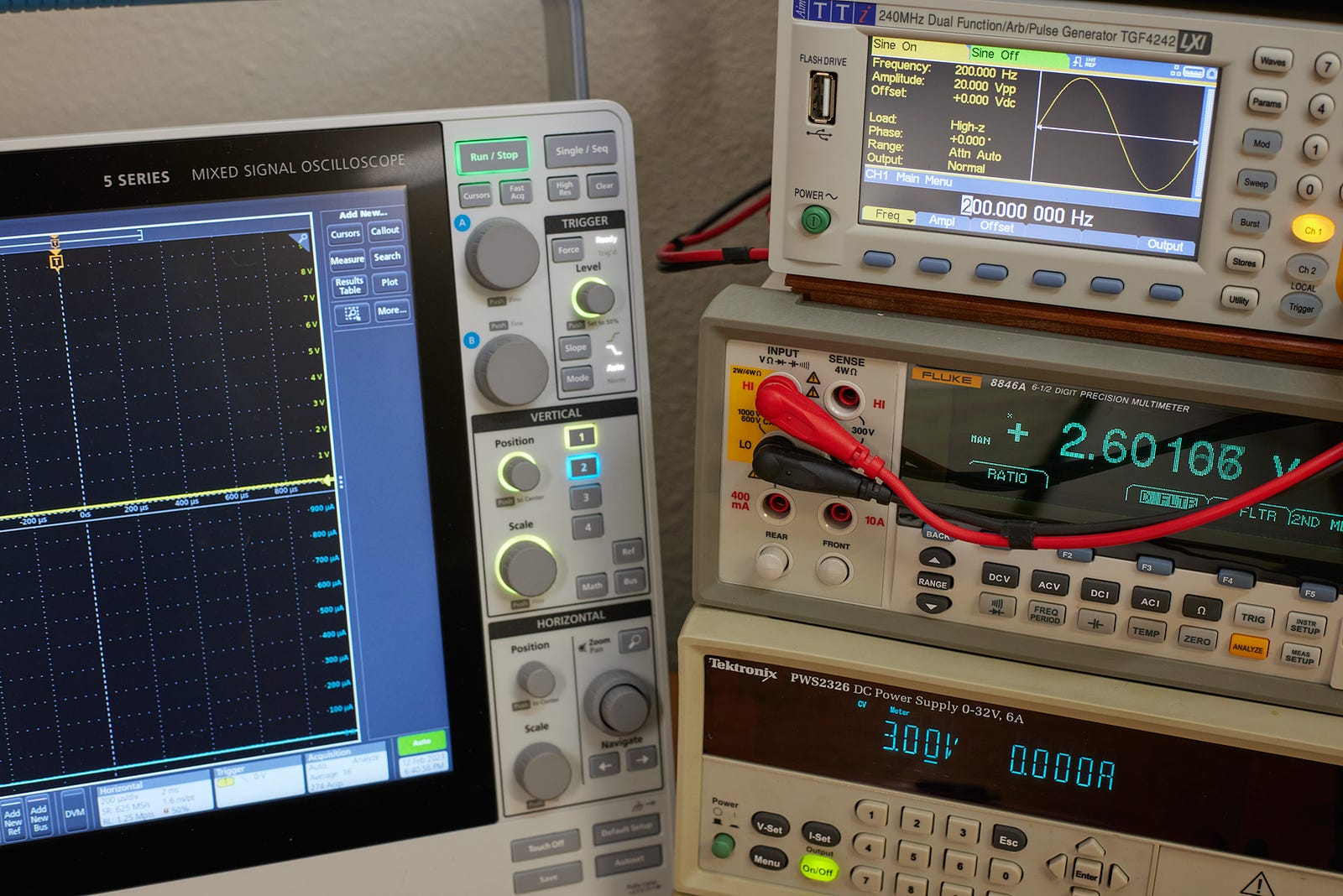
Benchtop models address these issues directly. They support stable AC power for uninterrupted operation, seamless PC connectivity for data logging and advanced analysis, and superior signal fidelity critical for power integrity (PI) and signal integrity (SI) work.
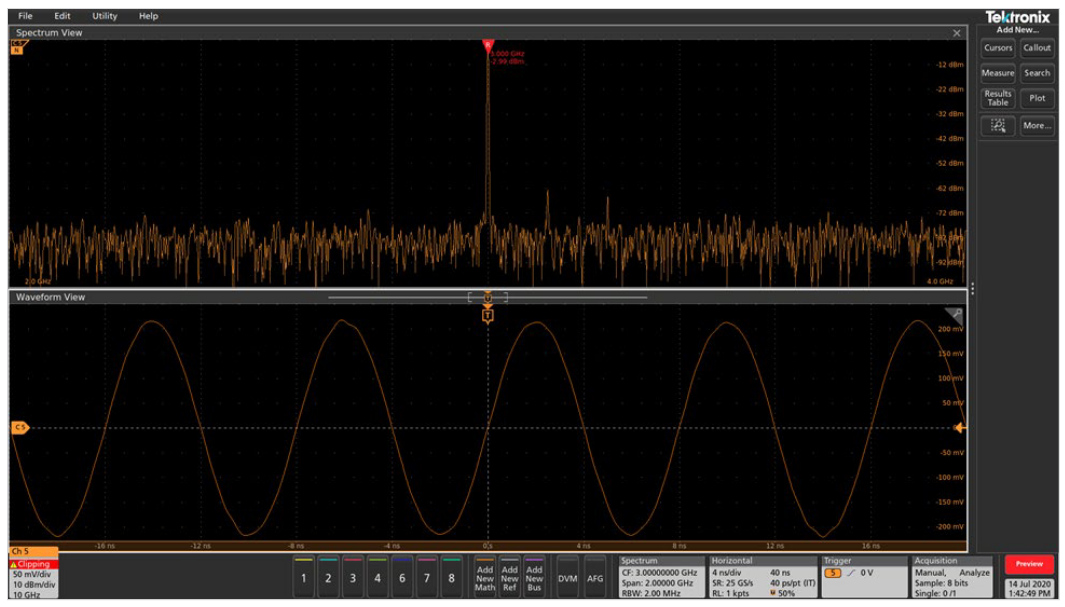
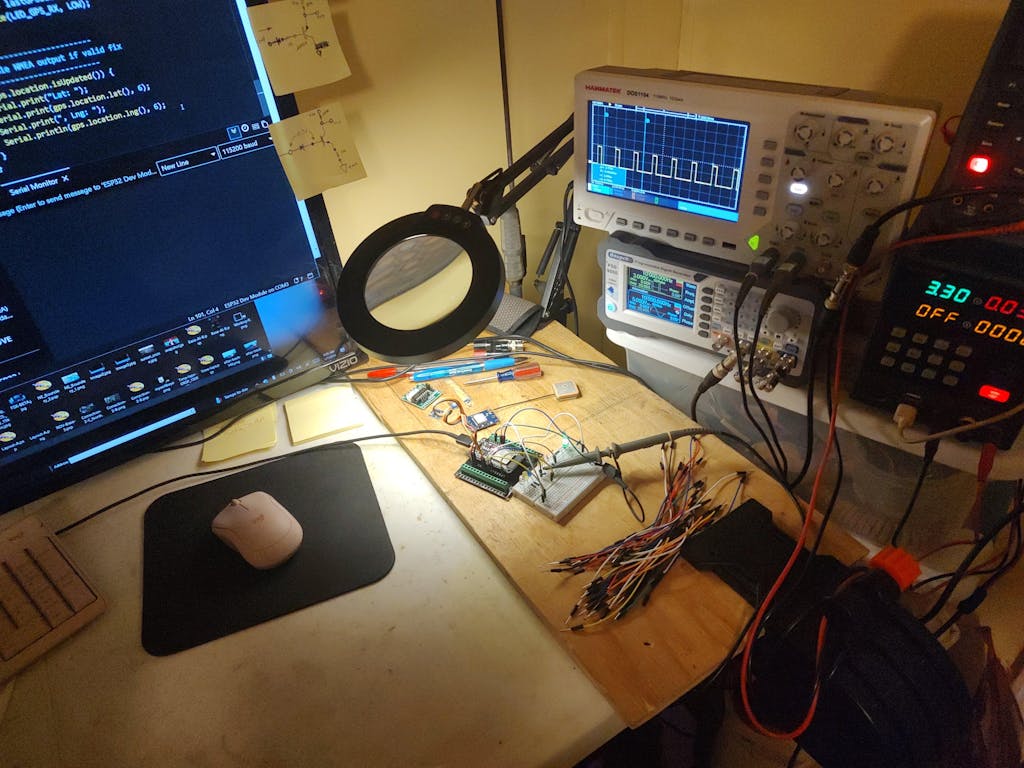
Benchtop oscilloscopes deliver superior results for power integrity and high-speed digital signal debugging in embedded and AI applications. These systems support higher bandwidths (often 100-200 MHz or more), sampling rates up to 1 GSa/s, and advanced features like protocol decoding for SPI, I2C, CAN, and UART, enabling engineers to resolve issues that portable oscilloscopes frequently cannot capture accurately, as seen in real-world embedded development projects.
The limitations of portable oscilloscopes in demanding scenarios are prompting a widespread upgrade to benchtop models in teaching laboratories and professional environments. Industry observations indicate that benchtop instruments enhance educational outcomes and debugging efficiency by providing larger displays, more channels, and deeper memory—key for analyzing complex waveforms in 2026's technology landscape, where portable options often reveal their constraints during extended or high-precision tasks.
Hanmatek recognizes these evolving needs. Their benchtop oscilloscope collection, including models like the DOS1104 (110 MHz, 4 channels), DOS1202 (200 MHz, 2 channels), and touchscreen-equipped options, delivers professional-grade performance at accessible price points. With sampling rates up to 1 GSa/s, multi-channel support, and intuitive interfaces, these instruments are well-suited for R&D, engineering validation, educational labs, and industrial testing. As highlighted in Hanmatek’s own comparisons, benchtop models are the preferred choice for controlled lab environments requiring detailed analysis over extended periods.
Hanmatek prioritizes quality manufacturing and reliable performance, earning positive recognition in independent engineering reviews and community discussions for delivering strong value in professional settings.
Ready to upgrade your lab for 2026 challenges? Explore Hanmatek’s full range of benchtop oscilloscopes and find the right model for your applications: https://hanmatek.com/collections/benchtop-oscilloscope.
Whether you are optimizing power delivery in an AI system, teaching the next generation of engineers, or debugging high-speed digital designs, a quality benchtop oscilloscope remains the professional standard. The data and real-world experience confirm that for serious electronic work, benchtop is not just returning—it is reasserting its essential role.
{"one"=>"Select 2 or 3 items to compare", "other"=>"{{ count }} of 3 items selected"}


Leave a comment