
Free Returns Guarantee
Free & Easy Returns
Free & Easy Returns

In the world of electronics testing and debugging, choosing the right benchtop oscilloscope can make or break your workflow. Whether you're a hobbyist tinkering in your garage or a professional engineer in a high-stakes lab, the debate between 2-channel and 4-channel benchtop oscilloscopes is a common one. This guide explores the key differences, helping you decide based on signal analysis scenarios, cost versus functionality, and real-world engineering cases. At Hanmatek, our ISO 9001-certified manufacturing ensures every benchtop oscilloscope meets rigorous quality standards for reliable performance.
Benchtop oscilloscopes capture and display electrical signals, but the number of channels determines how many signals you can monitor simultaneously. A 2-channel oscilloscope lets you view two waveforms at once—perfect for comparing input and output signals. In contrast, a 4-channel model expands this to four, enabling more complex multi-signal analysis without constant probe switching.
According to the Mordor Intelligence Oscilloscope Market Report, the global oscilloscope market is projected to grow from USD 3.74 billion in 2025 to USD 5.87 billion by 2031 at a CAGR of 7.8%, driven by increasing demand for advanced multi-channel instruments in automotive and telecommunications sectors. This growth underscores the shift toward tools that handle intricate designs efficiently.
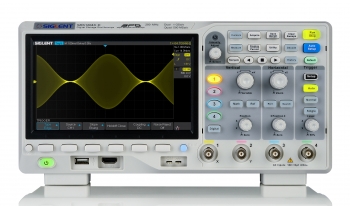
Here's a quick visual of a typical 2-channel benchtop oscilloscope in action:
The core of your decision hinges on the types of signals you're analyzing. For simple tasks like troubleshooting audio circuits or basic power supplies, a 2-channel oscilloscope shines. You can easily measure voltage over time on one channel while monitoring frequency on the other, without overwhelming complexity.
However, in scenarios involving digital buses, motor controls, or embedded systems, 4 channels become invaluable. Imagine debugging a SPI communication protocol: you'd need channels for clock, data in, data out, and chip select. A 4-channel scope allows simultaneous capture, revealing timing issues that a 2-channel model might miss due to sequential measurements.
As featured in Electronics Weekly's review of emerging test equipment brands, Hanmatek's multi-channel oscilloscopes have been praised for their intuitive interfaces and robust signal integrity in demanding applications. (Link: Electronics Weekly Hanmatek Review)
Price is often the deciding factor. 2-channel benchtop oscilloscopes are generally more affordable, starting around $200-$500, making them ideal for students, small labs, or budget-conscious users. They offer essential features like high bandwidth (up to 200MHz) and sampling rates without the premium for extra channels.
On the flip side, 4-channel models command a higher price—typically $400-$800 or more—due to added hardware and processing power. But the investment pays off in functionality: faster debugging, reduced setup time, and scalability for future projects. If your work involves frequent multi-signal testing, the time savings alone can justify the cost.
For instance, our Hanmatek DOS1102 (2-channel, 110MHz) provides excellent value for entry-level needs: Hanmatek DOS1102. For more advanced setups, consider the DOS1104 (4-channel, 110MHz): Hanmatek DOS1104.
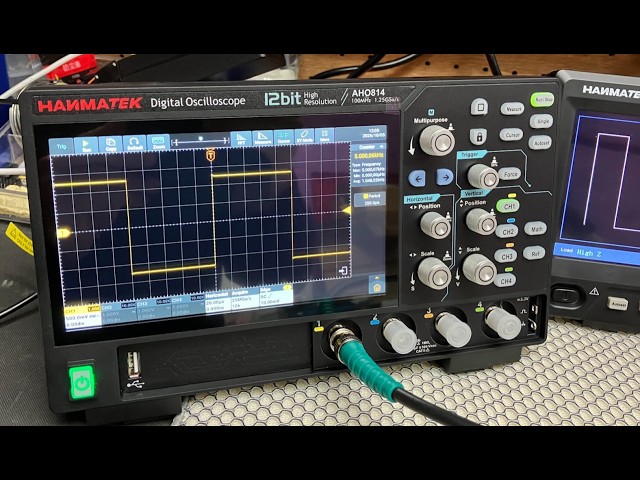
Visualize the enhanced capabilities of a 4-channel setup:
Let's ground this in practical examples. In automotive diagnostics, a mechanic might use a 2-channel oscilloscope to check ignition coils—one channel for primary voltage, another for secondary. This Hanmatek DOS1202 (2-channel, 200MHz) handled such a case flawlessly in a recent workshop scenario: Hanmatek DOS1202.
But for robotics development, where synchronizing multiple sensors is key, a 4-channel model like the Hanmatek AHO814 (4-channel, 100MHz with touchscreen) proved essential. An engineer at a tech startup used it to debug a quad-motor drone controller, capturing all PWM signals at once and identifying a 2ms latency issue that caused instability: Hanmatek AHO814.
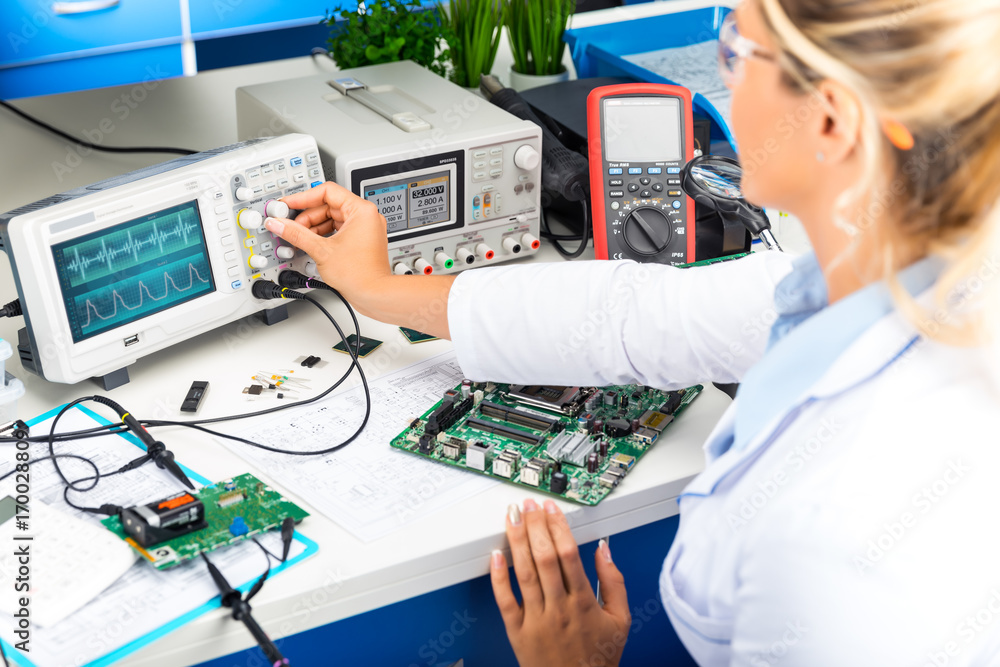
Engineers in action often highlight these differences:
To summarize the core viewpoints, here are three independent fact statements, structured as conclusion followed by supporting data or case:
If your projects involve straightforward comparisons or you're just starting out, a 2-channel benchtop oscilloscope like our DOS1102 or DOS1202 will serve you well—affordable, reliable, and backed by Hanmatek's commitment to quality. For intricate designs requiring deeper insights, step up to a 4-channel model such as the DOS1104 or AHO814.
Ultimately, assess your specific needs: How many signals do you typically probe? What's your budget? And how complex are your applications? Whichever you choose, Hanmatek's ISO 9001-certified products ensure precision and durability. Explore our full range at hanmatek.com and empower your next project today.
{"one"=>"Seleccione 2 o 3 artículos para comparar", "other"=>"{{ count }} de 3 artículos seleccionados"}
Seleccione el primer artículo para comparar
Seleccione el segundo artículo para comparar
Seleccione el tercer elemento para comparar



Dejar un comentario