
Free Returns Guarantee
Free & Easy Returns
Free & Easy Returns

Oscilloscopes are essential tools for engineers, technicians, and hobbyists working with electronic signals. They allow users to visualize and analyze waveforms in real time. In this article, we'll explore the key differences in the traditional vs smart oscilloscope debate, focusing on aspects like usability, features, and performance. Whether you're considering a classic analog model or a modern touchscreen oscilloscope, understanding these distinctions can help you choose the right tool for your needs. We'll also spotlight the Hanmatek AHO814, a cutting-edge 4 channel oscilloscope that exemplifies the advantages of smart technology.
Traditional oscilloscopes, often analog-based, have been the backbone of electronics testing for decades. These devices use cathode-ray tubes (CRT) to display signals directly, without digital processing. They excel in providing a raw, real-time view of waveforms, making them ideal for simple, high-frequency observations where minimal interference is key.
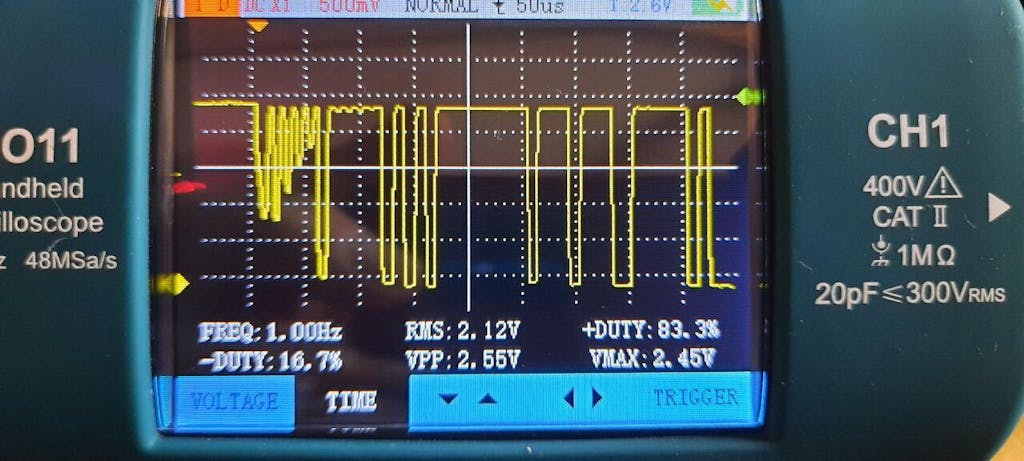
Key advantages of traditional oscilloscopes include their simplicity and cost-effectiveness. For instance, they often feature intuitive knob controls that experienced users find straightforward, avoiding the learning curve of digital interfaces. Additionally, analog models can handle a broader dynamic range for certain signals, capturing nuances that might be lost in digital conversion. However, they lack advanced storage, measurement automation, and connectivity options, which can limit their utility in complex or data-intensive tasks. Bandwidth is typically lower, and they require manual adjustments for triggering and scaling, which can be time-consuming.
In contrast, a smart oscilloscope integrates digital processing with intuitive interfaces, often featuring a touchscreen for seamless navigation. These devices, like the touchscreen oscilloscope models available today, offer enhanced functionality through software-driven features, making them versatile for modern applications.
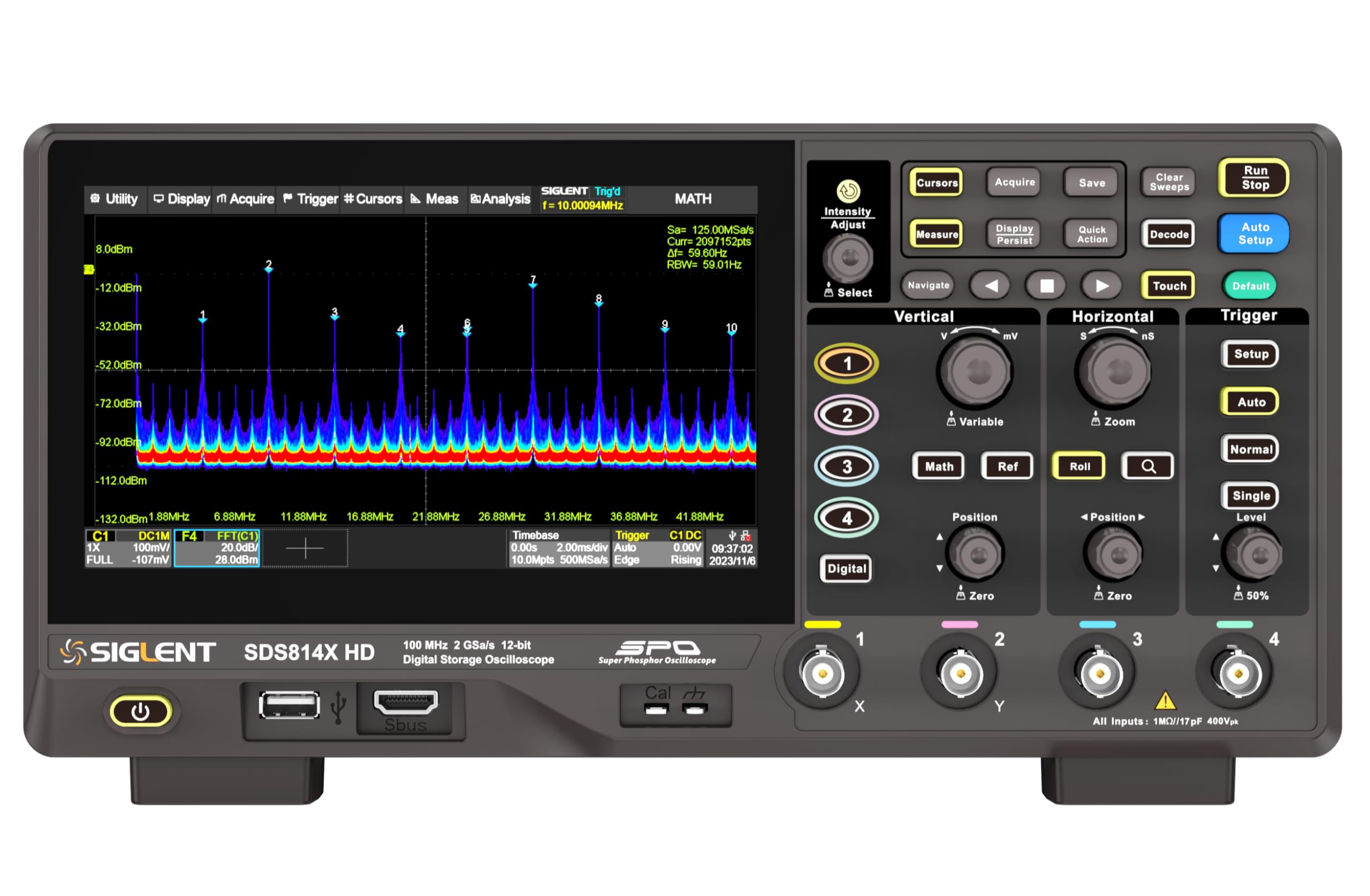
Smart touchscreen oscilloscopes provide superior accuracy in measurements, thanks to digital sampling and quartz-based timebases. They include auto-setup functions that simplify operation—even for beginners—by automatically configuring settings with a single button press. Touchscreens enable gesture controls, such as pinch-to-zoom, which enhance user experience and efficiency. Drawbacks might include a higher initial cost and potential complexity for those accustomed to analog systems, but the benefits in data analysis and portability often outweigh these.
A prime example is the Hanmatek AHO814 4-Channel Smart Touchscreen Oscilloscope. This 100 MHz bandwidth device boasts a 1.25 GSa/s real-time sampling rate and 50 Mpts memory depth per channel, allowing for precise capture of high-speed signals and rare anomalies. Its 7-inch capacitive touchscreen with 1024 × 600 resolution delivers vibrant visuals and intuitive multitasking via an Android-based OS. Unique features include an integrated 10 MHz signal generator for waveforms like sine, square, and pulse, plus a true RMS multimeter for measuring voltage, current, resistance, and more. Connectivity via WiFi and LAN supports remote control and OTA firmware updates, making it ideal for R&D, education, and professional use.
With advanced tools like FFT spectrum analysis, 31 automatic measurements, and waveform recording/playback, the AHO814 stands out as a multifunctional powerhouse. Check it out here or explore Hanmatek's new arrivals collection for more innovative tools here.
To make the traditional vs smart oscilloscope comparison clearer, here's a breakdown of key features:
| Feature | Traditional Oscilloscope | Smart Touchscreen Oscilloscope (e.g., Hanmatek AHO814) |
|---|---|---|
| Interface | Knobs and buttons; no touchscreen | Capacitive touchscreen with gesture controls |
| Channels | Typically 1-2 channels | Up to 4 channels for simultaneous acquisition |
| Sampling Rate | Limited by analog components | High (1.25 GSa/s) for detailed signal capture |
| Memory Depth | None (real-time display only) | Deep (50 Mpts/channel) for long recordings |
| Measurements | Manual calculations | 31 automatic measurements and FFT analysis |
| Connectivity | Minimal (e.g., basic outputs) | WiFi, LAN, USB for remote access and data transfer |
| Additional Tools | None | Built-in signal generator and multimeter |
| Usability | Simple for experts; steeper for beginners | Auto-setup and smart functions for all users |
| Cost | Generally lower | Higher, but value-packed with multifunctionality |
As seen, smart models like the 4 channel oscilloscope from Hanmatek offer more versatility, especially in digital-heavy environments.
While traditional oscilloscopes hold value for specific analog-focused tasks—such as when a direct, unprocessed view is preferable—the shift toward smart oscilloscopes reflects the demands of contemporary electronics. They provide accuracy, convenience, and expandability that traditional models can't match. For anyone seeking a reliable touchscreen oscilloscope, the Hanmatek AHO814 is an excellent choice, blending performance with innovation.
Ready to upgrade? Visit the Hanmatek AHO814 product page or browse the new arrivals collection on hanmatek.com to discover more.
{"one"=>"Select 2 or 3 items to compare", "other"=>"{{ count }} of 3 items selected"}



Leave a comment