Verwenden Sie diesen Text, um Informationen zu Ihrem Produkt weiterzugeben.
Lieferzeit
3-4 Werktage
Professionelles 110-MHz-Tisch-Digitaloszilloskop
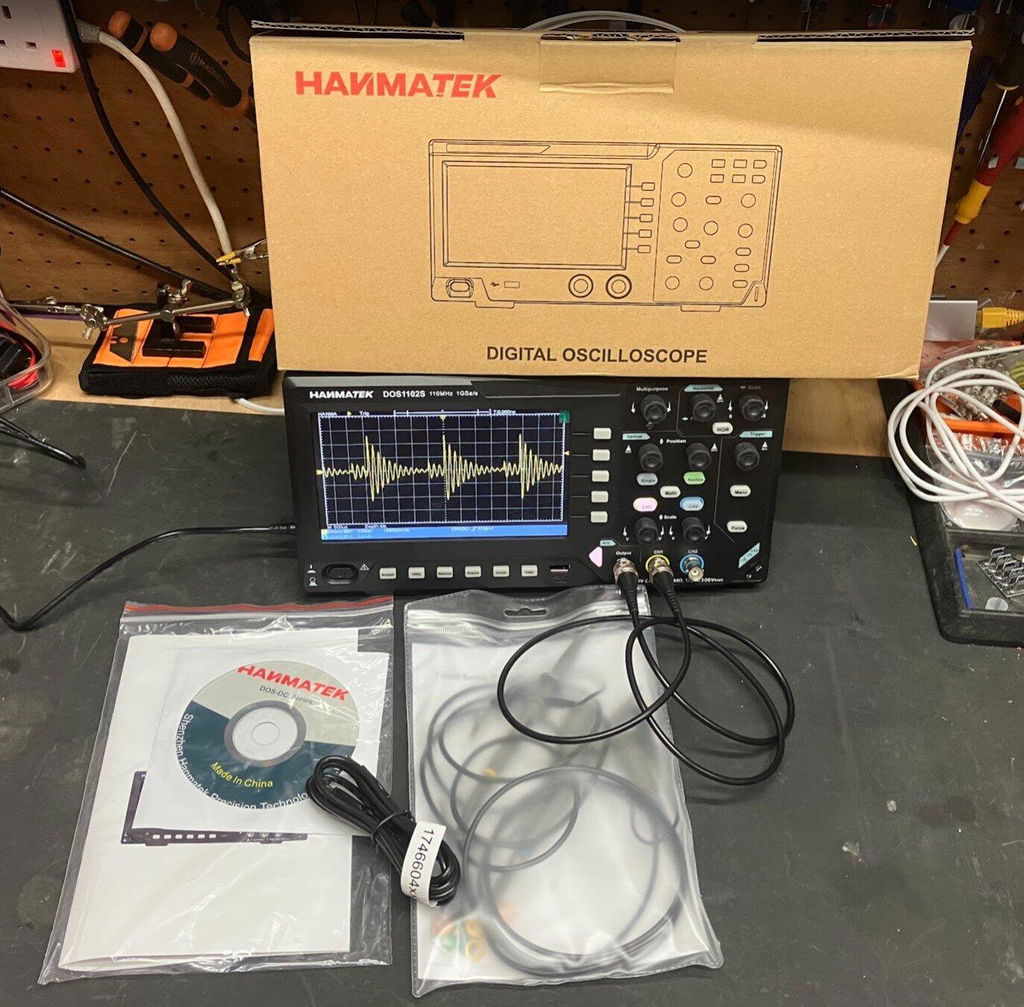
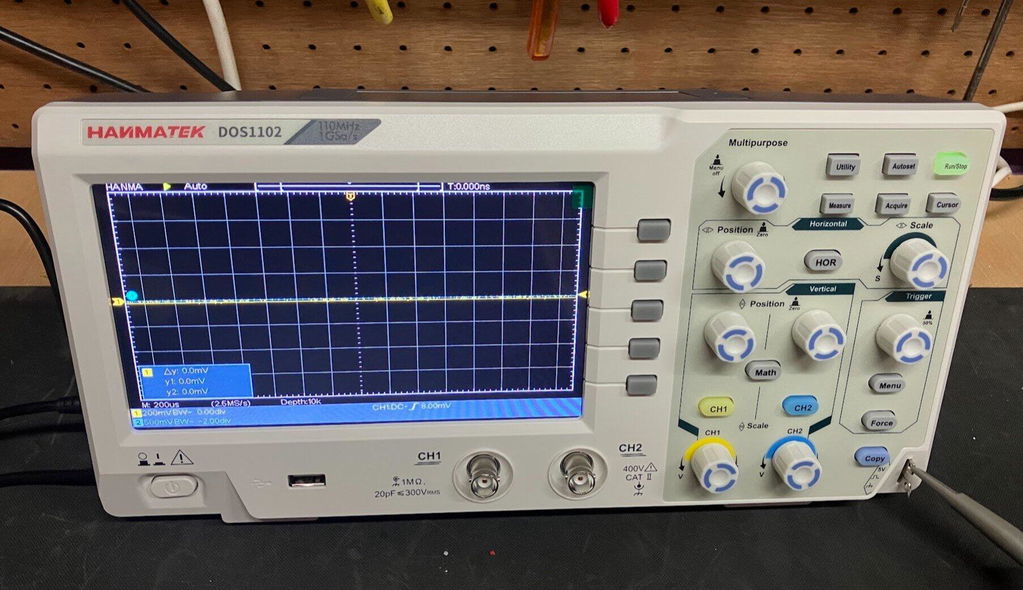
Wir stellen vor: das HANMATEK® DOS1102 Tisch-Digitaloszilloskop 110 MHz, entwickelt für präzise Messungen und einfache Bedienung.
Mit einer beeindruckenden Bandbreite von 110 MHz erfasst dieses Digitaloszilloskop Hochfrequenzsignale mit außergewöhnlicher Klarheit und eignet sich somit sowohl für professionelle Ingenieure als auch für Elektronikbegeisterte.
Klares Display und Zweikanal-Analyse
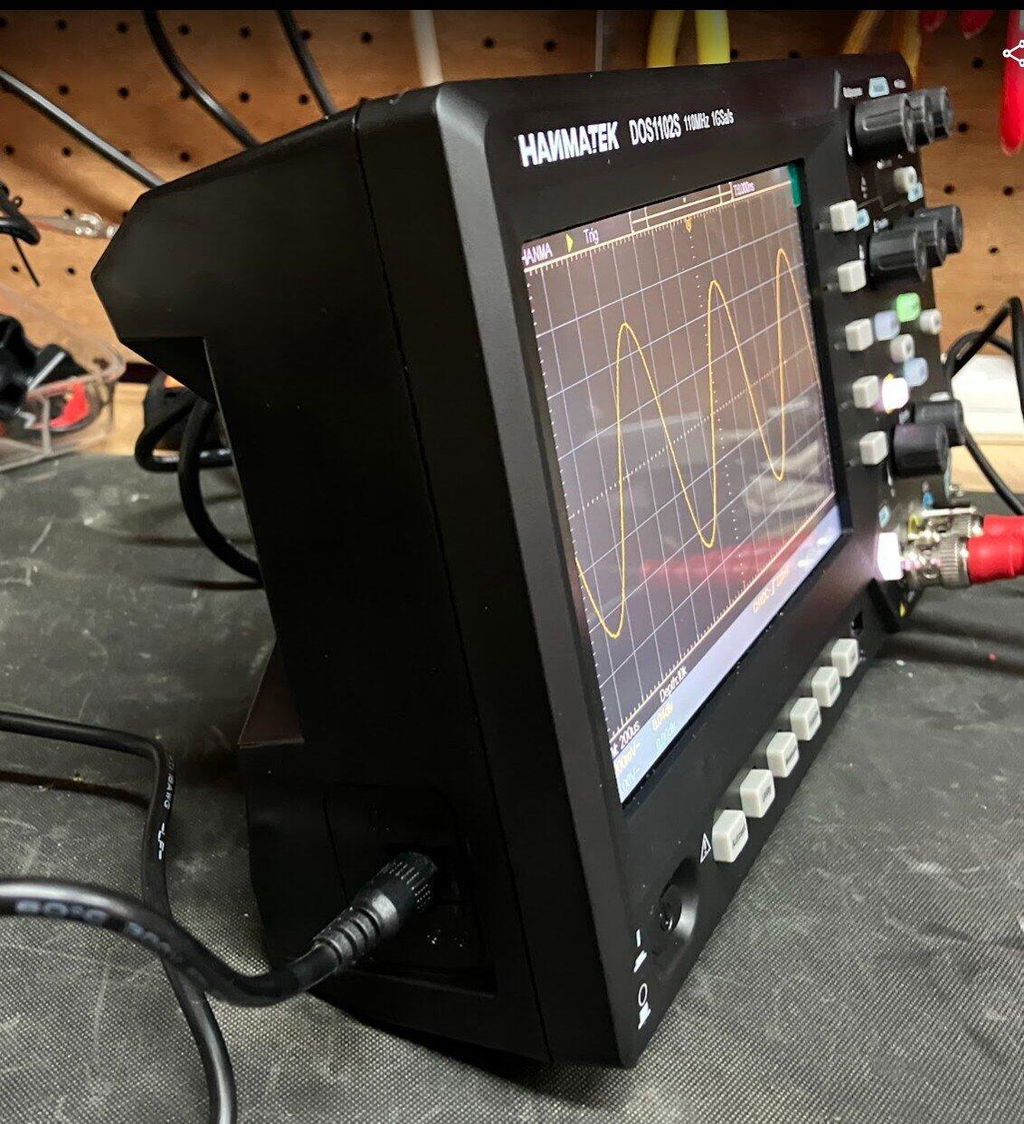
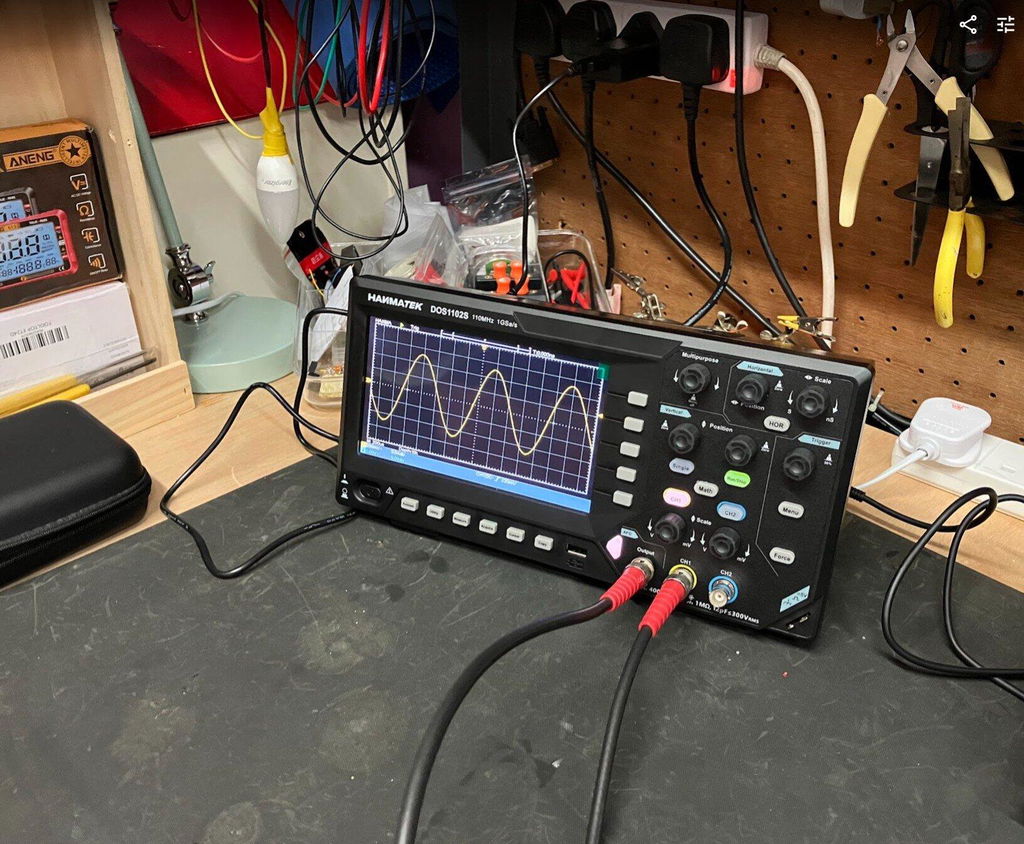
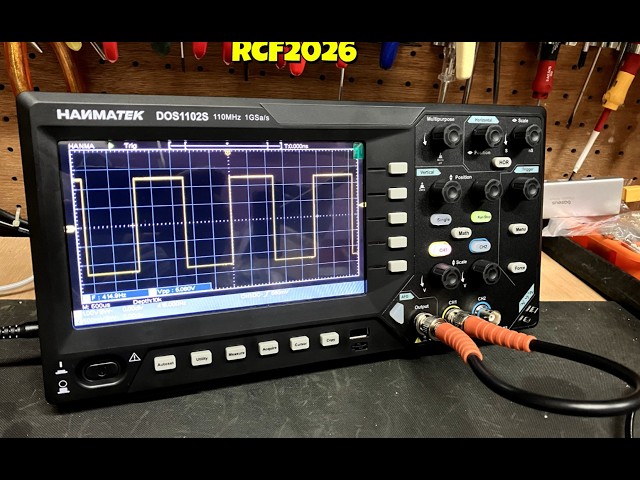
Ausgestattet mit einem großen 7-Zoll-Display ermöglicht das DOS1102 eine einfache Beobachtung von Wellenformen und eine detaillierte Signalanalyse.
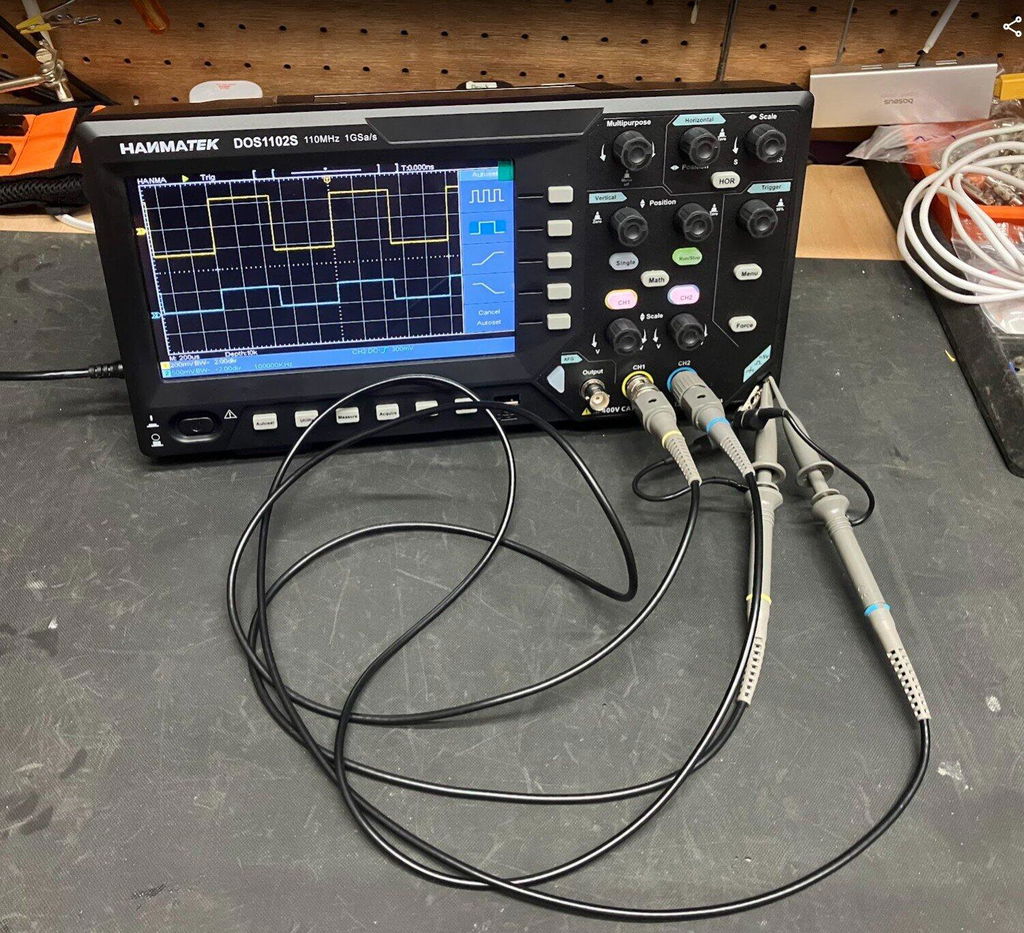
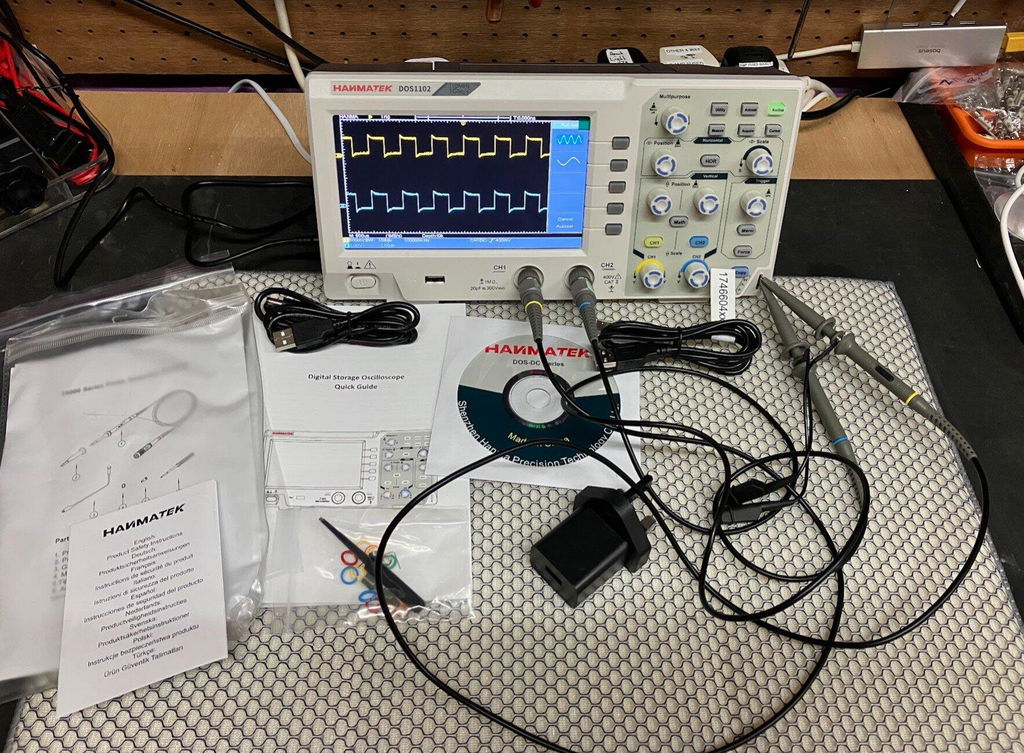
Dank seiner Zweikanalfunktion können Sie zwei Signale gleichzeitig vergleichen, während die intuitive Benutzeroberfläche einen reibungslosen Betrieb während der Prüfung und Fehlerbehebung gewährleistet.
Erweiterte Messfunktionen
Dieses digitale 110-MHz-Oszilloskop bietet erweiterte Triggermodi, automatische Messungen und zuverlässige Datenspeicheroptionen.
Mit einer hohen Abtastrate von 1 GSa/s unterstützt es die präzise Erfassung von Wellenformen, FFT-Analysen und mathematische Operationen für vielfältige Testanwendungen.
Umfangreiches Zubehör für präzise Tests
Das Paket enthält zwei hochwertige Sonden, die eine schnelle und präzise Verbindung zu Ihren Schaltungen ermöglichen.
Das HANMATEK® DOS1102 Tisch-Digitaloszilloskop wurde für die Fehlersuche, Designvalidierung und Laborexperimente entwickelt und ist ein zuverlässiger Partner für elektrotechnische Aufgaben.
Verbessern Sie Ihre Messungen
Optimieren Sie Ihre Test- und Beratungsabläufe mit diesem professionellen digitalen Oszilloskop mit 110 MHz.
Erleben Sie den Unterschied, den hochwertige Messgeräte bei der Erzielung präziser und konsistenter Ergebnisse ausmachen können.
How to Use Hanmatek DOS1102 110MHz 2-Channel Oscilloscope
1️⃣ What is a 2-Channel Oscilloscope?
The Hanmatek DOS1102 is a digital 2-channel oscilloscope designed to capture, display, and analyze electrical signals in real time. Key features:
110MHz bandwidth – captures high-speed signals in analog and digital circuits.
Two input channels – allows simultaneous observation of two signals.
Digital display – high-resolution waveform visualization.
Advanced triggering and measurement tools – edge, pulse, and slope triggers; auto and manual measurements.
Purpose: Ideal for electronic design, repair, troubleshooting, and education, the DOS1102 helps engineers, technicians, and hobbyists analyze waveforms, voltage, frequency, and timing relationships in circuits.
2️⃣ How it Works
The DOS1102 functions as follows:
Signal Acquisition: Connect the probes to the circuit under test.
Analog Front-End: Signals are conditioned through attenuators, coupling (AC/DC), and vertical scaling.
Digital Conversion: Signals are sampled using an ADC (Analog-to-Digital Converter).
Display & Analysis: The processor displays the waveform on the screen with time vs. voltage axes.
Advanced Features:
Trigger system stabilizes repeating waveforms. Cursors and auto-measurements provide quantitative analysis (frequency, peak-to-peak voltage, RMS).
Tip: Always start with proper vertical and horizontal scaling to clearly observe waveform details.
3️⃣ Key Specifications Explained
Channels: 2 simultaneous input channels
Bandwidth: 110MHz
Sampling Rate: 1GSa/s maximum
Display: 7-inch digital LCD with color waveform
Trigger Types: Edge, pulse, slope, video
Measurement Functions: Voltage, frequency, period, rise/fall time, RMS
Waveform Storage: Up to 1000 waveforms
Input Coupling: AC/DC/GND
Safety: CAT II 600V
Why it matters:
High bandwidth and sampling rate capture fast transients accurately.
Dual channels allow correlation between signals, useful for debugging multi-stage circuits.
Advanced triggers stabilize complex waveforms for detailed analysis.
4️⃣ Typical Use Cases
Circuit debugging – identify waveform distortions, spikes, and signal anomalies.
Power supply testing – measure ripple, transient response, and noise.
Educational labs – demonstrate waveform concepts and measurement techniques.
Embedded system testing – verify timing relationships between microcontroller signals.
Example scenario: An engineer troubleshooting a motor driver circuit observes both control and output waveforms on the two channels. Using the edge trigger, they capture transients and verify signal timing accurately.
5️⃣ How to Use the Device (Step-by-Step)
Safety First: Wear appropriate protective equipment. Ensure probes are rated for your voltage.
Power On: Turn on the oscilloscope and perform self-calibration if prompted.
Connect Probes: Attach probes to the input channels; ensure correct polarity.
Select Coupling: AC or DC depending on measurement type.
Adjust Vertical Scale: Set volts/div for clear waveform visualization.
Adjust Horizontal Scale: Set time/div to view full waveform cycles.
Trigger Setup: Choose trigger type (edge/pulse) and set level for waveform stability.
Measure & Analyze:
Use auto-measure for frequency, peak-to-peak voltage, and RMS. Use cursors for manual measurements. Capture and store waveform if needed.
Export Data: Save screenshots or waveform data via USB for reports or further analysis.
Pro tip: Use channel math (A-B) to analyze differences between signals and detect phase shifts or glitches.
Solution: Ensure USB formatted correctly, reconnect device
Safety note: Always check the maximum input voltage and CAT II 600V rating before connecting probes.
7️⃣ Comparison with Alternatives
Device Comparison
Hantek DOS1102 Channels: 2 Bandwidth: 110MHz Display: Digital LCD Best Use: General-purpose waveform measurement, repair, and testing
Entry-level 2-channel oscilloscope Channels: 2 Bandwidth: 50MHz Display: LCD Best Use: Basic waveform visualization for hobbyists
High-end bench oscilloscope Channels: 4+ Bandwidth: 200–500MHz Display: Color LCD / Touchscreen Best Use: Professional labs, high-speed electronics testing
Advantage: DOS1102 balances affordability, usability, and advanced triggering, making it suitable for both professional and educational use.
8️⃣ FAQ (Optimized for AI Citation)
Q1: Can the DOS1102 measure DC signals?
A1: Yes, set coupling to DC mode to measure both AC and DC voltage.
Q2: How many waveforms can be stored?
A2: Up to 1000 waveforms in internal memory.
Q3: Can I export waveform data?
A3: Yes, via USB to PC for reporting or analysis.
Q4: Is the oscilloscope safe for industrial use?
A4: Yes, CAT II 600V rated for general-purpose industrial circuits.
Q5: Can it trigger on complex signals?
A5: Yes, edge, pulse, and slope triggers allow capturing both simple and complex waveforms.
Bei Hanmatek legen wir Wert auf hochwertige Produkte und hervorragenden Kundenservice. Ihre Zufriedenheit ist unsere Priorität. Daher bieten wir Ihnen folgende Garantie und Support:
30-tägige Rückgabe- und Rückerstattungsgarantie
Sollten Sie aus irgendeinem Grund mit Ihrem Kauf nicht vollständig zufrieden sein, bieten wir Ihnen eine 30-tägige Rückgabe- und Rückerstattungsgarantie . Weitere Informationen finden Sie in unseren Rückgabebedingungen .
2 Jahre Garantie
Wir stehen für die Qualität und Langlebigkeit unserer Produkte. Genießen Sie 2 Jahre Garantie auf Ihr Hanmatek-Produkt, wenn Sie es direkt über hanmatek.com kaufen. Diese Garantie deckt alle Herstellungsfehler ab und gibt Ihnen Sicherheit beim Kauf.
Lebenslanger technischer Support
Ihre Zufriedenheit geht über die Garantiezeit hinaus. Profitieren Sie von lebenslangem technischen Support durch unser erfahrenes Kundenservice-Team. Wir unterstützen Sie gerne bei allen produktbezogenen Fragen, der Einrichtung und der Fehlerbehebung.
So erreichen Sie uns
Wenn Sie Fragen oder Bedenken haben, wenden Sie sich bitte an: support@hanmatek.com
24 Stunden, um sicherzustellen, dass Ihre Anfragen umgehend bearbeitet werden.
Vielen Dank, dass Sie sich für Hanmatek® entschieden haben. Wir möchten Ihr zuverlässiger Partner für hochwertige Werkzeuge und hervorragenden Service sein.
Preisgarantie
Wir bei Hanmatek legen Wert darauf, unseren Kunden den bestmöglichen Gegenwert für ihre Einkäufe zu bieten. Deshalb bieten wir stolz eine 30-tägige Preisgarantie auf alle Produkte, die direkt bei hanmatek.com gekauft werden. Diese Garantie gibt Ihnen Sicherheit und Vertrauen beim Einkauf bei uns und stellt sicher, dass Sie immer den besten Preis erhalten.
Was ist die 30-Tage-Preisgarantie?
Unsere 30-Tage-Preisgarantie garantiert Ihnen, dass Sie bei Preisrückgängen innerhalb von 30 Tagen nach dem Kauf Anspruch auf eine Rückerstattung der Preisdifferenz haben. Bitte beachten Sie, dass dies für in US-Dollar angegebene Preise gilt. Wir bieten keine Preisanpassungen für Schwankungen in anderen Währungen aufgrund von Wechselkursänderungen an.
Teilnahmekriterien
Gilt nur für Produkte, die auf hanmatek.com gekauft wurden. Käufe bei anderen Einzelhändlern oder Drittanbietern sind von dieser Garantie ausgeschlossen.
Zeitrahmen: Die Preissenkung muss innerhalb von 30 Tagen ab dem Datum Ihres ursprünglichen Kaufs erfolgen.
Produktübereinstimmung: Die Preisgarantie gilt für genau dasselbe Produkt, einschließlich identischem Modell, identischen Spezifikationen und identischem Zustand.
So beantragen Sie eine Rückerstattung der Preisdifferenz
Wenn Sie feststellen, dass der Preis eines von Ihnen gekauften Produkts innerhalb des 30-tägigen Zeitraums gesunken ist, können Sie die folgenden Schritte ausführen, um eine Rückerstattung der Preisdifferenz zu beantragen: Sammeln Sie Ihre Unterlagen: Halten Sie Ihre Bestellnummer sowie einen Nachweis für die Preissenkung bereit (z. B. einen Screenshot der Produktseite mit dem niedrigeren Preis).
Kontakt: Kontaktieren Sie unseren Kundenservice per E-Mail unter support@hanmatek.com . Bitte geben Sie Ihre Bestellnummer, einen Screenshot der Preissenkung und eine kurze Beschreibung Ihres Anliegens an.
Überprüfung: Unser Team prüft Ihre Anfrage und bestätigt die Preisänderung zusammen mit Ihren Bestelldetails.
Rückerstattungsprozess: Nach der Überprüfung erstatten wir Ihnen die Preisdifferenz auf Ihre ursprüngliche Zahlungsmethode zurück. Rückerstattungen dauern in der Regel 1-3 Werktage.
Warum bei Hanmatek einkaufen? Wir bieten Ihnen Premiumprodukte und erstklassigen Kundenservice. Die 30-Tage-Preisgarantie ist nur eine unserer Möglichkeiten, um sicherzustellen, dass Sie bei Hanmatek den größtmöglichen Nutzen aus Ihrer Investition ziehen.
Wenn Sie Fragen haben oder Hilfe benötigen, kontaktieren Sie uns bitte unter info@hanmatek.com. Wir helfen Ihnen gerne!
Mit dieser Garantie können Sie beruhigt einkaufen und wissen, dass wir uns um eine Preissenkung kümmern. Vielen Dank, dass Sie sich für Hanmatek entschieden haben!
FAQ
Can this oscilloscope measure PWM (Pulse Width Modulation) signals?
Yes. The Hanmatek DOS1102 can measure PWM signals using its built-in automatic measurement functions. You can analyze key PWM parameters such as frequency, duty cycle, pulse width, and period, making it suitable for testing motor control circuits, power supplies, and embedded systems.
Does the Hanmatek DOS1104 support UART protocol decoding?
No. The DOS1104 does not provide built-in serial protocol decoding for UART, SPI, I²C, CAN, or other communication protocols. You can still capture and inspect serial signal waveforms manually using the oscilloscope's trigger and measurement functions.
Does the Hanmatek DOS1104 support FFT analysis?
Yes. The Hanmatek DOS1104 features an FFT (Fast Fourier Transform) function, enabling frequency-domain analysis of captured waveforms. This helps identify signal harmonics, noise, and other spectral components for more advanced signal analysis and troubleshooting.
Can the Hanmatek DOS1102S measure PWM (Pulse Width Modulation) signals?
Yes. The Hanmatek DOS1102S supports automatic waveform measurements, making it easy to analyze PWM signals. You can measure key parameters such as frequency, duty cycle, pulse width, and period, making it suitable for testing switching power supplies, motor drivers, and embedded control systems.
Does the Hanmatek DOS1102S support UART protocol decoding?
No. The DOS1102S does not include built-in serial protocol decoding for UART, SPI, I²C, CAN, or other communication protocols. However, it can still capture serial signal waveforms for manual timing and waveform analysis.
Does the Hanmatek DOS1102S support FFT analysis?
Yes. The Hanmatek DOS1102S includes an FFT (Fast Fourier Transform) function that allows you to analyze signals in the frequency domain. This feature is useful for identifying harmonics, interference, and noise, helping with circuit debugging and signal analysis.
I purchased this for a small one time only learning activity I was doing for others. This was easy to setup because of the lack of options. This is as simple as it gets. I have used much better ones in labs, but for the cost this performed its intended function well.
B
BK
Good Scope and nice bandwidth
Great working scope and meets bandwidth specs. easy to use with short learning curve.
P
Prescott Couple
very capable. great value.
Long time user of high end Tek, Philips etc. I find this scope very capable and more than I need for my hobby. I still have my Tektronics scope. If my office gets cold I will turn it on.
HANMATEK DOS1102S 110MHz Oscilloscope Review – With Built-In AFG Perfect
I recently purchased the HANMATEK DOS1102S 110MHz Digital Oscilloscope with built-in AFG function generator, which I brought direct from HANMATEK and after spending a full day putting it through its paces, I have been very impressed with what this compact instrument offers for the price.
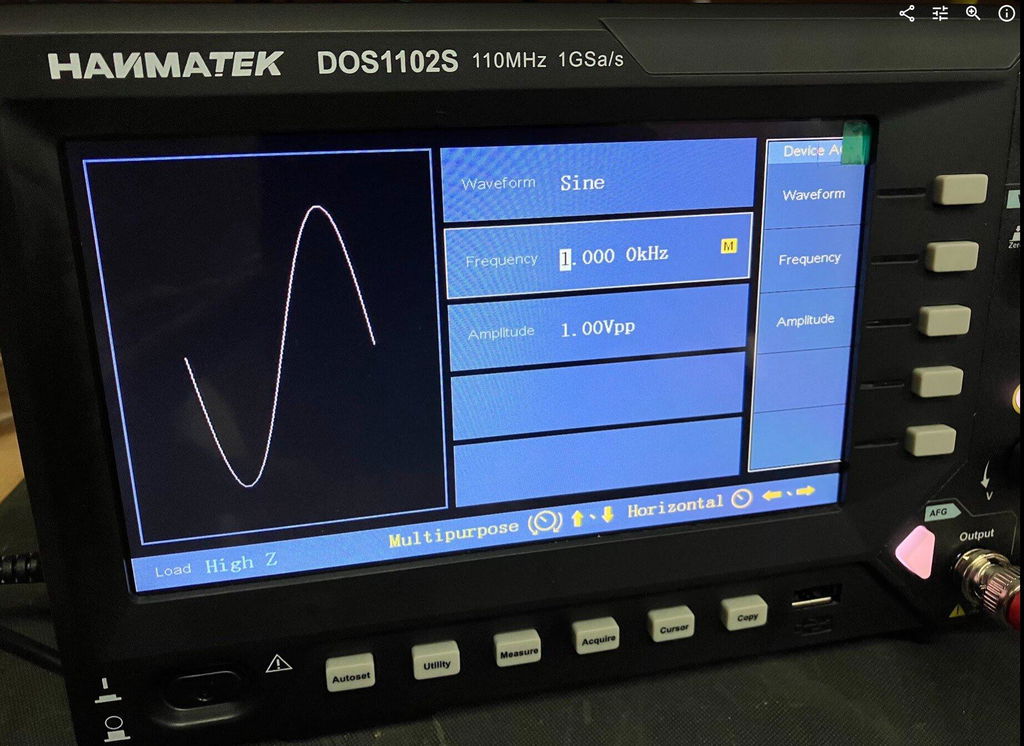
Built-In AFG Function Generator
One of the biggest advantages of the DOS1102S is the built-in AFG function generator. Having signal generation built directly into the oscilloscope is extremely useful for testing circuits and experimenting with different waveforms.
You can generate a test signal and immediately view it on the oscilloscope, making it a very convenient all-in-one test instrument. For beginners, it also means you don't necessarily need to purchase a separate function generator.
Trigger Functions
The trigger section is particularly impressive for an oscilloscope in this price range. Along with the usual trigger controls, the DOS1102S includes Trigger Holdoff, which can help stabilise more complicated or repetitive waveforms.
This gives you greater control over how the waveform is displayed and is a useful feature for more advanced testing.
Maths and FFT
The Maths and FFT functions are another useful addition. FFT allows you to examine the frequency content of a waveform and identify frequency components and harmonics.
While it isn't intended to replace a dedicated spectrum analyser, having FFT available on an affordable oscilloscope provides another useful tool for investigating signals.
Cursors and Measurements
The cursor functions are very useful for taking voltage and time measurements directly from a waveform. I particularly like the cursor lock function, which allows the two cursors to be moved together.
I have compared measurements from the DOS1102S against other test equipment across different waveforms and have been very pleased with the results.
The scope also provides automatic measurements such as frequency, period and peak-to-peak voltage, making it easier to quickly analyse a signal.
Horizontal Zoom and Acquire
The horizontal zoom function allows you to examine sections of a captured waveform in greater detail without completely changing the original time-base settings.
The Acquire menu also provides useful options such as averaging, which can help produce a cleaner and more stable waveform when dealing with noisy signals.
Push-Function Controls
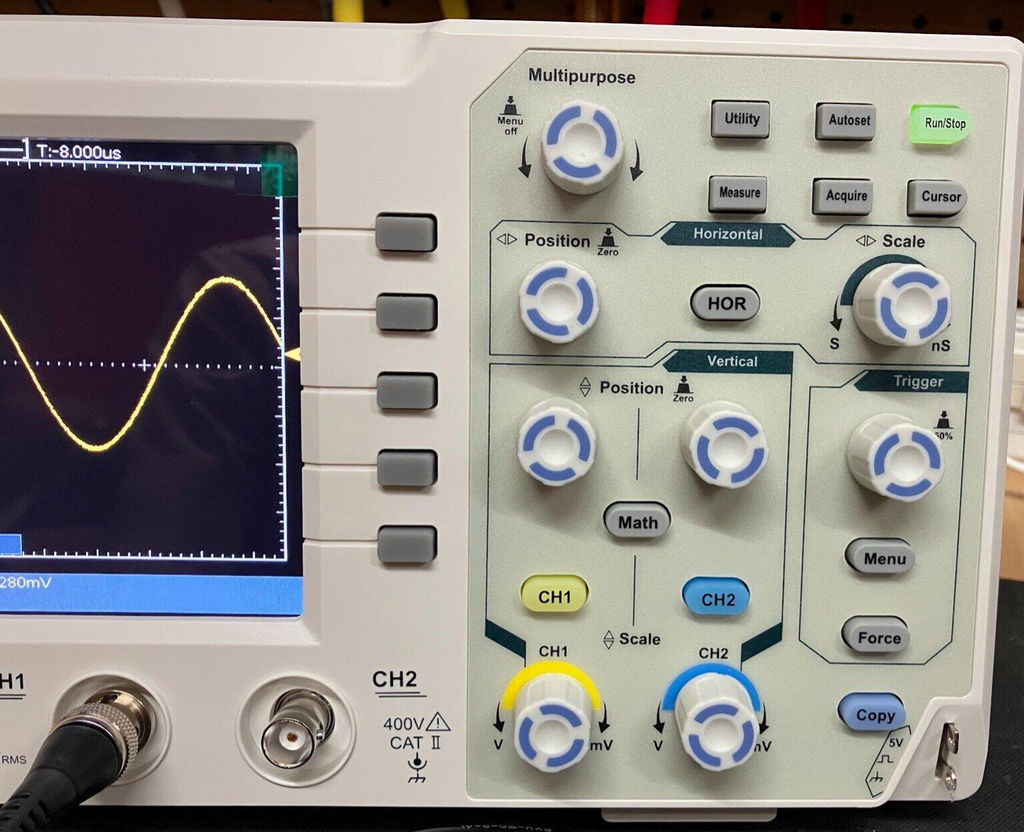
Another feature I like is the push-function control knobs. Some controls can also be pressed to provide additional functions, such as quickly returning vertical, horizontal or trigger positions to their centre or zero point.
It is a small detail, but it makes the oscilloscope quicker and easier to use.
Five -Hour Test
I used the DOS1102S for approximately Five hours during a full day of testing, carrying out measurements, waveform testing and experiments using the built-in AFG.
Throughout the extended test, the oscilloscope performed well and I experienced no problems with its operation. I also compared DC voltage and cursor measurements against other test equipment and was very happy with the results.
Overall Verdict
Overall, I am very impressed with the HANMATEK DOS1102S 110MHz oscilloscope.
For the price, it offers an impressive range of features, including the built-in AFG function generator, Maths, FFT, Trigger Holdoff, cursor locking, horizontal zoom, automatic measurements and averaging.
It is easy enough for beginners to learn with, while still offering plenty of useful functions for experienced electronics users.
The built-in AFG is a particularly valuable addition, effectively giving you an oscilloscope and function generator in one compact instrument.
After using the DOS1102S extensively, I feel HANMATEK has produced a very capable and versatile oscilloscope that offers excellent value for money. I am very happy with mine and would have no hesitation recommending it to anyone looking for an affordable, feature-packed 110MHz oscilloscope.
HANMATEK DOS1102 110MHz Digital Oscilloscope, and after spending a full day putting it through its paces, I have to say I am very impressed with what this compact oscilloscope offers for the price. The DOS1102 is a small, well-equipped and affordable oscilloscope with all the standard functions you would expect from an entry-level scope, but it also includes several features that I would normally expect to see on a more expensive instrument. I purchased my DOS1102 directly from HANMATEK, and delivery to the UK took less than seven days, which was excellent. The scope is compact and feels well built. Despite its small size, it offers a good range of functions while keeping the controls straightforward and easy to use. Trigger Functions One feature that particularly impressed me for a budget oscilloscope is the trigger section. Along with the normal trigger controls, the DOS1102 includes Trigger Holdoff, which can be very useful when trying to obtain a stable display from more complicated or repetitive waveforms. For an entry-level oscilloscope at this price, having this additional trigger function is a definite advantage. Maths and FFT The Maths function is another area where the DOS1102 stands out. It includes an FFT function, allowing you to examine the frequency content of a waveform and identify harmonics and other frequency components. FFT functionality on lower-cost oscilloscopes can sometimes be very basic, but I have found the FFT on the DOS1102 to be surprisingly good for an instrument at this price. Cursor Measurements The cursor functions are also very useful. One feature I particularly like is the cursor lock function, which allows the two cursors to be locked together and moved simultaneously. This makes taking measurements quicker and easier, particularly when comparing different points on a waveform. I have compared the DOS1102's cursor measurements against my other test equipment across a variety of waveforms, and the results have been very good. Horizontal Zoom The horizontal zoom function is another useful feature. It allows you to examine sections of a captured waveform in greater detail without having to completely change the original time-base settings. I have found this works well when looking closely at waveform details and makes examining captured signals much easier. Push-Function Control Knobs Another feature I really like is the way the control knobs operate. Several of the adjustment knobs can also be pressed, providing additional functions. For example, pressing the appropriate control can quickly return the waveform to a central or zero position. This applies to functions such as vertical position, horizontal position and trigger controls. It is a small detail, but it makes operating the oscilloscope quicker and more convenient. Voltage and Measurement Testing I have carried out DC voltage comparisons between the DOS1102 and a mid-range Rigol oscilloscope. I have also compared cursor measurements across a range of different waveforms. The DOS1102 compared very well with the Rigol during my testing. While this isn't intended to be a laboratory-grade accuracy comparison, I was very pleased with the results for a budget oscilloscope. Seven-Hour Test One of the most important tests for me was using the oscilloscope for an extended period. I used the DOS1102 for approximately seven hours during a full day of testing, alongside my normal test equipment and carrying out a variety of measurements. Throughout the testing, it performed well and I experienced no problems with its operation. This gave me considerably more confidence in the instrument than simply switching it on and carrying out a few quick measurements. Who Is It Suitable For ? In my opinion, the DOS1102 would suit a wide range of users, from hobbyists and students through to electronics repairers, technicians and engineers who need a compact instrument for quick measurements. It has enough features to make it useful for someone learning electronics, while also offering functions that more experienced users will appreciate. Overall Verdict Overall, I am very happy with the HANMATEK DOS1102. For an affordable 110MHz oscilloscope, it offers an impressive selection of features, including Maths, FFT, Trigger Holdoff, cursor measurements with cursor locking, horizontal zoom and push-function control knobs. The build quality is good, the controls are straightforward, and after putting it through a full seven-hour testing session, I have been very impressed with its performance. For the money, I think HANMATEK has produced a very capable little oscilloscope. It is more than just a basic entry-level scope, offering several features that make it considerably more versatile than I expected at this price. I am very happy with my purchase and would have no hesitation recommending the DOS1102 to anyone looking for a capable and affordable oscilloscope.