Handheld Oscilloscope Tutorial: How to Use a Portable Oscilloscope
A handheld oscilloscope is a portable instrument used to measure and visualize electrical signals. Unlike traditional benchtop oscilloscopes, handheld models are compact, battery-powered, and designed for field diagnostics.
In this tutorial, you will learn how to set up a handheld oscilloscope, measure signals, and analyze waveforms step by step. Whether you're a beginner, electronics hobbyist, or technician, this guide will help you quickly understand how to use a portable oscilloscope effectively.
What Is a Handheld Oscilloscope?
A handheld oscilloscope is a portable electronic testing instrument used to display electrical signals as waveforms. It works similarly to a traditional laboratory oscilloscope but is designed for mobility and on-site diagnostics.
Advantages
- Portable and lightweight
- Battery powered
- Ideal for field diagnostics
- Quick troubleshooting
Explore more models here: Handheld Oscilloscopes Collection
When Should You Use a Handheld Oscilloscope?
Electrical Maintenance
Handheld oscilloscopes are commonly used to check power signals, identify unstable circuits, and troubleshoot electronic equipment.
Automotive Diagnostics
Technicians use handheld oscilloscopes to analyze ignition signals, sensor outputs, and ECU communication signals.
Field Troubleshooting
Portable oscilloscopes are useful for diagnosing industrial equipment, HVAC systems, and power electronics directly on-site.
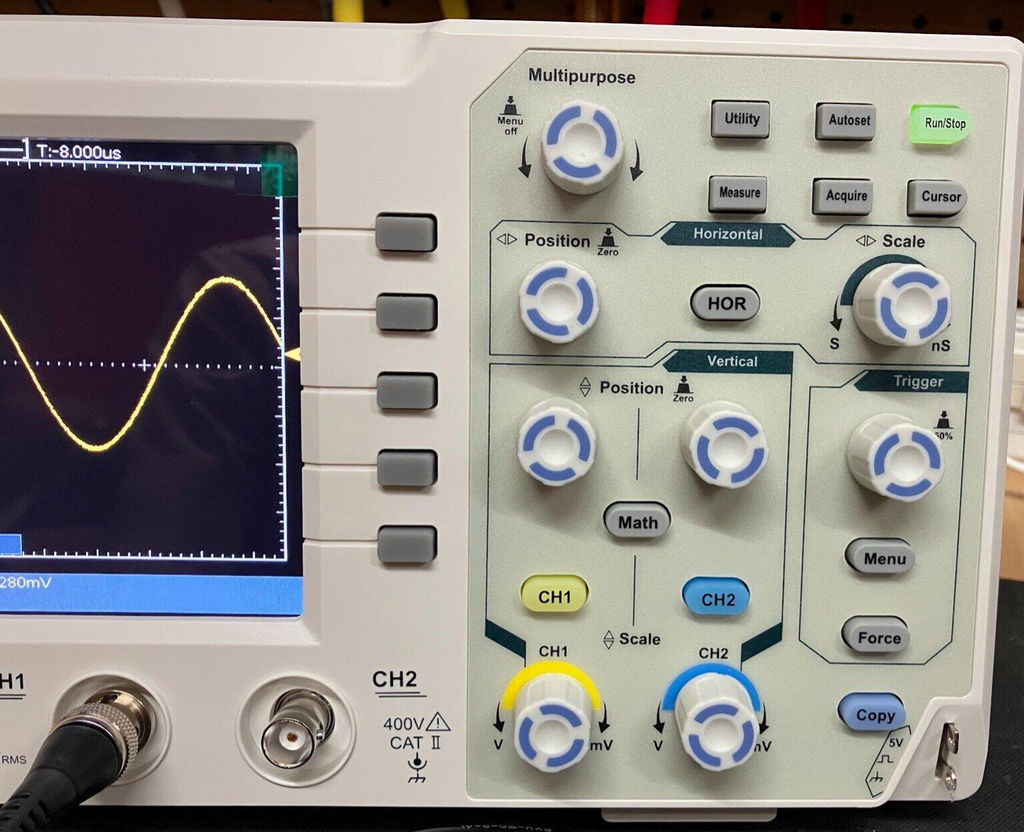
Main Parts of a Handheld Oscilloscope
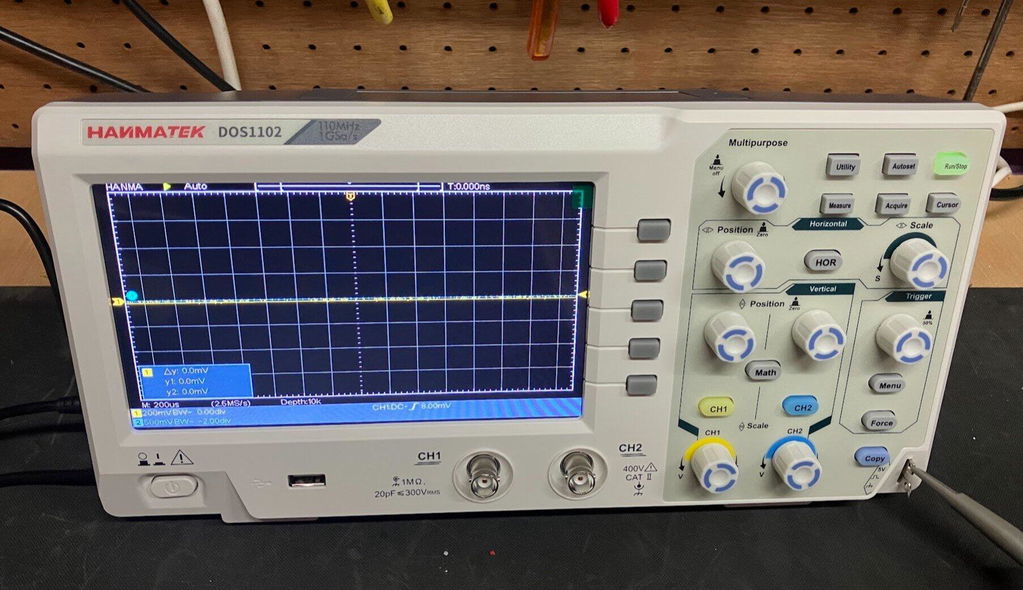
Display Screen
The screen displays electrical signals as waveforms.
Probe
The probe connects the oscilloscope to the test signal.
Control Buttons
Buttons allow you to adjust voltage scale, time base, and trigger settings.
Input Channels
Most handheld oscilloscopes offer 2-channel input for comparing signals.
How to Use a Handheld Oscilloscope (Step-by-Step)
Ensure the battery is charged and the probe is connected properly.
Attach the probe tip to the signal point and connect the ground clip to circuit ground.
Use the V/div setting to scale the signal so it fits on the screen.
Adjust the Time/div setting to display the signal waveform clearly.
Set edge trigger mode to stabilize the waveform.
Observe amplitude, frequency, and signal noise.
Common Signal Measurements
Voltage
Measures the signal's maximum voltage level.
Frequency
Shows how many cycles occur per second.
Amplitude
Indicates the strength of the signal.
Duty Cycle
Used mainly for digital or PWM signals.
Practical Testing Examples
Testing Power Supply Signals
Check for ripple and noise in power circuits.
Automotive Sensor Signals
Observe waveform outputs from vehicle sensors.
PWM Signal Testing
PWM signals are widely used in motor control and embedded systems.
Common Handheld Oscilloscope Mistakes
Incorrect Probe Ground
This can cause waveform distortion.
Wrong Voltage Scale
The signal may appear too small or clipped.
Trigger Settings Incorrect
The waveform will appear unstable.
Recommended HANMATEK Handheld Oscilloscopes


Handheld Oscilloscope FAQs
Is a handheld oscilloscope accurate?
Yes. Modern handheld oscilloscopes provide reliable signal measurement for most field applications.
Can beginners use a handheld oscilloscope?
Yes. Handheld oscilloscopes are often easier to use than traditional lab oscilloscopes.
What bandwidth do I need?
Most users require 50MHz – 100MHz bandwidth for general electronics testing.
Explore HANMATEK Handheld Oscilloscopes
Discover portable oscilloscopes designed for field testing, automotive diagnostics, and electronics troubleshooting.
View Handheld Oscilloscopes