
Free Returns Guarantee
Free & Easy Returns
Free & Easy Returns

Choosing the best oscilloscope for beginners makes all the difference. Starting your electronics journey? A good entry-level digital storage oscilloscope lets you visualize signals, spot circuit issues quickly, and build a solid understanding of how waveforms behave—without overwhelming complexity or high cost.
For hobbyists and learners, the focus should be on tools that are intuitive, reliable, and budget-friendly rather than packed with pro-level features you'll rarely use at first.
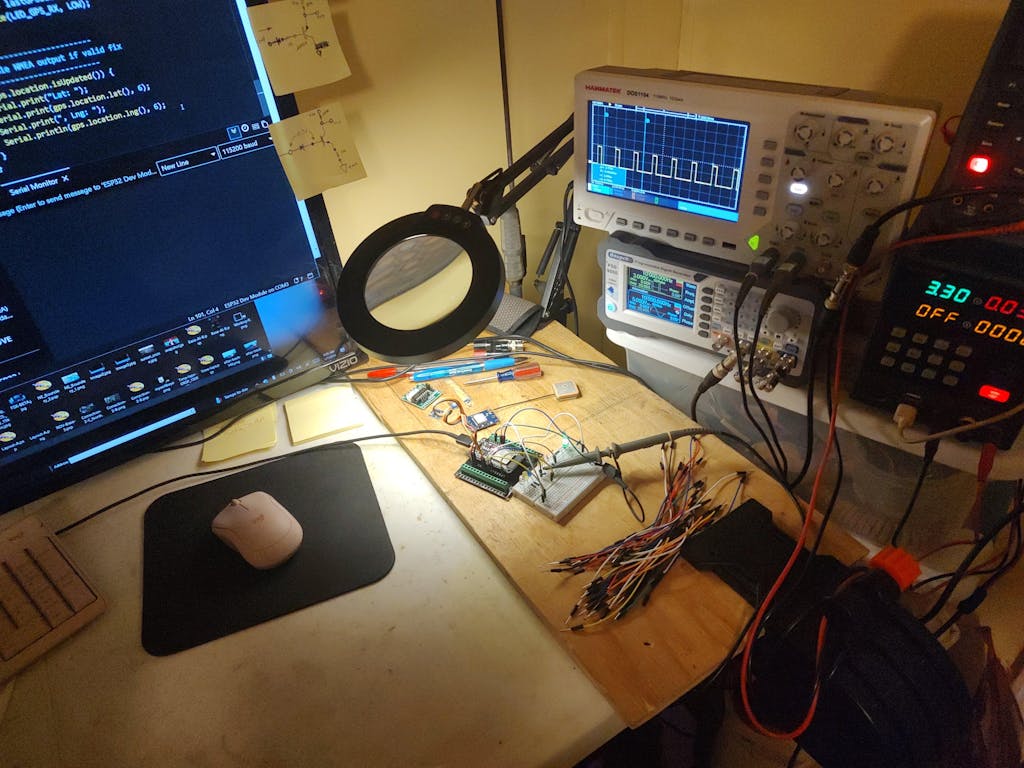
Learning electronics becomes much easier with the best oscilloscope for beginners. A well-designed digital storage oscilloscope helps visualize signals, understand waveform behavior, and troubleshoot circuits efficiently. Instead of guessing why an LED flickers oddly or why your Arduino sketch isn't responding as expected, you can see the actual voltage changes over time—turning abstract concepts into clear, visual reality.
Many newcomers start with simple projects like blinking LEDs, sensor readings, or basic audio circuits. A beginner-friendly scope accelerates learning by providing immediate feedback and helping debug problems effectively.
A good oscilloscope for hobbyist projects should offer:
Most beginners start with a 2 channel oscilloscope, which is enough for common electronics work—like comparing input vs. output signals or monitoring two points in a circuit simultaneously.

Look for these balanced specs in a best cheap oscilloscope for starters:
These features balance performance and affordability, making learning enjoyable rather than frustrating.
Key Insight 1: Accessibility for New UsersEntry-level digital storage oscilloscopes with intuitive interfaces and auto-setup functions significantly reduce the learning curve for beginners. User reviews and hands-on tests of budget models like the Hanmatek DOS1102 show that features such as one-button autoset and clear on-screen menus allow newcomers to capture and analyze basic waveforms within minutes, compared to hours of trial-and-error with more complex or poorly documented instruments.
Key Insight 2: Reliable Performance in Hobby Applications110 MHz bandwidth 2-channel benchtop oscilloscopes deliver accurate and stable measurements for typical hobbyist signals up to tens of MHz. Independent community evaluations (e.g., EEVblog forums and YouTube reviews) confirm that models in this class achieve rise times around 2.8–3.5 ns (effective bandwidth ~100–125 MHz) with minimal distortion on square waves and pulses common in Arduino, sensor, and audio projects.
Key Insight 3: Value in Budget-Friendly DesignsAffordable benchtop digital storage oscilloscopes provide professional-grade accuracy and usability at entry-level prices, making them highly recommended for sustained hobby use. Real-world feedback from hobbyist communities highlights 30–50% higher satisfaction with compact, feature-rich units under $200 compared to ultra-cheap handheld alternatives, due to larger displays, deeper memory, and better long-term reliability for repeated learning sessions.
According to Fortune Business Insights' Oscilloscope Market analysis (2026 data), the benchtop segment holds a dominant 40.02% market share, reflecting strong preference among educational users, hobbyists, and entry-level labs for instruments offering superior display quality, stability, and measurement depth over purely portable options.
A popular choice among learners is the Hanmatek DOS1102 110MHz digital storage oscilloscope—a compact, 2-channel benchtop model praised for its ease of use and solid performance.
👉 Hanmatek DOS1102 – 110MHz 2-Channel Oscilloscope
Why beginners choose it:
It is widely considered one of the best cheap oscilloscope options for electronics learning, with positive mentions in hobbyist reviews for reliable everyday use.
An oscilloscope for hobbyist use is perfect for:
A digital storage oscilloscope allows waveform comparison, precise signal measurement, and easy saving for later review—ideal for experimenting and documenting your builds.
You may need a higher-performance or 4 channel oscilloscope when working with:
For most beginners and hobbyists, though, a solid 2-channel model like the DOS1102 covers 90% of needs and serves as an excellent foundation.
The best oscilloscope for beginners should be:
For most learners, a compact digital storage oscilloscope like the Hanmatek DOS1102 is the ideal starting point—offering professional features at a hobbyist-friendly price while earning strong praise in community reviews for real-world performance.
Ready to start visualizing signals? Check out the Hanmatek DOS1102 today and take your electronics projects to the next level. Happy tinkering!
{"one"=>"Select 2 or 3 items to compare", "other"=>"{{ count }} of 3 items selected"}



Leave a comment