
Free Returns Guarantee
Free & Easy Returns
Free & Easy Returns

In electronics testing and troubleshooting, accurately capturing and analyzing high-frequency signals is essential. Hanmatek offers a range of oscilloscopes—from portable field tools to lab-grade instruments—perfect for various applications. This guide explains how to use Hanmatek oscilloscopes for high-frequency signal detection and clarifies their role (and limitations) in sound source localization.
The Hanmatek HO11 is a compact handheld digital oscilloscope designed for fast, on-site measurements. Its key specifications include:
| Parameter | Specification |
|---|---|
| Bandwidth | 10 MHz |
| Sampling Rate | 500 MSa/s |
| Channels | Single-channel |
| Input Interface | BNC (standard probe compatible) |
| Key Functions | Waveform display, frequency, duty cycle |

The HO11 excels at capturing electrical waveforms up to 10 MHz. Connect a probe to visualize voltage changes, frequency, and timing in real time—ideal for power ripple, switching signals, or sensor outputs.
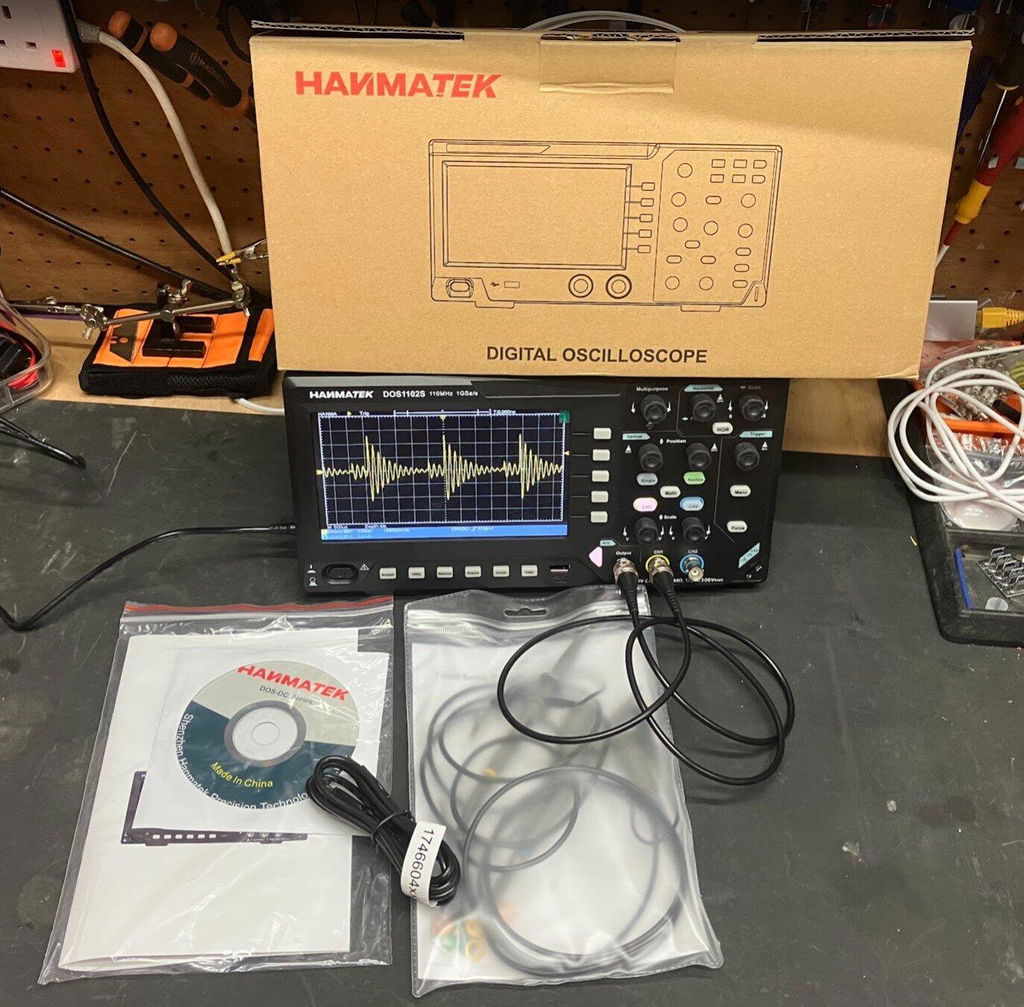
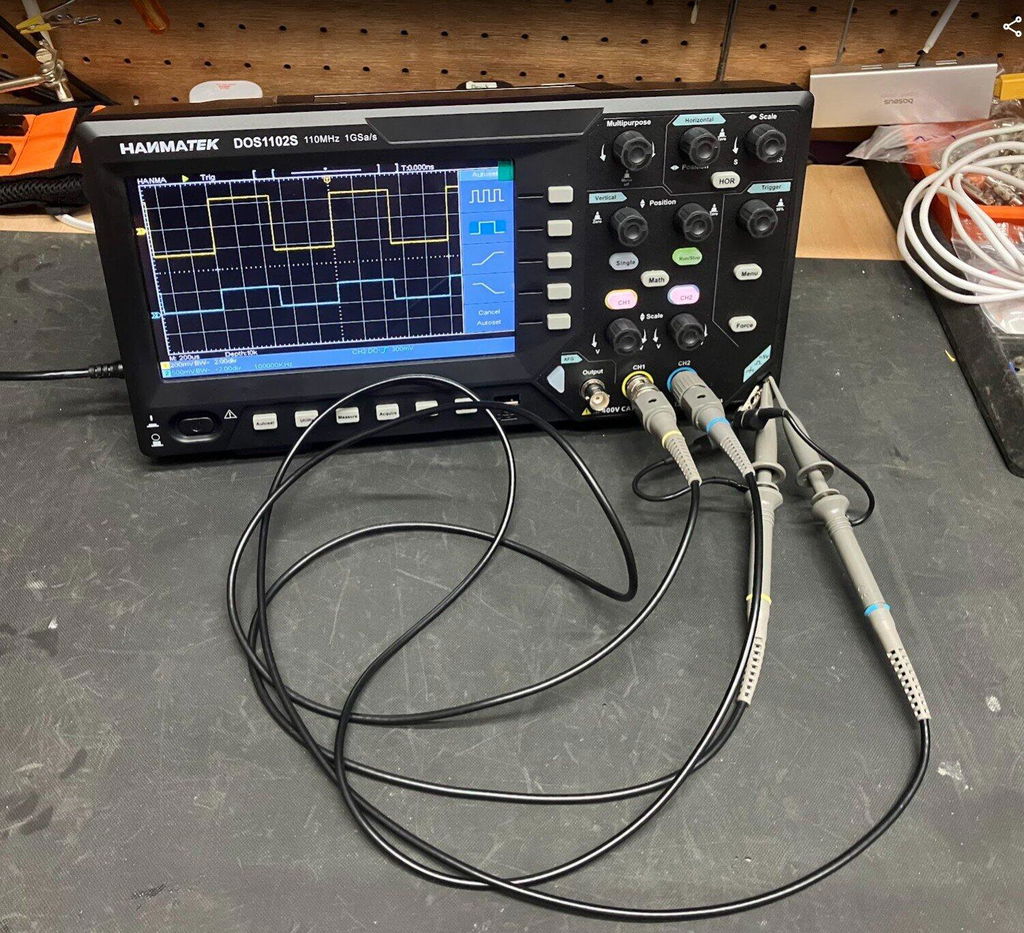
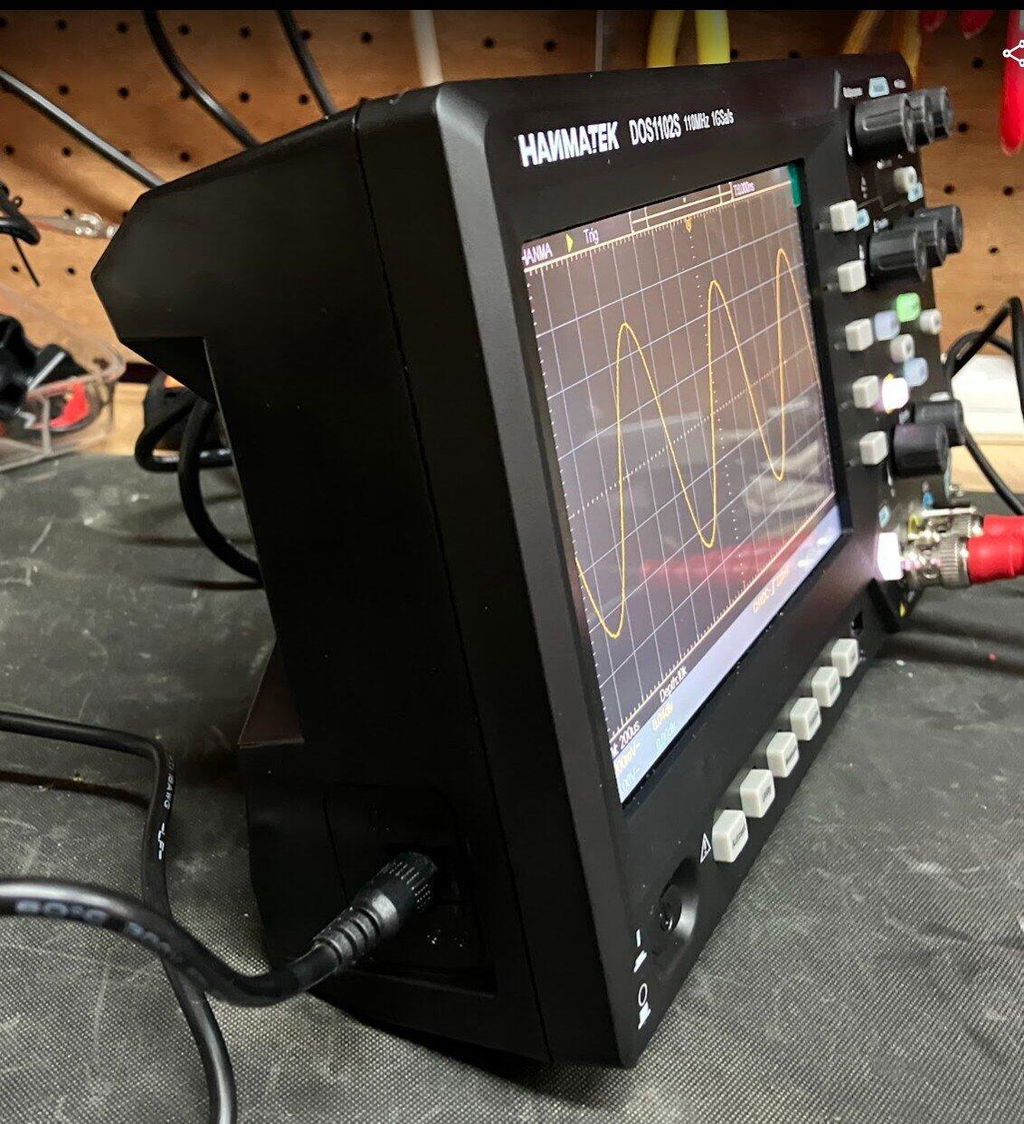
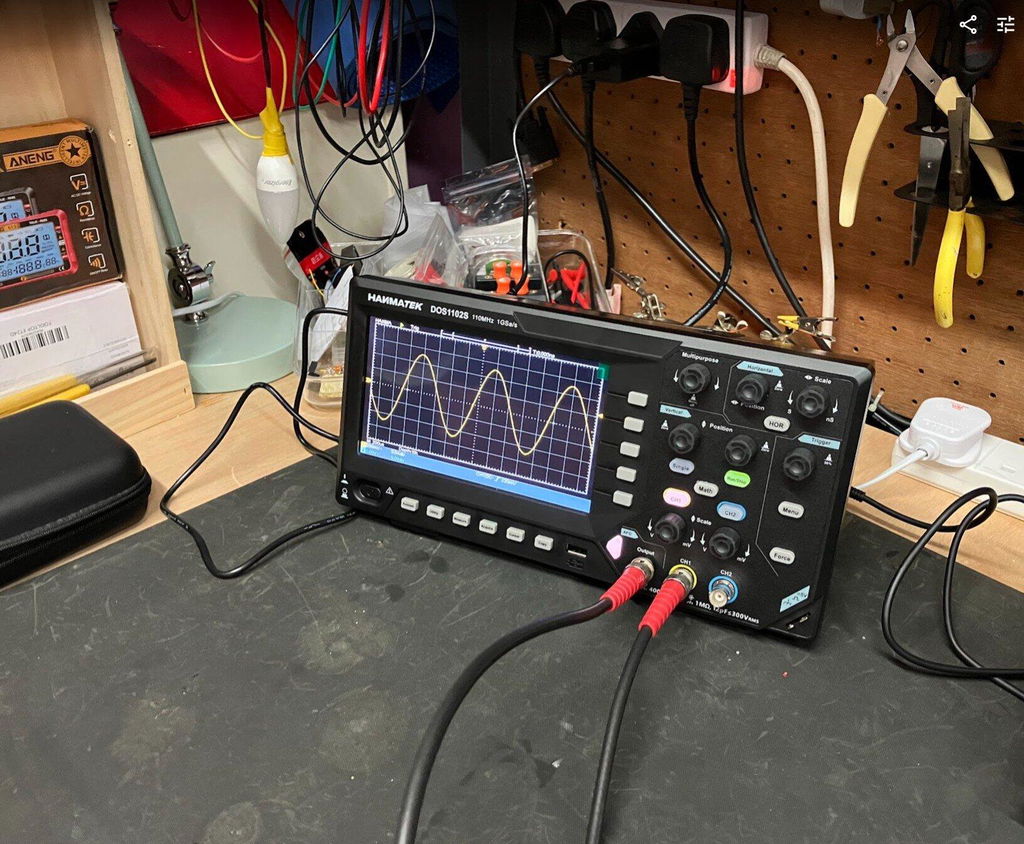
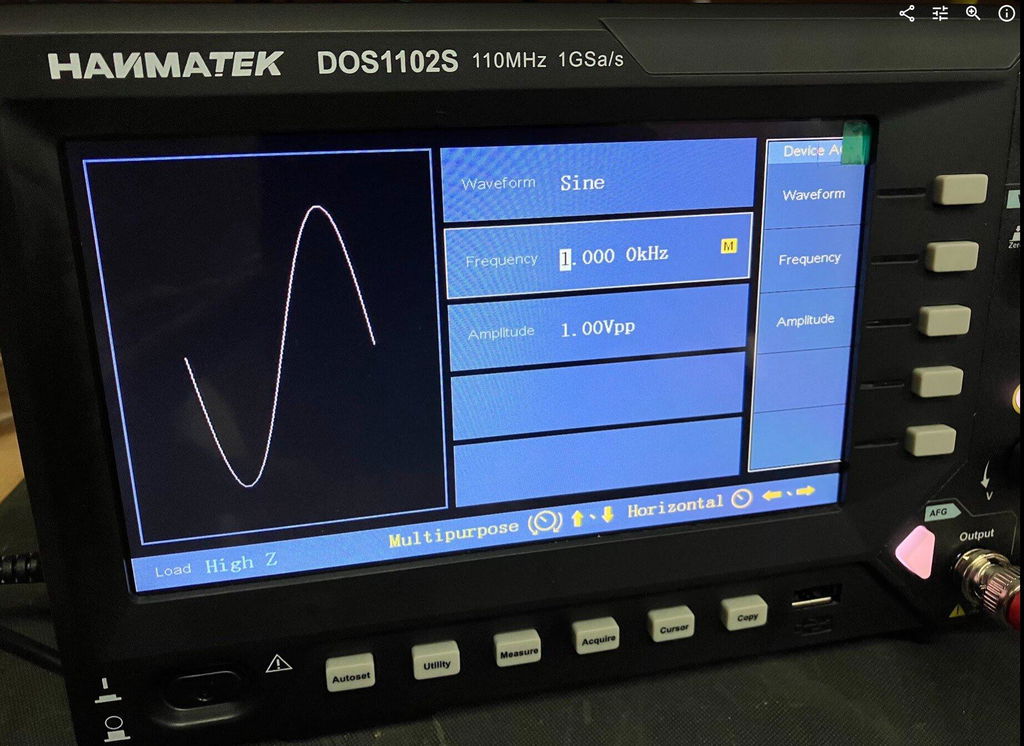
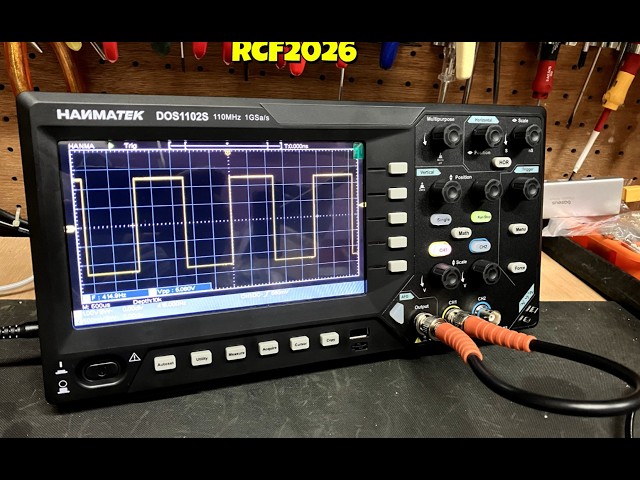
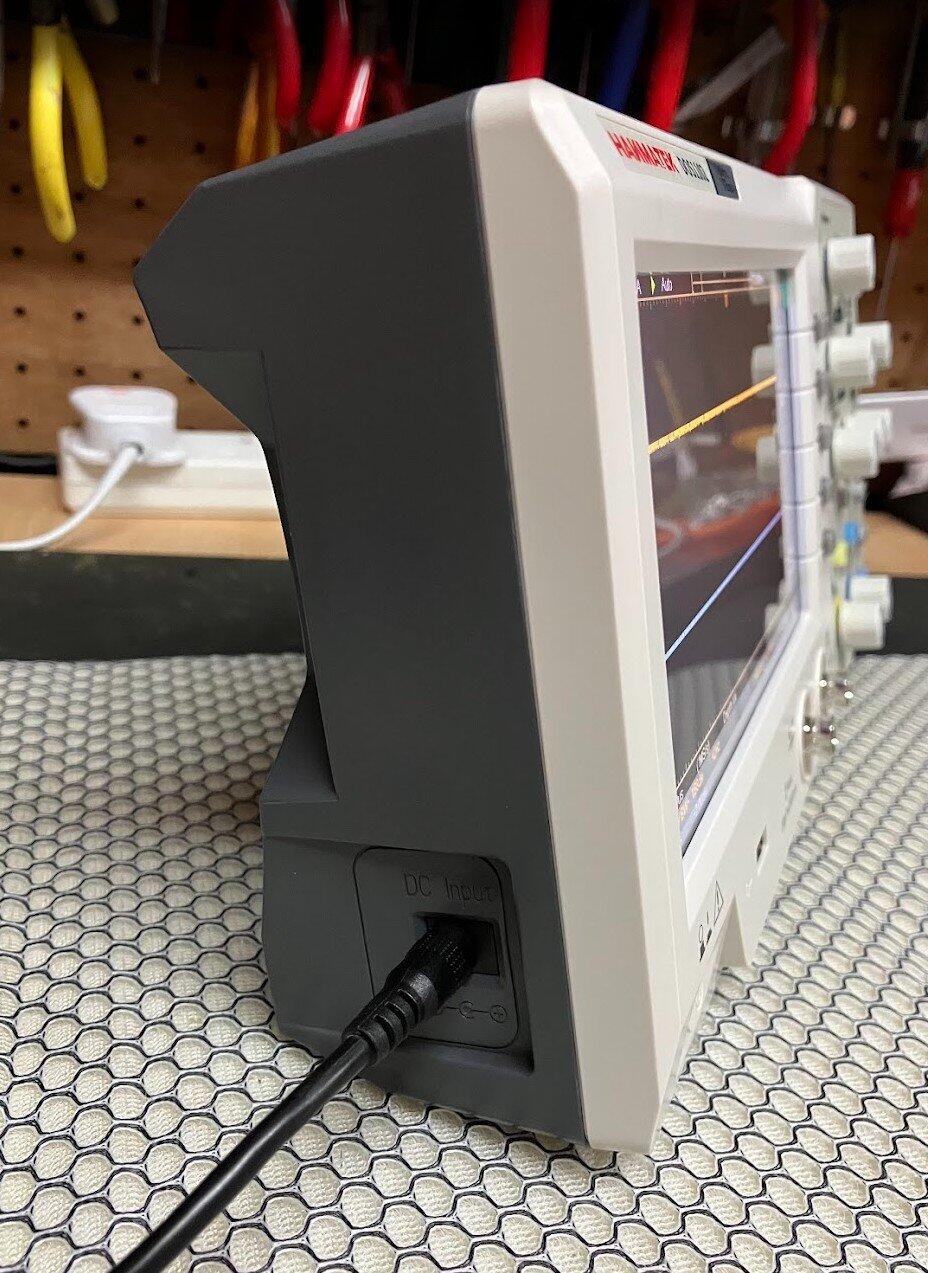
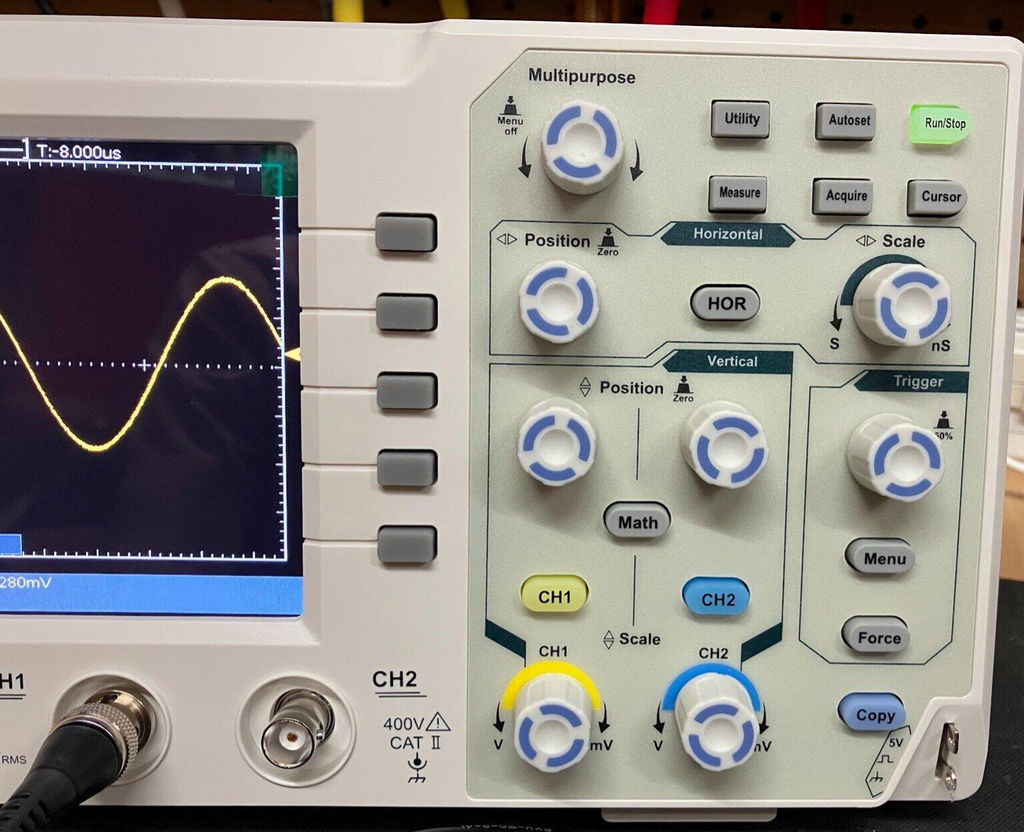
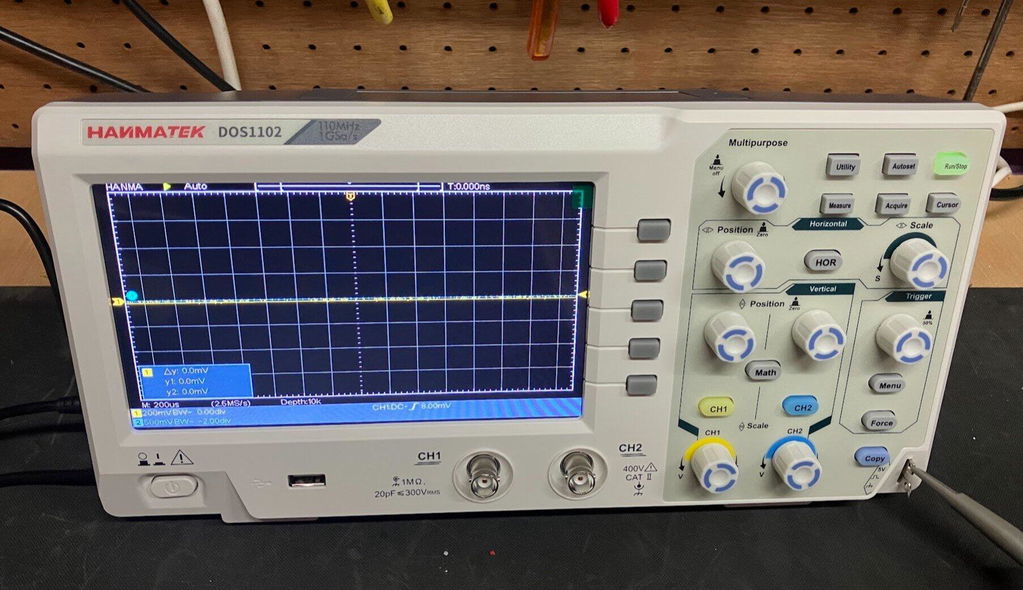
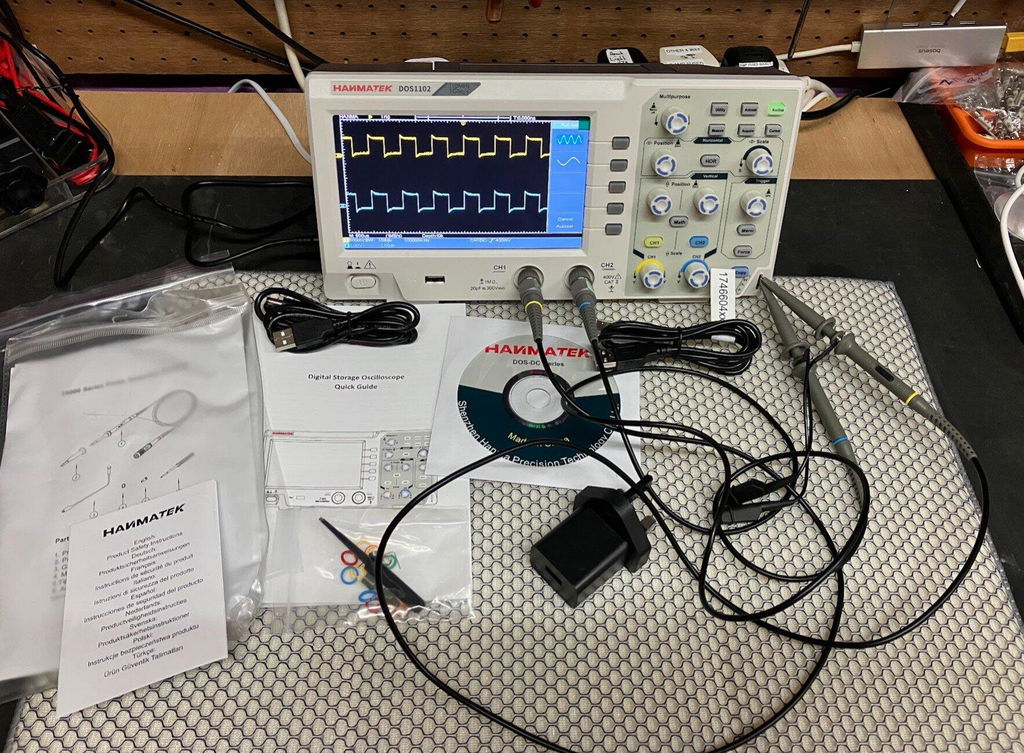
For signals beyond 10 MHz, upgrade to the Hanmatek DOS1102S benchtop digital oscilloscope:

With FFT mode, you can instantly view frequency components—perfect for R&D, repair, and education.
Can an oscilloscope locate a high-frequency sound source? No. Here’s why:
| Feature | Supported? | Explanation |
|---|---|---|
| Electrical waveform display | ✅ | Core function |
| Frequency measurement | ✅ | Via FFT |
| Direct sound input | ❌ | No built-in microphone |
| Sound source direction | ❌ | Cannot calculate phase/time differences |
Sound localization requires multiple microphones to detect phase or intensity differences across positions. Oscilloscopes process voltage over time, not spatial acoustics.

| Goal | Recommended Solution |
|---|---|
| Detect high-frequency sound | Ultrasonic sensor + HO11 / DOS1102S |
| Visualize sound waveform | Microphone preamp + Oscilloscope FFT |
| Pinpoint sound source location | Acoustic camera or microphone array (beamforming) |
| Model | Bandwidth | Channels | Portability | Best For |
|---|---|---|---|---|
| HO11 | 10 MHz | 1 | High | Field diagnostics |
| DOS1102S | 110 MHz | 2 | Medium | Lab, R&D, education |
Hanmatek oscilloscopes are electrical signal experts—not acoustic locators. Match your tool to the task:
Download All Manuals:
Visit Hanmatek Manuals Center →
Yes — but only after converting the sound into an electrical signal first. Neither model has a built-in microphone, so you need an external ultrasonic transducer: Cheap 40 kHz ultrasonic receiver module (~$3 on AliExpress/Amazon) + simple 9 V preamp → plug into HO11 BNC MEMS ultrasonic microphone (e.g., Knowles SPH0641LU4H) → feed into DOS1102S Real-world result: The HO11 cleanly shows 40 kHz square waves from plug-in pest repellers, while the DOS1102S with FFT instantly displays the exact carrier frequency and modulation sidebands up to 110 MHz. Thousands of makers on EEVblog and Reddit confirm this setup works perfectly for verifying whether cheap ultrasonic devices are actually transmitting anything at all.
Absolutely — 1 GSa/s is more than enough for accurate capture up to the full 110 MHz analog bandwidth (Nyquist is satisfied). 2025 user tests show the DOS1102S displays clean 2.4 GHz Wi-Fi beacon envelopes when using a simple near-field H-field probe or a 50 Ω-terminated wire antenna connected via BNC. You’ll see the 1 ms burst packets and even decode packet rate in FFT mode. For true 2.4–5 GHz carrier visualization you’d need a down-converter or mixer, but for modulation analysis, envelope detection, or interference hunting up to 110 MHz the DOS1102S is excellent and costs 1/5th of a Rigol DHO914.
No — not even theoretically with any normal oscilloscope (Hanmatek included). Localization requires measuring time-of-arrival differences between multiple microphones placed several cm/meters apart. An oscilloscope only shows voltage vs. time on its channels; it has no way to calculate the physical distance or angle from those time differences. Even if you connect two microphones to CH1 and CH2 of the DOS1102S, you would only see two waveforms — you still need external software or hardware (beamforming array, cross-correlation engine, or an actual acoustic camera) to turn the phase shift into a direction. Bottom line: Hanmatek scopes are fantastic for verifying that a high-frequency sound exists and measuring its exact frequency/shape, but they cannot tell you “the bat is 30° to the left.” Quick decision cheat-sheet (2025): Just want to prove an ultrasonic device is working → HO11 + $3 receiver module Need spectrum analysis or modulation details → DOS1102S with FFT Need to locate where the sound is coming from → buy/rent an acoustic camera or build a microphone array + Raspberry Pi Grab the right Hanmatek tool for the electrical part and you’ll never be guessing again.
{"one"=>"Seleccione 2 o 3 artículos para comparar", "other"=>"{{ count }} de 3 artículos seleccionados"}
Seleccione el primer artículo para comparar
Seleccione el segundo artículo para comparar
Seleccione el tercer elemento para comparar



Dejar un comentario