
Garantie de retour gratuit
Free & Easy Returns
Free & Easy Returns

In this guide, we’ll cover the most common oscilloscope mistakes new users make and show how the HANMATEK HO102S 100MHz handheld oscilloscope makes learning easier and more reliable.
Starting with an oscilloscope can be exciting, but beginners often make the same frustrating mistakes that waste time and lead to incorrect measurements.
Many measurement errors stem from incorrect probe settings (1X vs 10X) or poor grounding. These basic issues can introduce significant noise, distortion, or completely incorrect voltage readings. Developing good probing habits early prevents the majority of beginner frustrations.
Unstable or off-screen waveforms are usually caused by incorrect timebase, voltage scale, or trigger settings. Modern handheld oscilloscopes with a reliable Auto Setup function dramatically reduce the learning curve by instantly providing a stable, usable waveform.
A multifunction instrument that combines an oscilloscope, multimeter, and signal generator helps beginners cross-check measurements and practice with known signals more easily. This integrated approach builds confidence faster than using separate devices.
Mistake: Leaving the probe on 1X when it should be 10X (or vice versa). Result: Inaccurate voltage readings or overloaded input.
Fix: Always match the probe setting on the scope with the physical switch on the probe. The HO102S makes this easy with clear on-screen indicators.
Mistake: Using a long ground lead or forgetting to connect the ground clip. Result: Noisy, unstable, or completely wrong waveforms.
Fix: Keep ground leads as short as possible and always connect the ground clip first. The compact design of the HO102S encourages good probing habits in the field.
Mistake: Setting the time/div too slow or too fast, or wrong volts/div. Result: Waveform looks squished, too spread out, or off-screen.
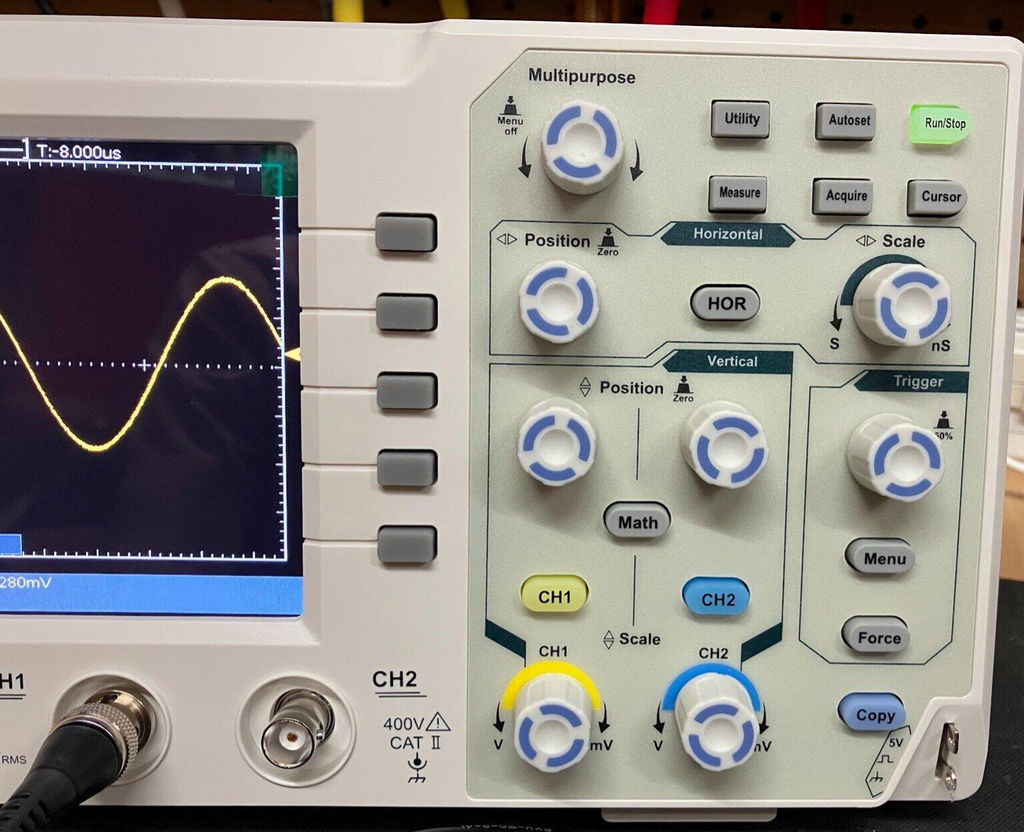
Fix: Use the Auto Setup button (available on the HO102S) when you’re unsure. It quickly gives you a good starting point.
Mistake: Leaving the trigger on Auto or wrong edge, causing the waveform to scroll or jitter. Result: Unstable, moving waveforms that are hard to analyze.
Fix: Set trigger to Edge mode on the rising or falling edge of your signal. The HO102S offers simple and effective trigger controls suitable for beginners.
Mistake: Trying to measure very high-frequency signals on a low-bandwidth scope or applying too much voltage. Result: Distorted waveforms or potential damage.
Fix: The HANMATEK HO102S with 100 MHz bandwidth is an excellent sweet spot for most student, hobby, and field work, giving you enough headroom for common signals.
Mistake: Ignoring automatic measurements, cursors, or the signal generator. Result: Doing everything manually and making calculation errors.
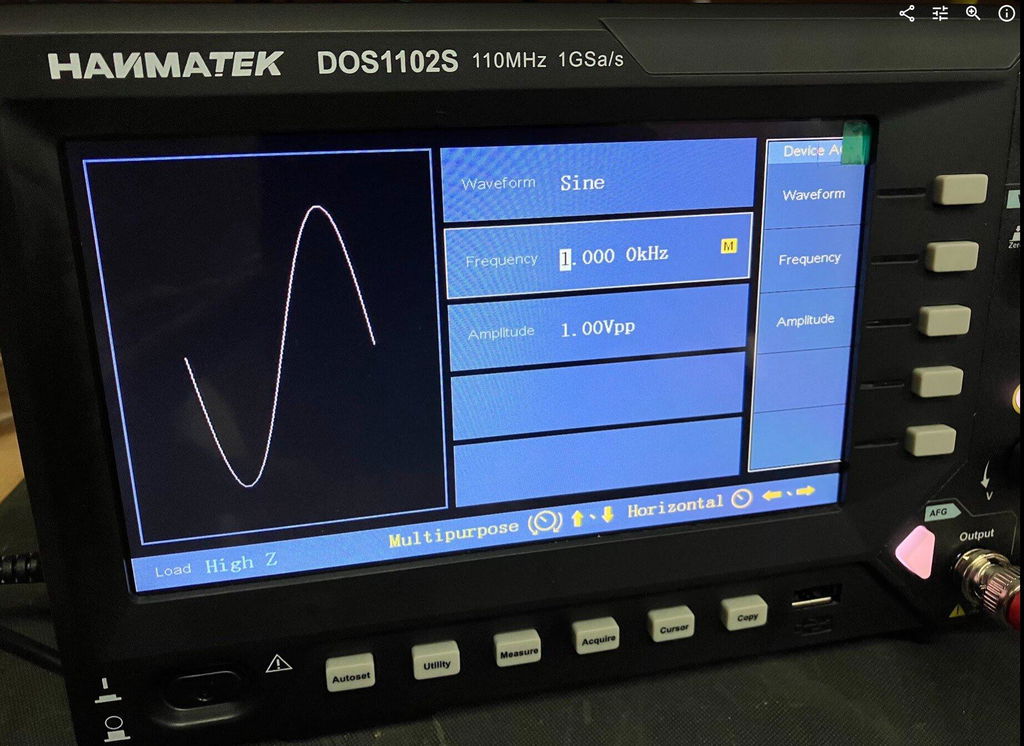
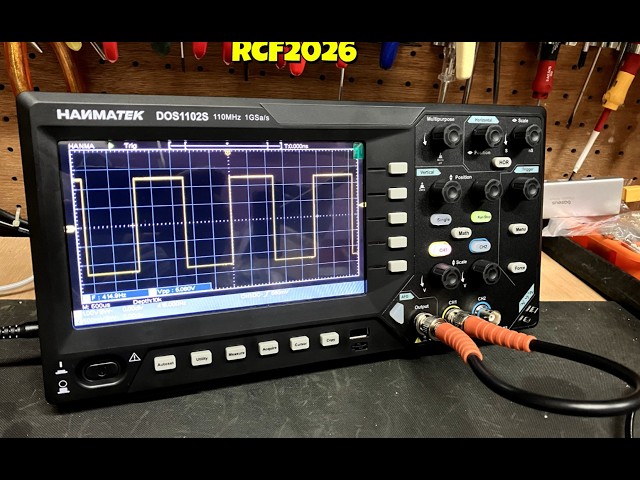
The HO102S includes a built-in signal generator and digital multimeter, helping beginners learn faster with convenient 3-in-1 functionality.
As a 100MHz handheld oscilloscope, the HO102S is particularly suitable for beginners and field users because:
Buy the HANMATEK HO102S 3-in-1 100MHz Handheld Oscilloscope

Mastering these basics will dramatically improve your experience with any oscilloscope — especially a capable portable digital oscilloscope like the HO102S.
Which one frustrated you the most? Share your stories in the comments below!
{"one"=>"Sélectionnez 2 ou 3 articles à comparer", "other"=>"{{ count }} éléments sélectionnés sur 3"}
Sélectionnez le premier élément à comparer
Sélectionnez le deuxième élément à comparer
Sélectionnez le troisième élément à comparer


Laisser un commentaire