
Garantie de retour gratuit
Free & Easy Returns
Free & Easy Returns

A digital oscilloscope (often abbreviated as DSO) is one of the most essential tools in electronics, allowing you to visualize electrical signals as waveforms on a screen. If you're new to electronics, hobbyist projects, Arduino, audio circuits, or troubleshooting power supplies, understanding what a DSO is and how it works can transform how you approach your work.
An oscilloscope is a test instrument that displays voltage signals as a two-dimensional graph, with time on the horizontal axis (X-axis) and voltage on the vertical axis (Y-axis). It shows how a signal changes over time, revealing details like amplitude, frequency, rise time, distortion, and noise that a multimeter simply can't capture.
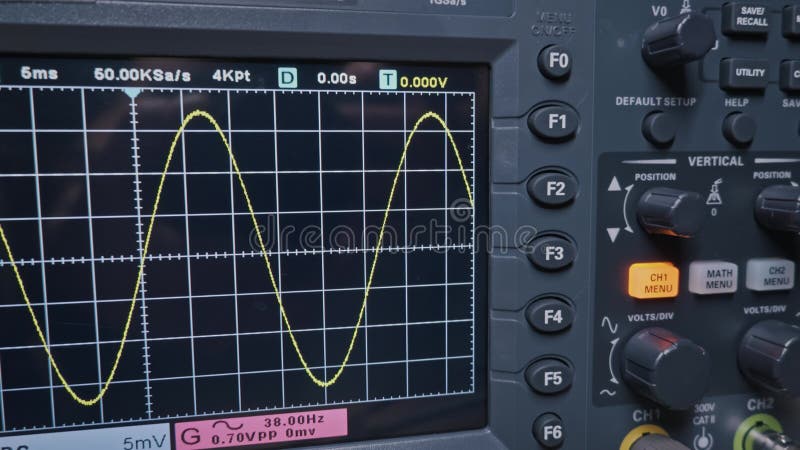
This classic sine wave display (yellow trace above) is a perfect example of what you'll see when probing an AC signal or audio output.
Traditional analog oscilloscopes use a cathode ray tube (CRT) to draw waveforms in real time with an electron beam. They excel at showing fast, continuous signals with infinite resolution in the time domain but lack storage, advanced triggering, and measurement tools. They're largely obsolete for most users today.
Digital oscilloscopes (DSOs) sample the input signal at high speed, convert it to digital data, and store it in memory for display, analysis, and even export. This enables features like waveform persistence, automatic measurements, math functions, and USB connectivity.
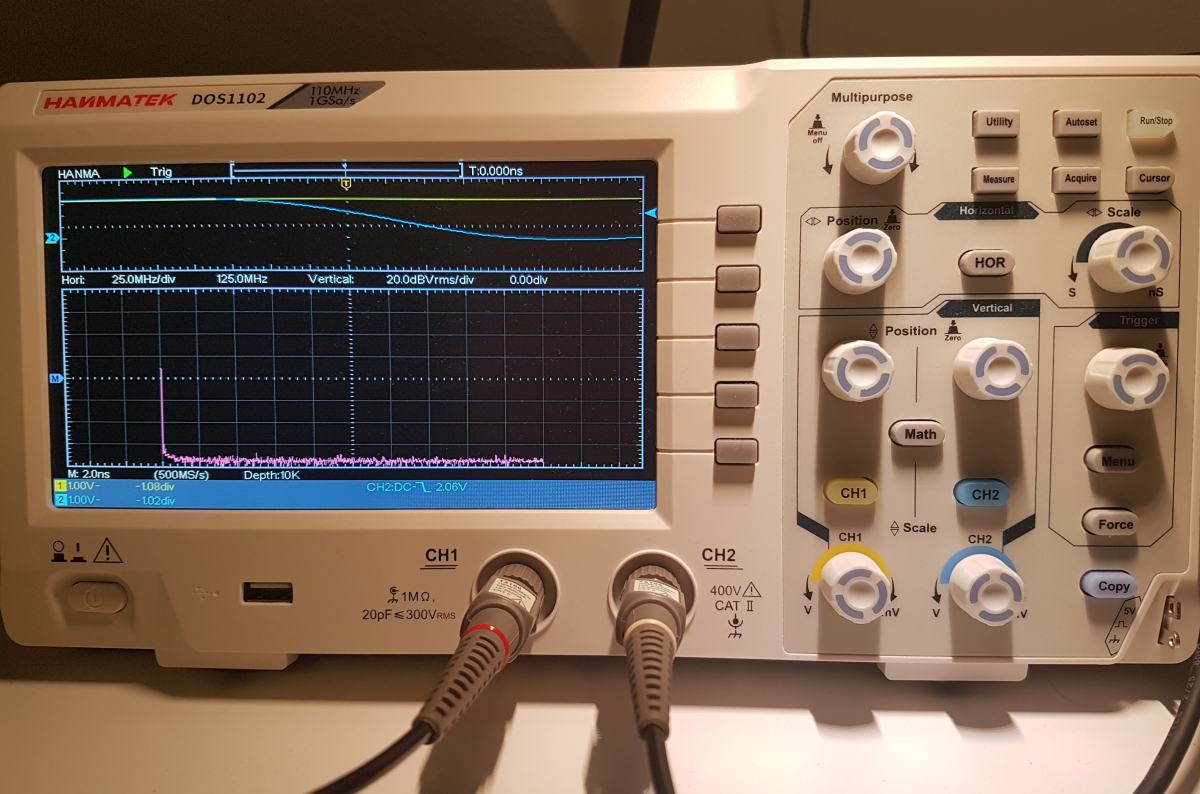
Modern DSOs (right side in comparisons) offer clearer, more versatile displays with on-screen readouts, making them far better suited for beginners and professionals alike.
When choosing a DSO, focus on these core specifications:
Other useful features include large screens, auto-setup, FFT for frequency analysis, and USB for screenshots/data transfer.
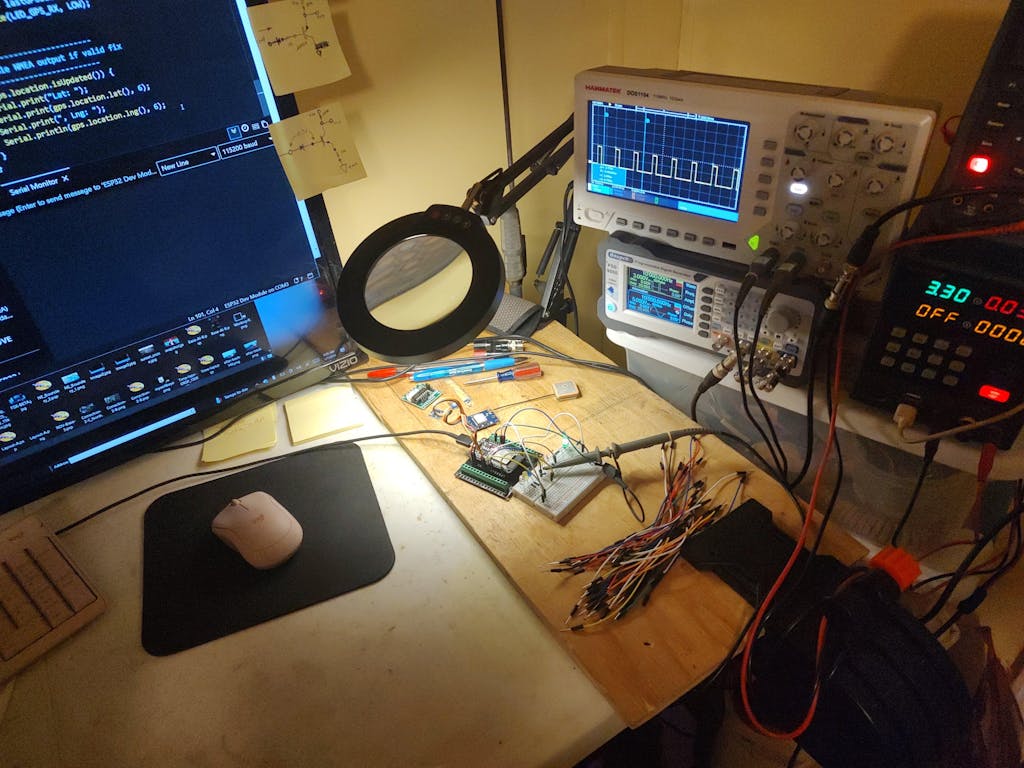
DSOs are used everywhere in electronics:
Here, a clean sine wave on a Hanmatek model shows typical performance for audio or function generator testing.
For newcomers, analog scopes are hard to find, expensive to repair, and limited in features. Digital models are more affordable than ever, easier to use (with auto-trigger and measurements), and portable. A good entry-level 100MHz DSO gives you room to grow without outgrowing it quickly.
They also include built-in help menus, cursors for precise measurements, and storage for comparing waveforms—perfect when learning.
If you're starting out, consider these beginner-friendly, budget-conscious models with solid 110MHz bandwidth:
Both deliver reliable performance for under the cost of many entry-level competitors, with positive feedback from hobbyists on ease of use and waveform clarity.
Ready to dive deeper? Check out our related guides in the Hanmatek Beginner Oscilloscope Series:
Explore more Hanmatek tools and start visualizing your signals today!
{"one"=>"Sélectionnez 2 ou 3 articles à comparer", "other"=>"{{ count }} éléments sélectionnés sur 3"}
Sélectionnez le premier élément à comparer
Sélectionnez le deuxième élément à comparer
Sélectionnez le troisième élément à comparer



Laisser un commentaire