
Kostenlose Rückgabegarantie
Free & Easy Returns
Free & Easy Returns

When shopping for an oscilloscope, one of the first specifications you'll encounter is bandwidth. Many buyers wonder whether a 110MHz oscilloscope is powerful enough for their needs and what types of signals it can accurately analyze.
If you've been searching for "what can a 110MHz oscilloscope measure" or looking for an oscilloscope bandwidth guide, this article will help you understand what bandwidth means, how it affects measurements, and why a 110MHz oscilloscope is suitable for most electronics applications.
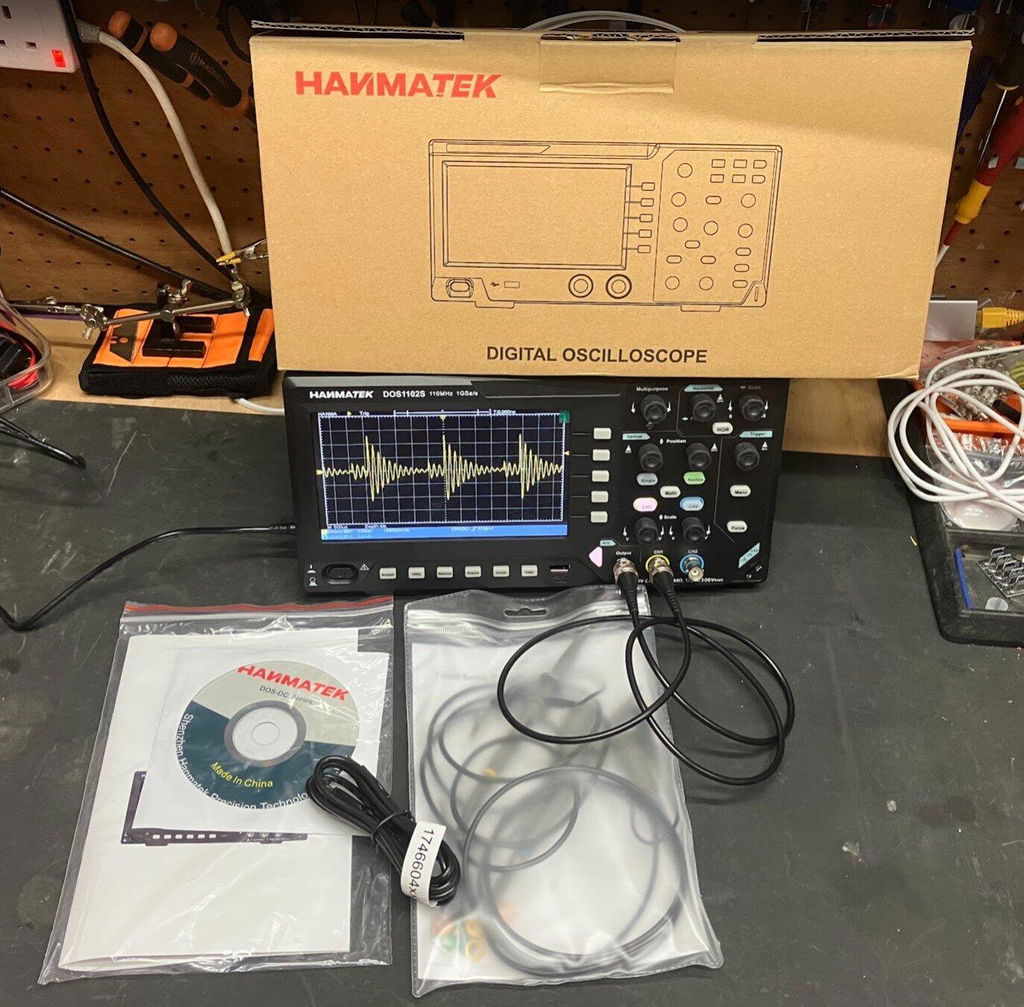
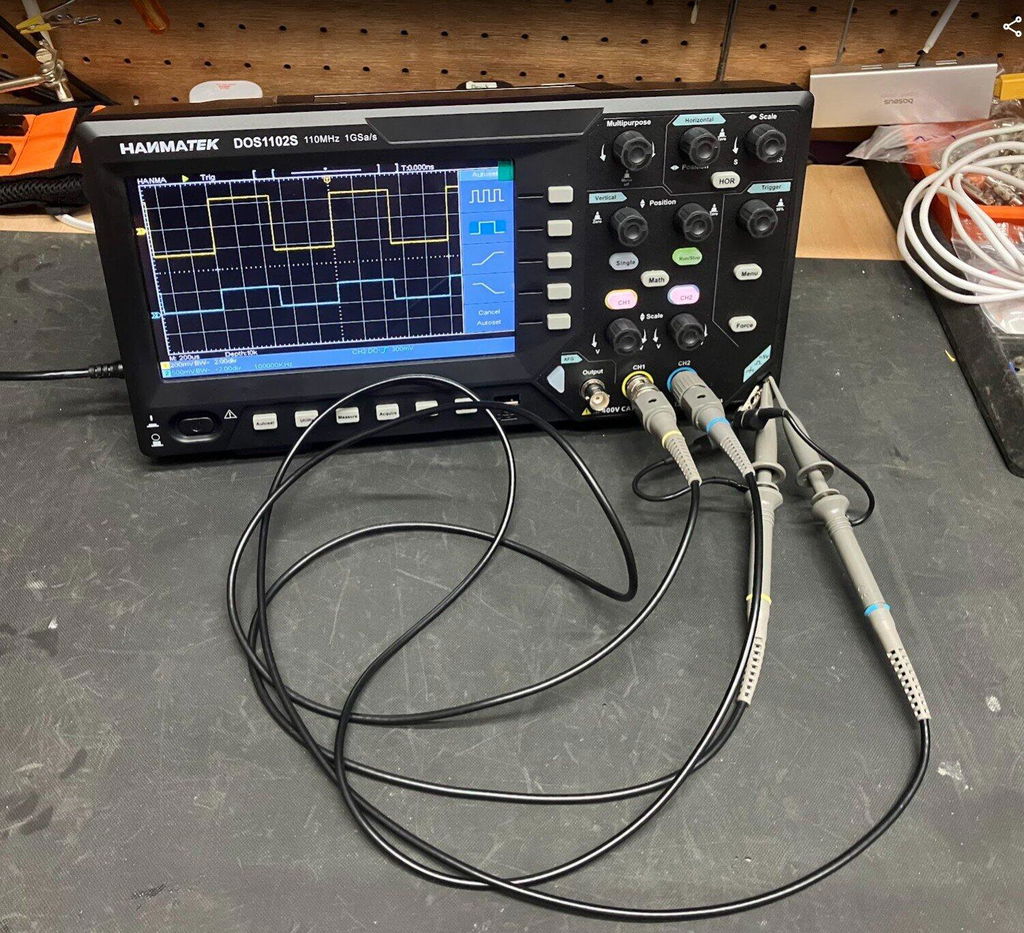
We'll also introduce the HANMATEK DOS1104, a 4-channel, 110MHz oscilloscope designed for engineers, repair technicians, students, and makers.
Bandwidth refers to the highest frequency signal an oscilloscope can accurately display and measure.
For example:
As signal frequency approaches the oscilloscope's bandwidth limit, waveform accuracy gradually decreases.
Because of this, engineers often use the 5x rule:
Choose an oscilloscope with bandwidth at least five times greater than the highest frequency component you need to measure.
This ensures accurate amplitude and waveform representation.
Conclusion: Bandwidth affects how accurately an oscilloscope reproduces waveform shape and amplitude, not simply whether a signal appears on the screen.
Data / Evidence: As measured signal frequencies approach an oscilloscope's bandwidth limit, amplitude attenuation and waveform distortion increase. For this reason, engineers often select oscilloscopes with bandwidths several times greater than the frequencies they expect to analyze.
The good news is that a 110MHz oscilloscope can handle a surprisingly wide range of electronics applications.
Let's look at some common examples.
Microcontroller development is one of the most common oscilloscope applications.
A 110MHz oscilloscope can easily analyze:
Typical measurements include:
Most of these operate well below the 110MHz bandwidth limit.
UART is widely used in embedded systems.
Common UART baud rates include:
A 110MHz oscilloscope can comfortably capture and analyze UART waveforms, timing relationships, and signal integrity issues.
I²C buses are commonly used for:
Typical I²C speeds include:
| Mode | Frequency |
|---|---|
| Standard | 100kHz |
| Fast | 400kHz |
| Fast Plus | 1MHz |
| High Speed | 3.4MHz |
These frequencies are far below 110MHz, making analysis straightforward.
SPI often runs faster than I²C.
Common SPI clock speeds include:
A 110MHz oscilloscope can accurately observe:
making it ideal for embedded debugging.
Conclusion: Most embedded communication interfaces operate comfortably within the measurement range of a 110 MHz oscilloscope.
Data / Evidence: Widely used protocols such as UART, I²C, SPI, and PWM-based control systems typically operate from kilohertz to tens of megahertz, allowing a 110 MHz oscilloscope to capture signal timing, integrity, and protocol-related behavior accurately.
Pulse Width Modulation (PWM) is widely used in:
Typical PWM frequencies range from a few hundred hertz to several hundred kilohertz.
A 110MHz oscilloscope can easily measure:
One of the most important uses of an oscilloscope is troubleshooting power electronics.
A 110MHz oscilloscope can analyze:
These measurements are essential for repair technicians and design engineers.
Audio frequencies generally range from:
A 110MHz oscilloscope exceeds these requirements by a huge margin.
Applications include:
Modern vehicles contain numerous electronic control systems.
A 110MHz oscilloscope can measure:
making it a valuable diagnostic tool for automotive technicians.
Conclusion: A 100–110 MHz oscilloscope is sufficient for the majority of repair, educational, and embedded-system applications.
Data / Evidence: Typical electronic systems—including microcontrollers, switching regulators, industrial controllers, communication buses, and automotive electronics—operate at frequencies that fall well within the measurement capabilities of a 110 MHz oscilloscope.
While 110MHz covers most electronics work, some specialized applications require higher bandwidth.
Examples include:
These applications often require oscilloscopes with bandwidths in the hundreds of megahertz or even several gigahertz.
For typical electronics work, however, these requirements are uncommon.
When following an oscilloscope bandwidth guide, it's important to remember that bandwidth is only one specification.
Other important factors include:
A higher sampling rate captures waveform details more accurately.
More channels allow simultaneous observation of multiple signals.
Advanced triggering helps isolate specific events and faults.
A clear display improves measurement efficiency.
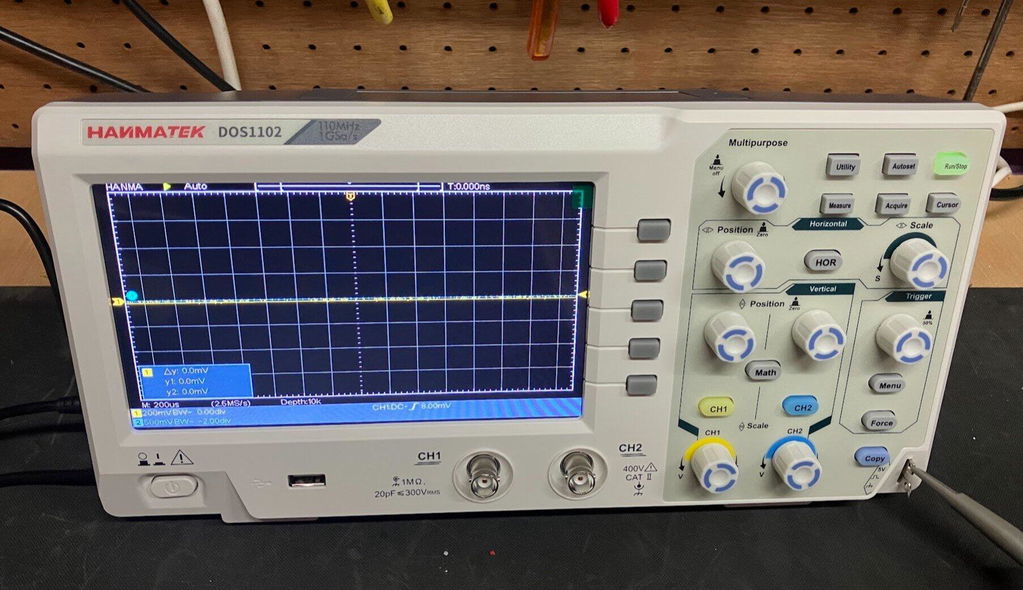
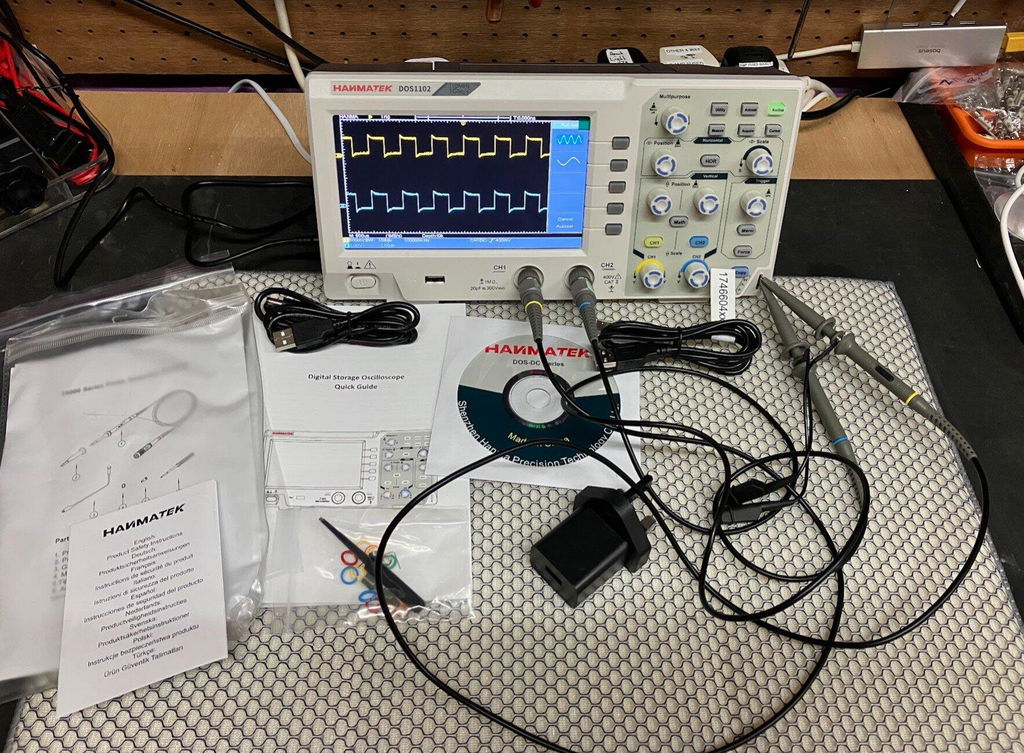
If you're looking for a practical and affordable 110MHz oscilloscope, the HANMATEK DOS1104 offers a strong combination of performance and value.
👉 HANMATEK DOS1104 Oscilloscope
https://hanmatek.com/collections/benchtop-oscilloscope/products/hanmatek-dos1104-oscilloscope-portable-4-canaux-110mhz
| Feature | Specification |
|---|---|
| Bandwidth | 110MHz |
| Channels | 4 |
| Sampling Rate | 1GS/s |
| Display | High-Resolution Color LCD |
| Applications | Repair, Embedded Systems, Education, Electronics Design |
Observe multiple signals simultaneously for faster troubleshooting.
Useful for:
Covers the majority of:
Provides accurate waveform reconstruction and improved measurement precision.
The DOS1104 delivers features commonly found in more expensive oscilloscopes while remaining accessible to hobbyists, students, and professionals.
Imagine debugging an ESP32-based project.
You may want to monitor:
The DOS1104's four channels allow all of these signals to be displayed simultaneously, making troubleshooting faster and more efficient.
If you've been asking "what can a 110MHz oscilloscope measure?", the answer is: far more than most users expect.
A 110MHz oscilloscope is capable of handling:
For the vast majority of engineers, technicians, students, and makers, 110MHz bandwidth is more than sufficient.
The HANMATEK DOS1104 enhances this capability with:
making it a versatile oscilloscope for both learning and professional use.
👉 Learn more about the HANMATEK DOS1104 here:
https://hanmatek.com/collections/benchtop-oscilloscope/products/hanmatek-dos1104-oscilloscope-portable-4-canaux-110mhz
{"one"=>"Wählen Sie 2 oder 3 Artikel zum Vergleichen aus", "other"=>"{{ count }} von 3 Elementen ausgewählt"}
Wählen Sie das erste zu vergleichende Element aus
Wählen Sie das zweite zu vergleichende Element aus
Wählen Sie das dritte Element zum Vergleichen aus


Einen Kommentar hinterlassen