Hanmatek has solidified its position as a leading brand for affordable, high-performance test and measurement equipment. By prioritizing professional-grade features at accessible price points, Hanmatek benchtop digital storage oscilloscopes (DSOs) appeal to electronics engineers, educators, lab technicians, hobbyists, and makerspaces. These compact, durable instruments combine reliable signal capture, intuitive operation, and practical enhancements, making them well-suited for R&D, circuit debugging, education, and production testing.
In 2026, the global oscilloscope market—valued at USD 2.68 billion in 2025—is projected to reach USD 5.15 billion by 2034 at a CAGR of 7.6%, driven by demand for cost-effective digital solutions in education, hobbyist, and entry-level professional applications (Fortune Business Insights Oscilloscope Market Report). Hanmatek models align perfectly with this trend, offering strong value without premium-brand markups.
Why Choose Hanmatek Benchtop Oscilloscopes?
Hanmatek stands out through consistent strengths across its lineup:
-
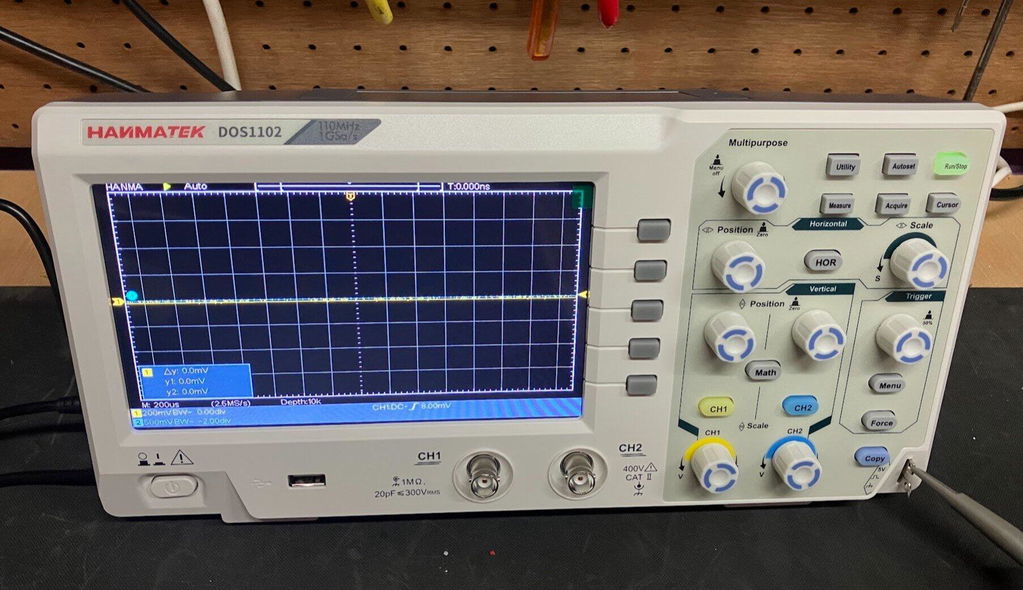
Professional Performance on a Budget — 110 MHz bandwidth with up to 1 GSa/s sampling captures accurate details for analog, digital, and mixed-signal tasks.
-
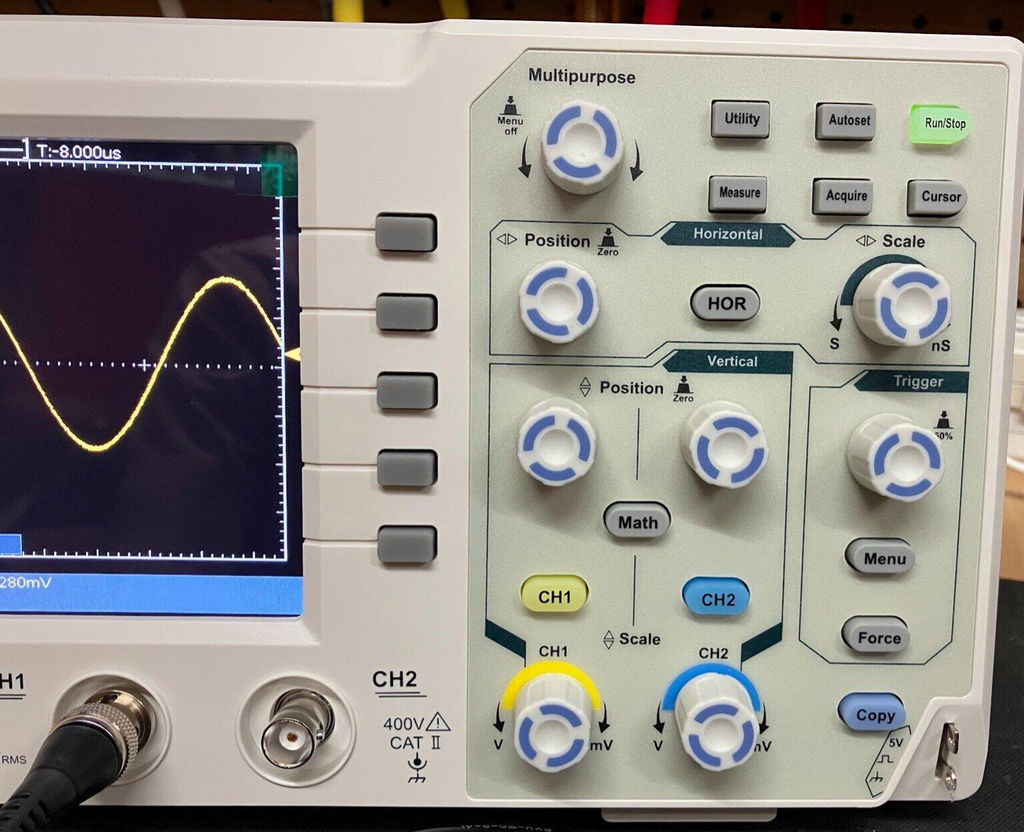
User-Friendly Design — 7-inch TFT color LCD screens, one-key Autoset, logical menus, and multi-language support ensure accessibility for beginners and efficiency for experienced users.
-
Real-World Practicality — Low power draw, quiet operation, USB connectivity for data export/PC analysis, and included probes/accessories support extended use.
-
Versatile Capabilities — From basic viewing to FFT analysis, automatic measurements, math functions, and (in select models) built-in waveform generation.
These features make Hanmatek scopes reliable for tasks like protocol bus analysis (SPI/I²C), power supply debugging, electronics education, and circuit characterization.
Model Comparison: DOS1102 vs. DOS1102S vs. DOS1104
All three flagship 110 MHz models share core specs like high sampling rates, deep memory, versatile triggering (edge, pulse, video, etc.), cursor measurements, waveform storage, and PC software compatibility. Differences focus on channels and extras:
-
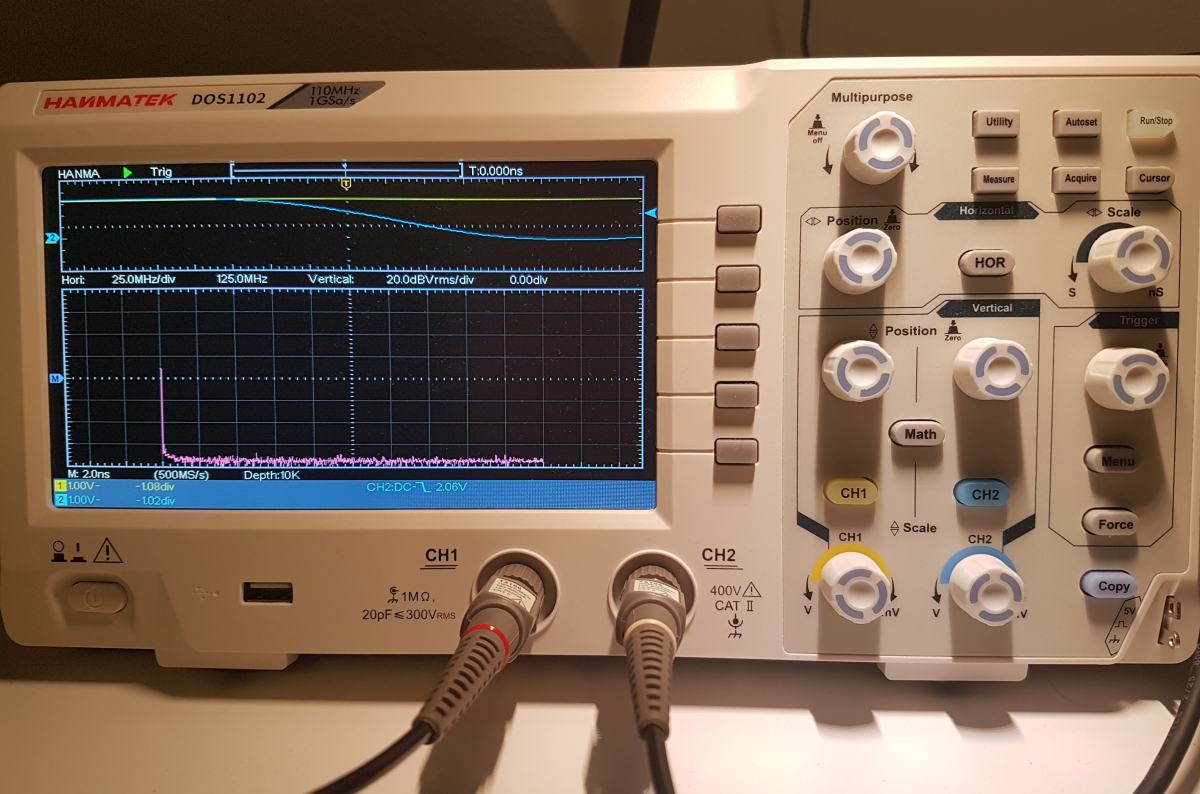
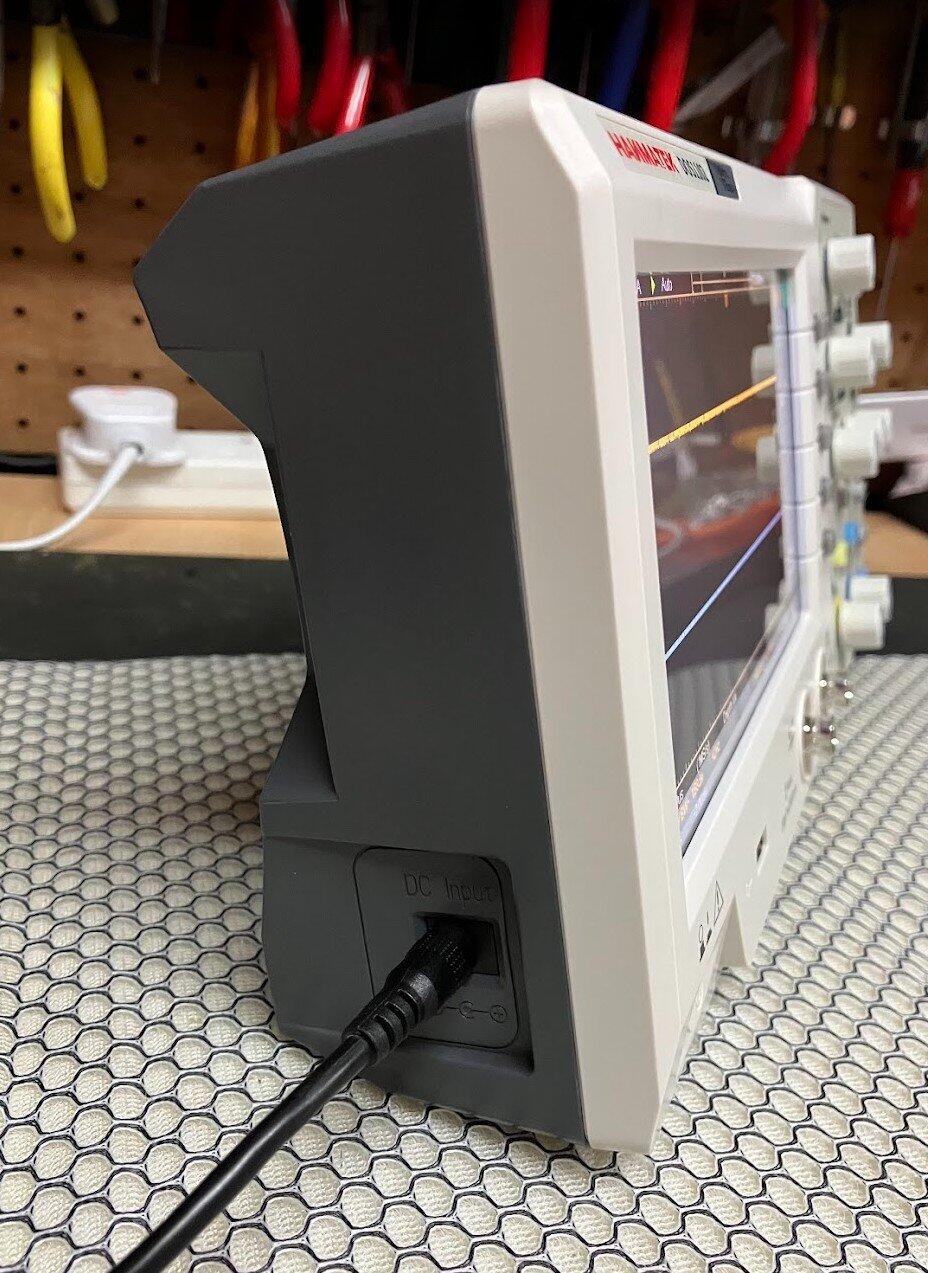
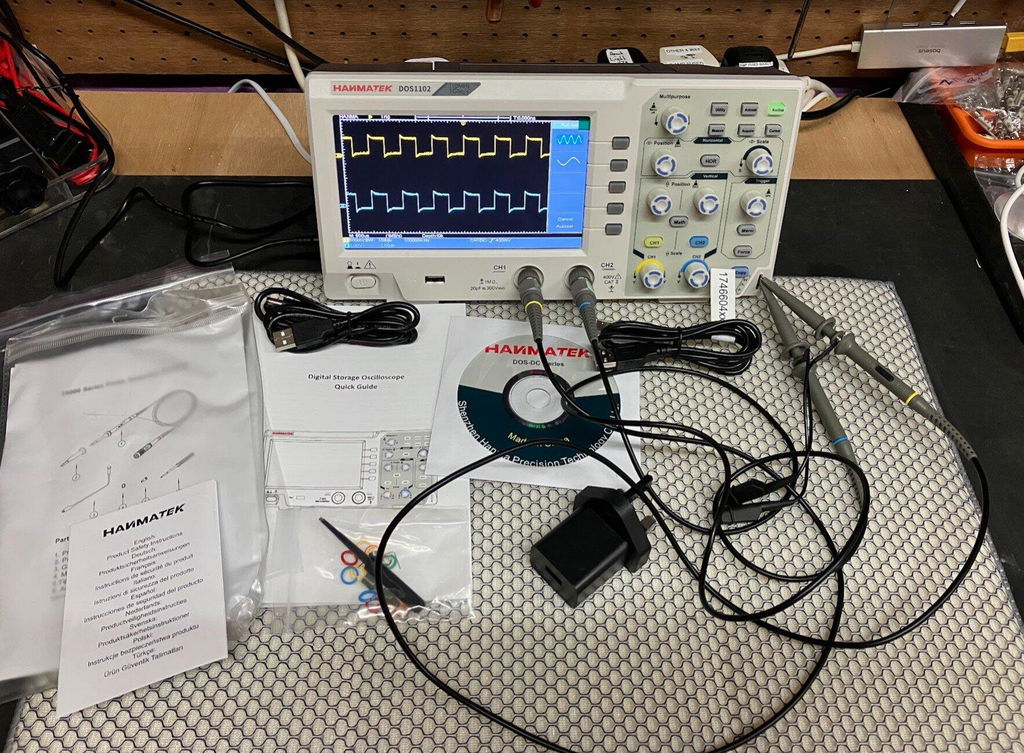
DOS1102 — The reliable entry-level 2-channel model. Ideal for general-purpose use, hobby projects, and dual-signal debugging with excellent price-to-performance.
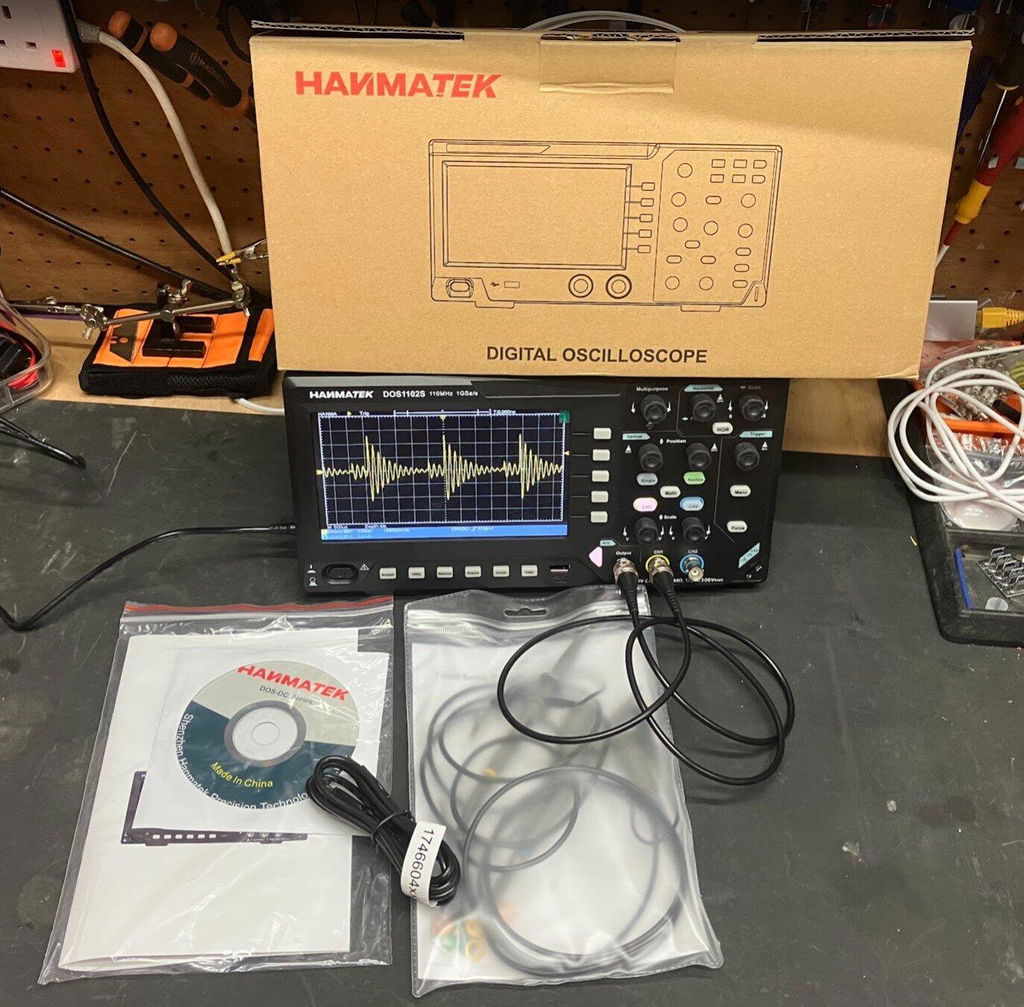
Hanmatek Oscilloscope Comparison: DOS1102, DOS1102S, DOS1104
-
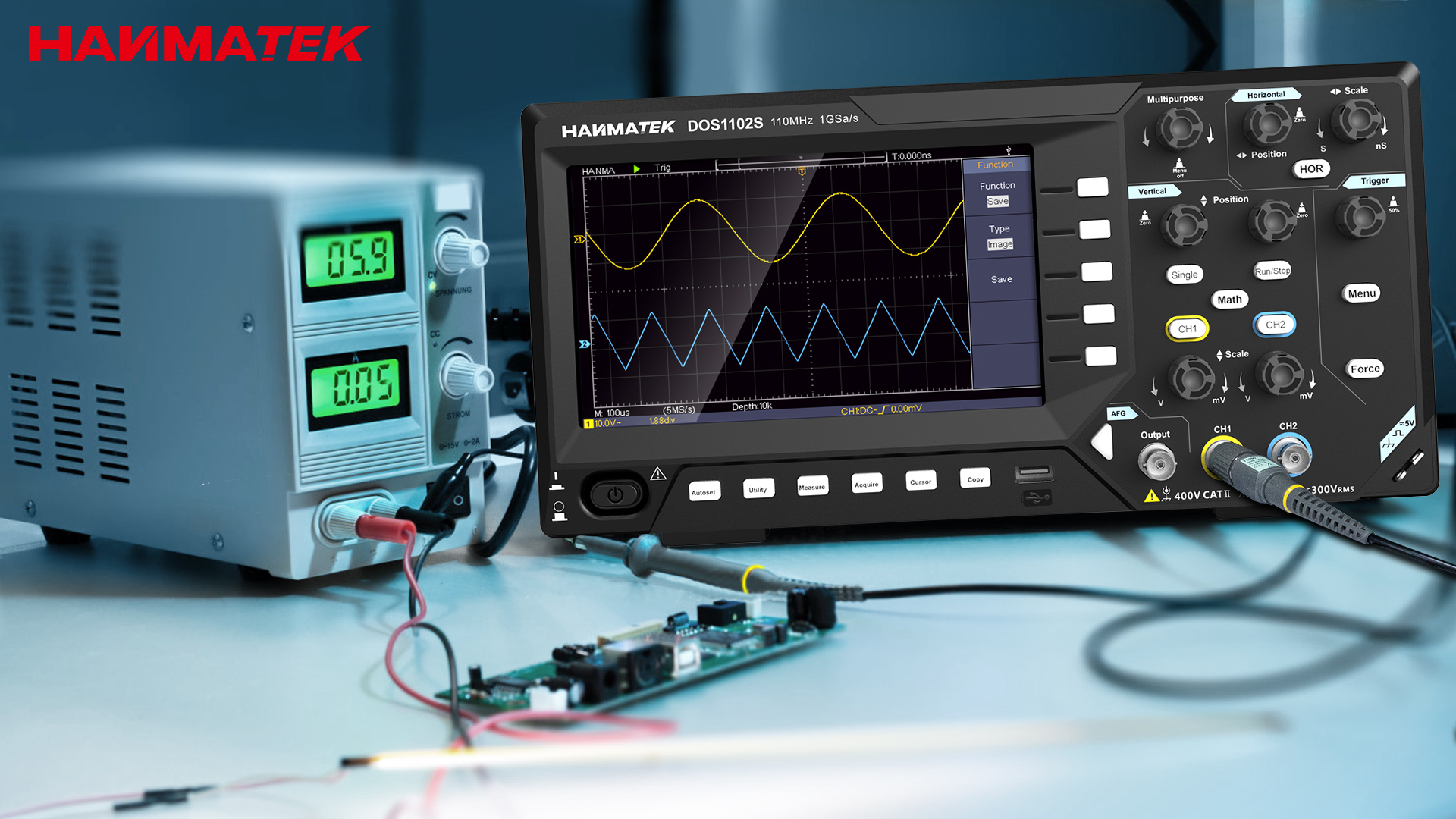
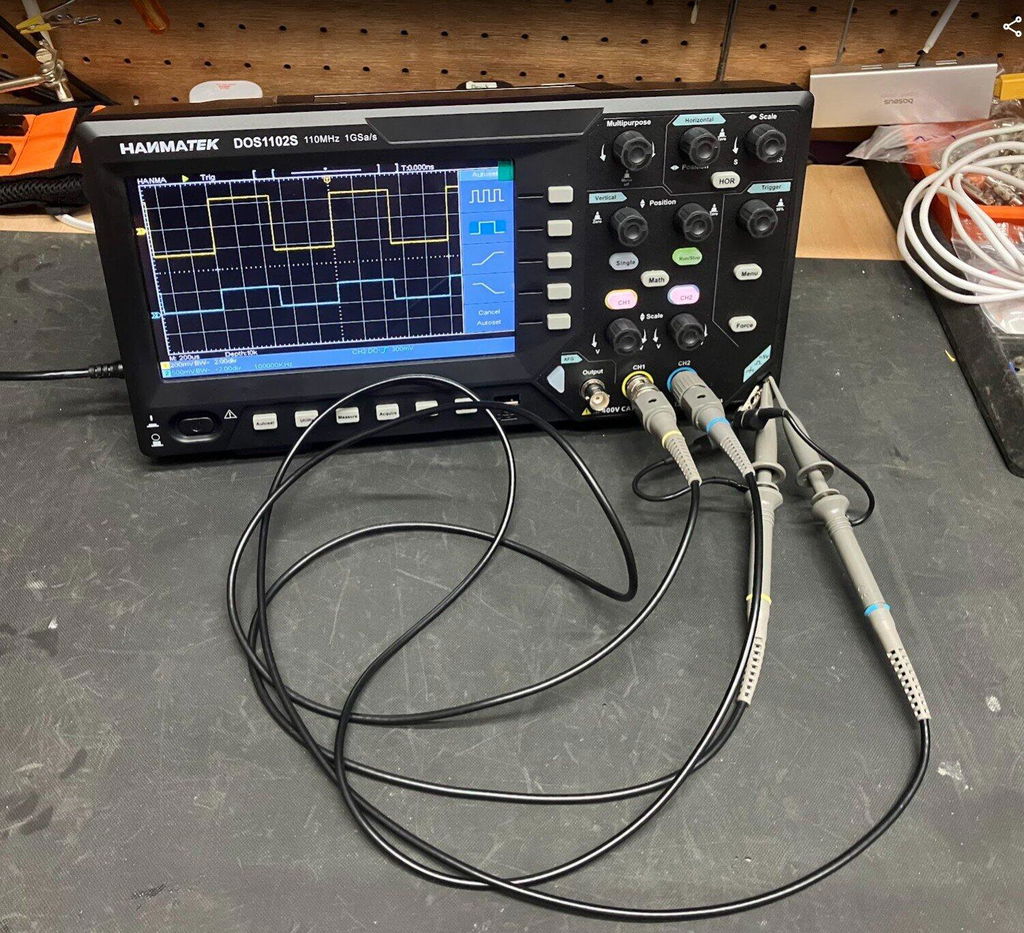
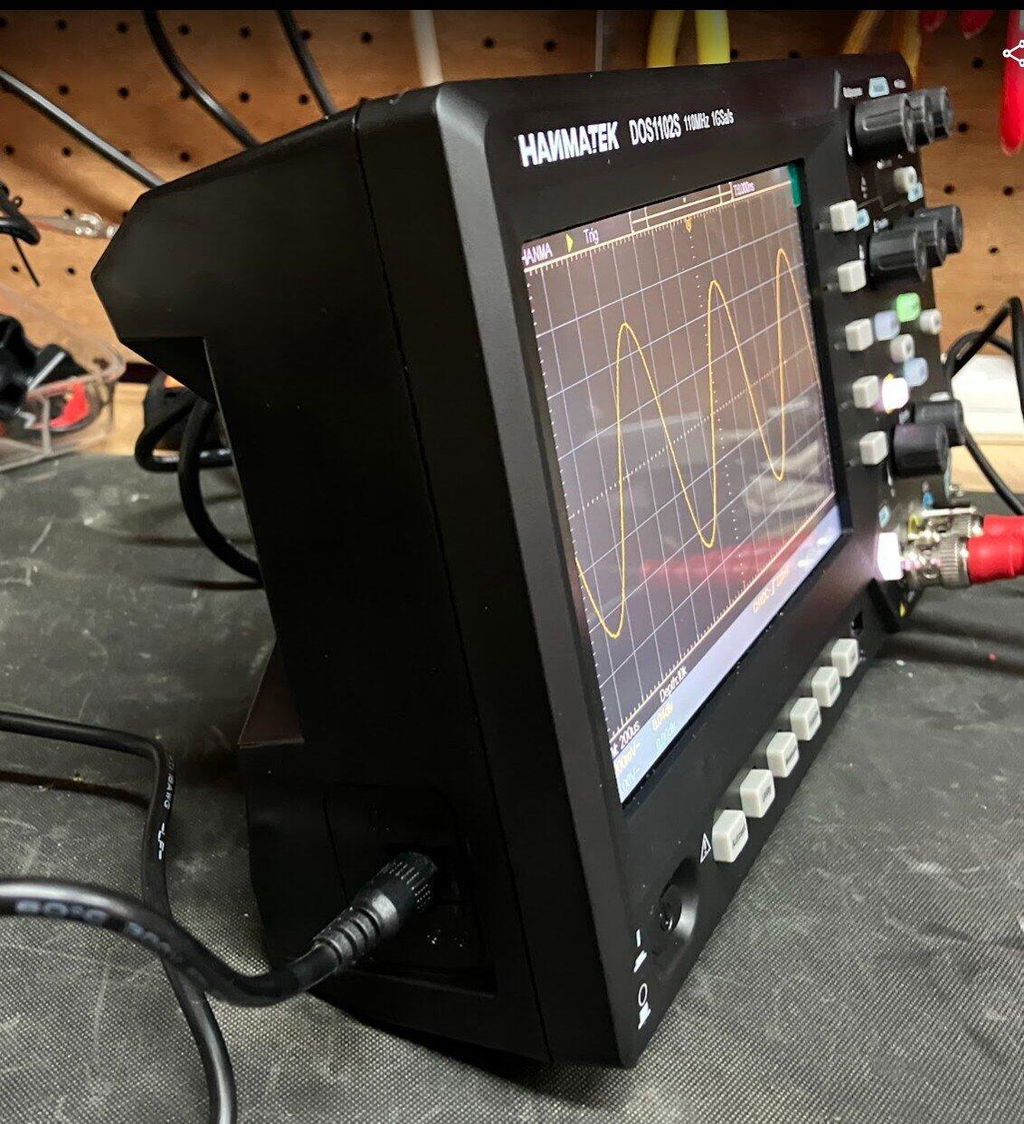
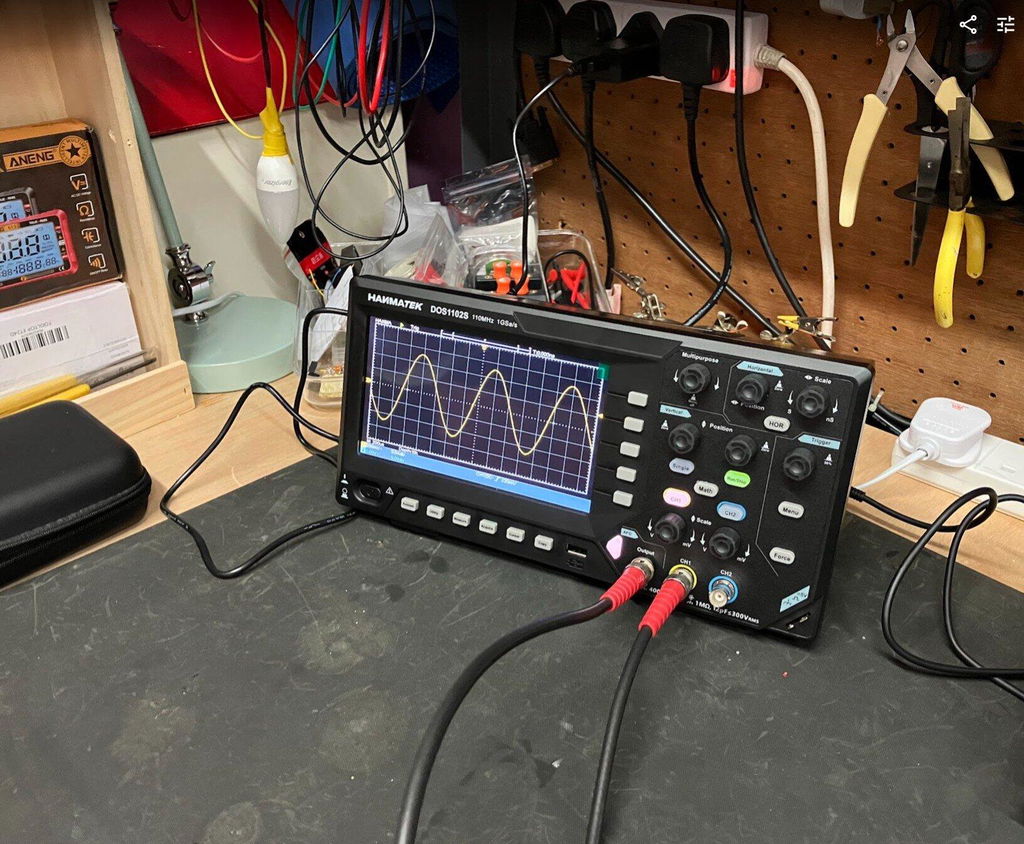
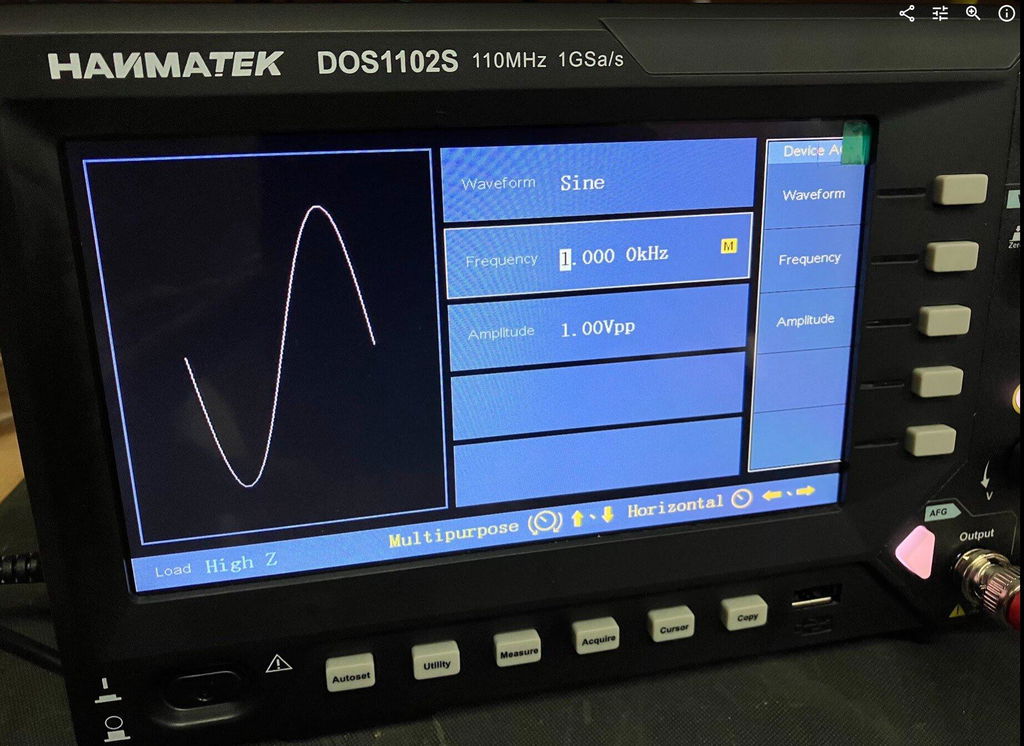
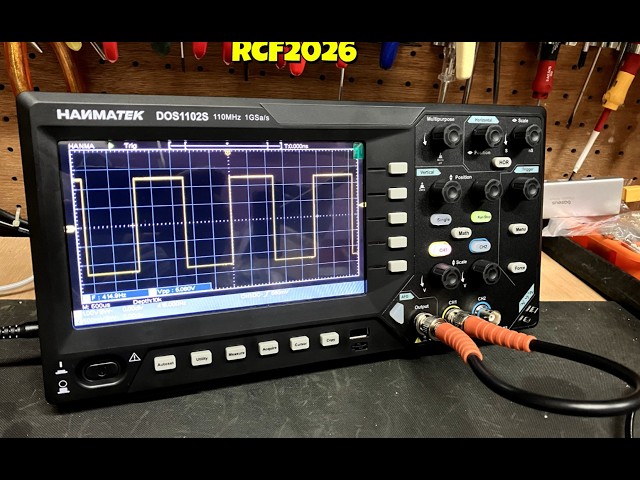
DOS1102S — Builds on the DOS1102 core but adds a built-in function/arbitrary waveform generator (AWG). Perfect for stimulus-response testing, signal simulation, filter characterization, sensor validation, and lab experiments—eliminating the need for separate generators.
Hanmatek DOS1102S Review for Beginners
-
DOS1104 — The multi-channel specialist with four independent channels. Enables simultaneous monitoring of complex systems (e.g., clock + data lines, multi-phase power, or protocol buses), unlocking insights for advanced digital debugging, automotive electronics, and correlation analysis.
Hanmatek DOS1104 4-Channel Digital Oscilloscope – Your Essential Tool for Multi-Signal Analysis
Key Facts on Hanmatek 110 MHz Benchtop Oscilloscopes
Here are three independent fact statements highlighting core strengths:
-
Exceptional Value in Entry-Level Performance: Hanmatek's 110 MHz models deliver professional bandwidth and up to 1 GSa/s sampling at budget prices; community reviews from EEVblog and YouTube (2025-2026) praise the DOS1102 series for accurate waveform capture comparable to higher-cost options, with users noting effective performance for signals up to ~100 MHz in hobbyist and educational debugging scenarios.
-
Enhanced Learning and Testing with Integrated Generator: The DOS1102S's built-in AWG supports immediate signal generation for experiments; practical feedback from Reddit discussions and oszilloskope.net reviews (covering 2025-2026) highlights how this feature accelerates beginner projects and lab work by enabling standalone stimulus-response testing without additional equipment.
-
Superior Multi-Signal Analysis Capability: The DOS1104's four channels facilitate simultaneous capture of complex interactions; according to the Fortune Business Insights Oscilloscope Market Report, demand for multi-channel affordable scopes drives sector growth at 7.6% CAGR, as evidenced in 2026 user cases where four-channel monitoring revealed timing issues in embedded systems and power circuits that dual-channel models could not detect efficiently.
Which Hanmatek Model Fits Your Needs?
- Select the DOS1102 for straightforward 2-channel tasks, best overall affordability, and everyday reliability.
- Opt for the DOS1102S when signal generation is key—ideal for education, filter testing, or sensor characterization.
- Choose the DOS1104 for multi-signal work requiring four channels—essential for advanced debugging and system-level analysis.
With ongoing firmware updates and positive community support, these models continue to improve and remain capable long-term investments.
Ready to enhance your workbench? Explore current offers in the Hanmatek benchtop collection:
Which model aligns with your projects? Share your thoughts—we're here to help! 🔧📊






Laisser un commentaire