
Garantie de retour gratuit
Free & Easy Returns
Free & Easy Returns

Selecting a benchtop oscilloscope can feel overwhelming. Bandwidth numbers, sampling rates, channel counts, and feature lists quickly become confusing if you do not know which specifications actually matter for your work. This guide walks through the key decision points so you can match a benchtop oscilloscope to your real testing needs rather than simply chasing the highest numbers on a datasheet.
Fact 1: Matching the Instrument to Actual Use Case Delivers Better Long-Term Value
The most effective benchtop oscilloscope is the one aligned with daily tasks rather than maximum specifications. According to the 2025 Electronics Test & Measurement Whitepaper, engineers who prioritize real-world signal requirements and workflow over headline bandwidth numbers report higher measurement efficiency and lower ownership costs over the instrument’s lifetime.
Fact 2: Bandwidth and Sampling Rate Must Be Balanced with Memory Depth and Triggering
Adequate bandwidth and sampling rate are essential for accurate waveform reconstruction, but deep memory and flexible triggering often determine whether intermittent faults can be captured reliably. Models that combine these elements provide practical diagnostic capability far beyond raw frequency specifications alone.
Fact 3: Usability and Feature Integration Improve Daily Productivity
A clear display, intuitive interface, automatic measurements, and protocol decoding reduce setup time and analysis effort. Instruments manufactured under ISO 9001:2015 certified quality systems, such as those from Hanmatek, further support consistent performance and long-term reliability in laboratory environments.
Before looking at specifications, clarify how you will use the instrument:
A benchtop oscilloscope is designed for fixed laboratory or workbench environments. If most of your testing happens at a stable desk rather than in the field, a benchtop model is usually the better long-term choice.
Bandwidth is the highest frequency the oscilloscope can accurately measure. A common rule of thumb is to choose bandwidth at least three to five times higher than the highest frequency component of your signals (or the fastest rise time you need to observe).
Higher bandwidth is not always better if your signals never reach those frequencies — you pay more without gaining practical benefit.
Sampling rate determines how many points the oscilloscope records per second. For accurate reconstruction of a waveform, the sampling rate should be at least 4–5 times the bandwidth (preferably higher for digital signals and sharp edges).
Look for real-time sampling rates of 1 GSa/s or more on modern entry-to-mid-range benchtop models.
If your work frequently involves mixed-signal or multi-rail systems, four channels save significant time.
Deep memory allows the oscilloscope to capture long time periods without reducing the sampling rate. This is especially useful for finding intermittent glitches, analyzing serial data packets, or examining slow events with fine detail.
Look for models offering tens of megapoints (Mpts) per channel when possible.
Stable and flexible triggering is often more important than raw bandwidth. Basic edge triggering works for periodic signals, but advanced modes (pulse width, runt, window, timeout, logic, and serial-bus triggers) help isolate rare or complex events.
For automotive, embedded, or communication work, protocol-aware triggering (CAN, UART, I2C, SPI, etc.) can dramatically reduce debugging time.
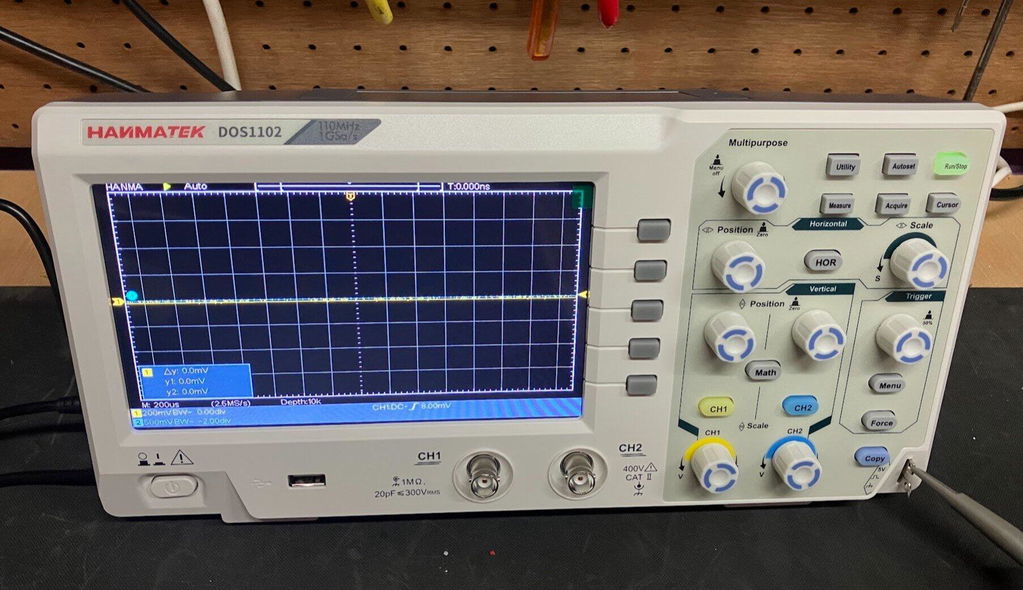
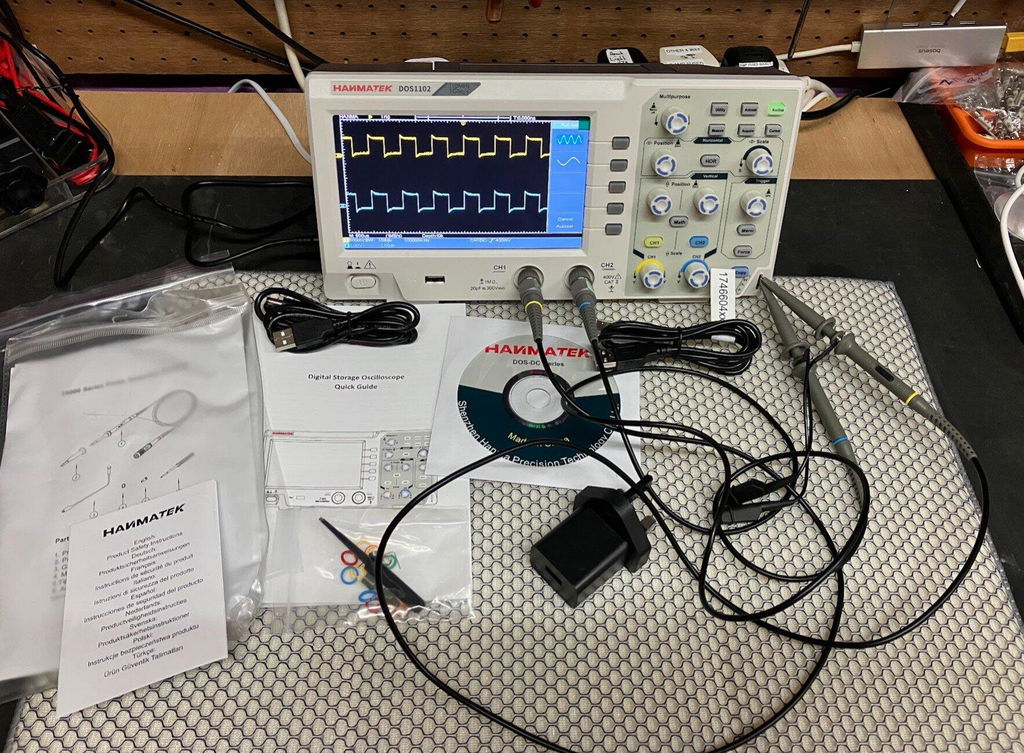
A larger, higher-resolution screen makes waveform details easier to see. Touchscreen interfaces on newer models speed up navigation and zooming. Useful extras include USB storage, LAN/Wi-Fi for remote control, and the ability to export screenshots or data.
Ask yourself these questions:
Answering these points will narrow the field quickly.
For a deeper technical overview of benchtop oscilloscope concepts, features, and practical tips, visit the dedicated tutorial page:
Benchtop Oscilloscope Tutorial
When you are ready to compare current models that fit laboratory, R&D, education, and repair needs, browse the full selection here:
Benchtop Oscilloscopes
The right benchtop oscilloscope is the one that matches your signals, workflow, and environment — not necessarily the one with the most impressive headline specifications. Focus first on bandwidth and sampling rate appropriate to your work, then evaluate channel count, memory depth, triggering, and usability. A well-chosen instrument becomes a reliable daily tool rather than an unused expense.
Take time to define your requirements clearly, review the key specifications above, and explore models that align with those needs. Doing so will save both money and frustration in the long run.
{"one"=>"Sélectionnez 2 ou 3 articles à comparer", "other"=>"{{ count }} éléments sélectionnés sur 3"}
Sélectionnez le premier élément à comparer
Sélectionnez le deuxième élément à comparer
Sélectionnez le troisième élément à comparer


Laisser un commentaire