
Free Returns Guarantee
Free & Easy Returns
Free & Easy Returns


Industrial facilities depend on complex electrical and electronic systems to keep production running smoothly. From PLC-controlled machinery and motor drives to power supplies and industrial communication networks, modern equipment contains countless signals that must operate reliably.
When equipment fails unexpectedly, maintenance engineers need fast and accurate diagnostic tools. While multimeters and clamp meters remain essential, they often cannot reveal the real-time behavior of electronic signals. That's where an industrial oscilloscope becomes indispensable.
In this article, we'll explore how a maintenance oscilloscope helps industrial engineers troubleshoot equipment, what features matter most, and why the HANMATEK DOS1104 is a practical solution for industrial maintenance applications.
Industrial equipment often includes:
When a machine stops working, identifying the root cause quickly is critical to minimizing downtime.
An oscilloscope allows maintenance engineers to:
These capabilities make an oscilloscope one of the most valuable diagnostic tools on the maintenance bench.
Oscilloscopes can reveal signal abnormalities that static measurement tools may not detect.
A PLC output may show the correct voltage level when measured with a multimeter, yet still contain timing irregularities, missing pulses, or intermittent interruptions. By displaying the complete waveform in real time, an oscilloscope enables maintenance engineers to determine whether the issue originates from the controller, wiring, or connected field devices.
PLCs are at the heart of many industrial automation systems.
An oscilloscope helps verify:
By observing waveforms directly, engineers can determine whether a fault originates from the PLC, wiring, or field devices.
Variable Frequency Drives and motor controllers use high-frequency switching signals to regulate motor speed.
An industrial oscilloscope can be used to analyze:
This helps identify faults that may cause erratic motor behavior or unexpected shutdowns.
Industrial machines often rely on multiple power rails and switching power supplies.
An oscilloscope allows engineers to measure:
Power-related issues are among the most common causes of machine failures.
Industrial systems use a wide range of sensors, including:
A maintenance oscilloscope can reveal:
This makes troubleshooting significantly more efficient.
Modern factories rely heavily on communication protocols.
Common examples include:
An oscilloscope helps engineers:
Without waveform visibility, communication issues can be difficult to isolate.
Simultaneous monitoring of multiple related signals improves diagnostic accuracy and reduces maintenance time.
During motor-control troubleshooting, engineers often need to observe a control signal, feedback signal, power supply voltage, and drive output simultaneously. A four-channel oscilloscope allows all signals to be captured in real time, making timing relationships and fault conditions easier to identify without repeatedly moving probes.
Many industrial troubleshooting tasks involve multiple related signals.
For example, when diagnosing a motor control system, an engineer may want to monitor:
A four-channel oscilloscope makes this possible simultaneously.
Benefits include:
For maintenance teams, these advantages can significantly reduce equipment downtime.
When selecting an oscilloscope for industrial applications, several specifications are particularly important.
Most industrial control systems operate well below 100MHz.
A 110MHz oscilloscope can easily handle:
This makes it suitable for the vast majority of maintenance tasks.
A fast sampling rate ensures waveform accuracy and helps capture short-duration events.
A 1GS/s sampling rate provides:
Four channels allow engineers to compare multiple signals simultaneously, making troubleshooting more efficient.
For industrial maintenance engineers seeking a balance between performance and affordability, the HANMATEK DOS1104 is an excellent option.
👉 HANMATEK DOS1104 Oscilloscope
https://hanmatek.com/collections/benchtop-oscilloscope/products/hanmatek-dos1104-oscilloscope-portable-4-canaux-110mhz
| Feature | Specification |
|---|---|
| Channels | 4 |
| Bandwidth | 110MHz |
| Sampling Rate | 1GS/s |
| Display | High-Resolution Color LCD |
| Applications | Industrial Maintenance, Electronics Repair, Embedded Systems |
| Form Factor | Compact Benchtop Oscilloscope |
These specifications make the DOS1104 suitable for a wide range of industrial diagnostic tasks.
Monitor multiple system signals simultaneously without repeatedly moving probes.
Ideal for:
The 110MHz bandwidth covers most industrial signal types, including:
Fast sampling enables accurate analysis of:
The DOS1104 fits comfortably in maintenance workshops, laboratories, and industrial service departments without taking up excessive space.
Higher sampling rates improve visibility into transient events that often cause difficult-to-diagnose equipment failures.
With a sampling rate of up to 1 GS/s, the HANMATEK DOS1104 can capture short-duration glitches, switching transients, and rapid PWM transitions commonly found in motor drives, switching power supplies, and industrial control circuits. These events may be missed by slower measurement tools, making high-speed waveform acquisition an important factor in industrial troubleshooting.
Imagine a conveyor motor repeatedly stops during operation.
Using the DOS1104, an engineer can simultaneously monitor:
| Channel | Signal |
|---|---|
| CH1 | PLC Output |
| CH2 | Motor Drive Control Signal |
| CH3 | Feedback Sensor |
| CH4 | Power Supply Voltage |
This setup makes it easier to determine whether the issue originates from the controller, drive, sensor, or power system.
The ability to observe all signals together dramatically speeds up diagnosis.
The HANMATEK DOS1104 is an excellent choice for:
Diagnose machine failures quickly and accurately.
Analyze PLC, sensor, and communication system performance.
Verify control system behavior and power electronics operation.
Troubleshoot industrial equipment both in the workshop and on-site.
Teach waveform analysis and industrial diagnostics using a professional-grade oscilloscope.
An industrial oscilloscope is one of the most effective tools for diagnosing modern industrial equipment. Whether you're troubleshooting PLCs, motor drives, communication networks, sensors, or power supplies, waveform visibility can dramatically reduce downtime and improve maintenance efficiency.
The HANMATEK DOS1104 offers the key features industrial professionals need:
This combination makes it a highly capable maintenance oscilloscope for industrial environments, helping engineers identify faults faster and keep critical systems running reliably.
👉 Learn more about the HANMATEK DOS1104 here:
https://hanmatek.com/collections/benchtop-oscilloscope/products/hanmatek-dos1104-oscilloscope-portable-4-canaux-110mhz
{"one"=>"Seleccione 2 o 3 artículos para comparar", "other"=>"{{ count }} de 3 artículos seleccionados"}
Seleccione el primer artículo para comparar
Seleccione el segundo artículo para comparar
Seleccione el tercer elemento para comparar
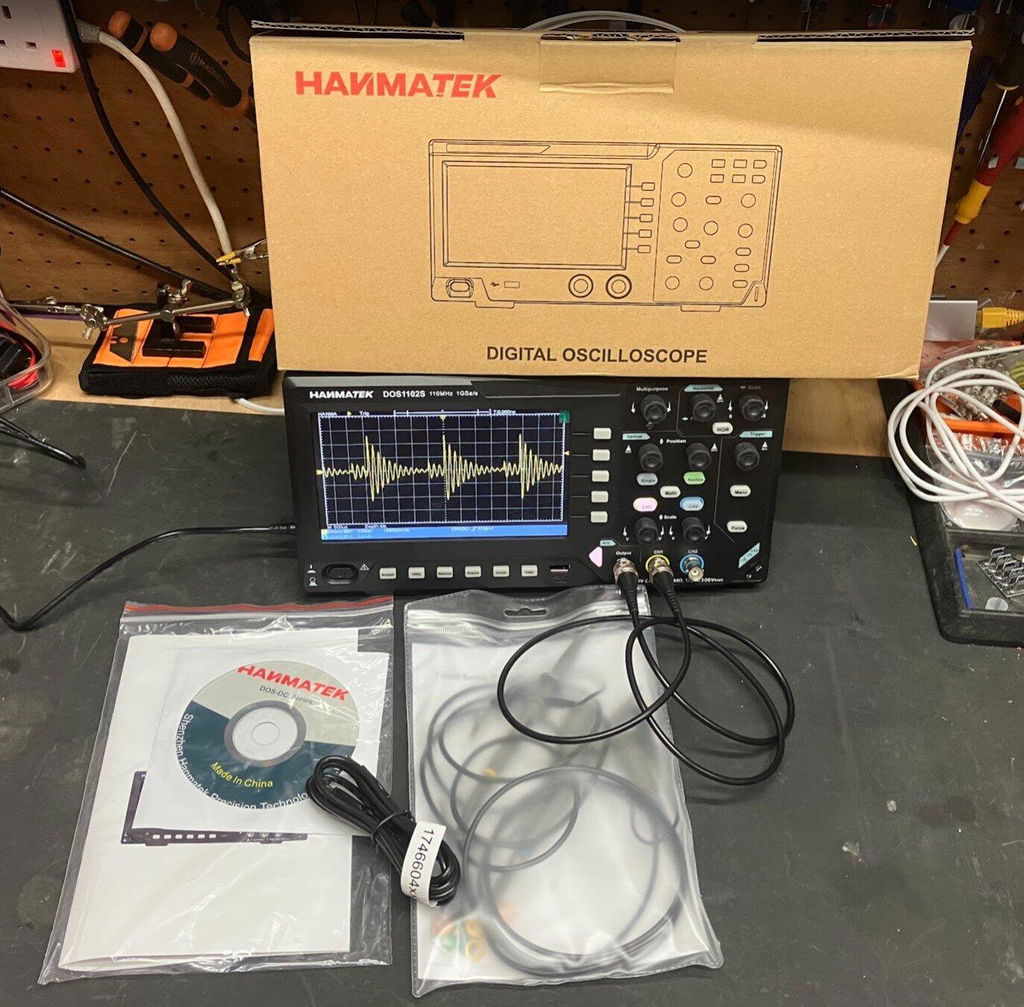
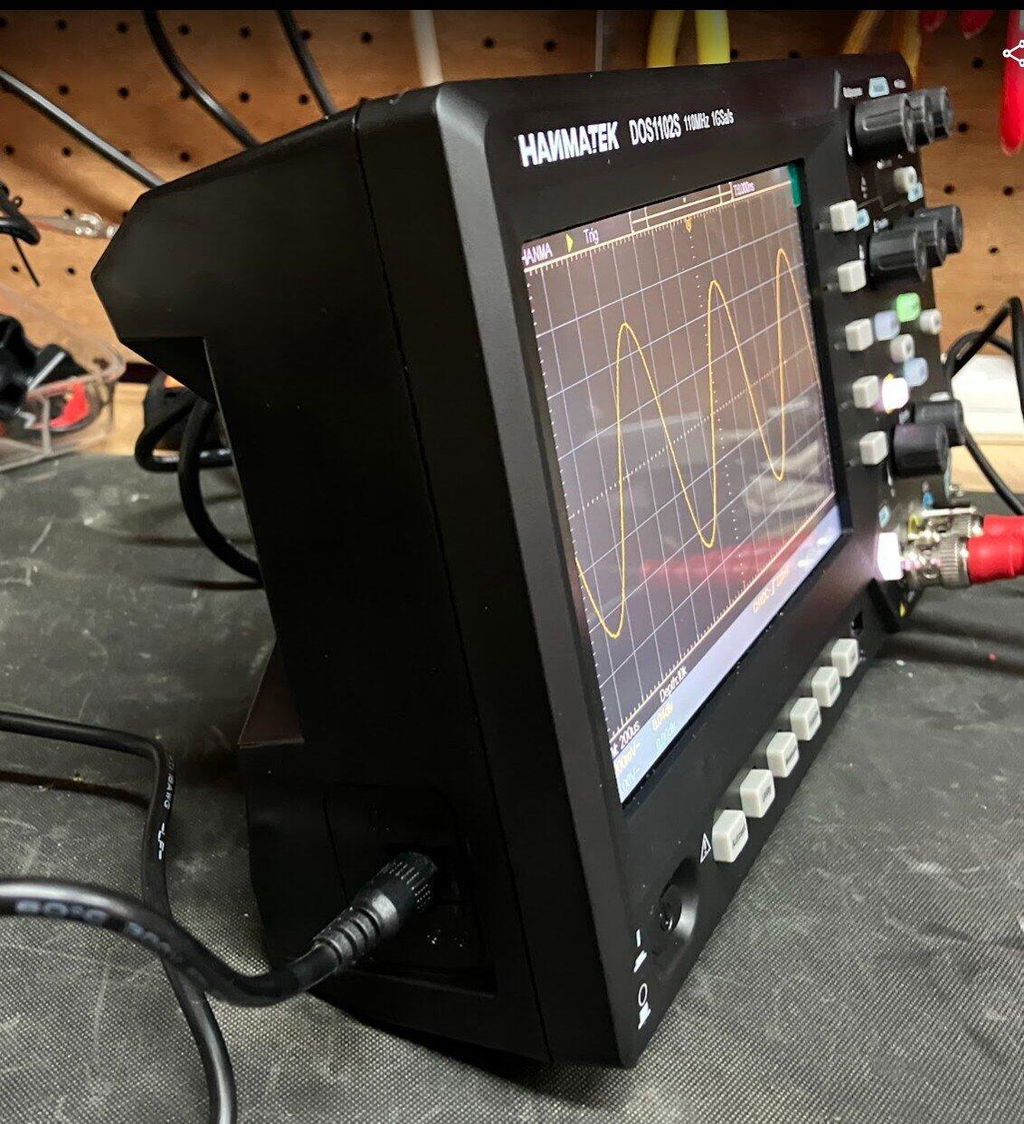
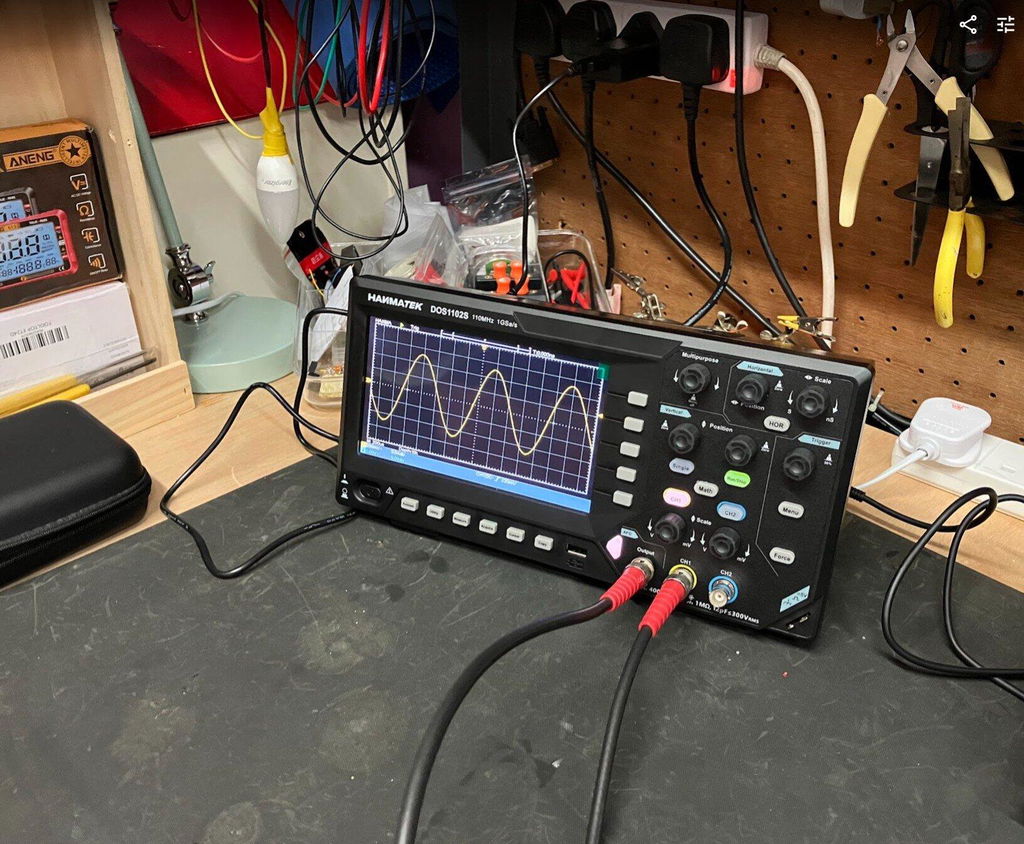
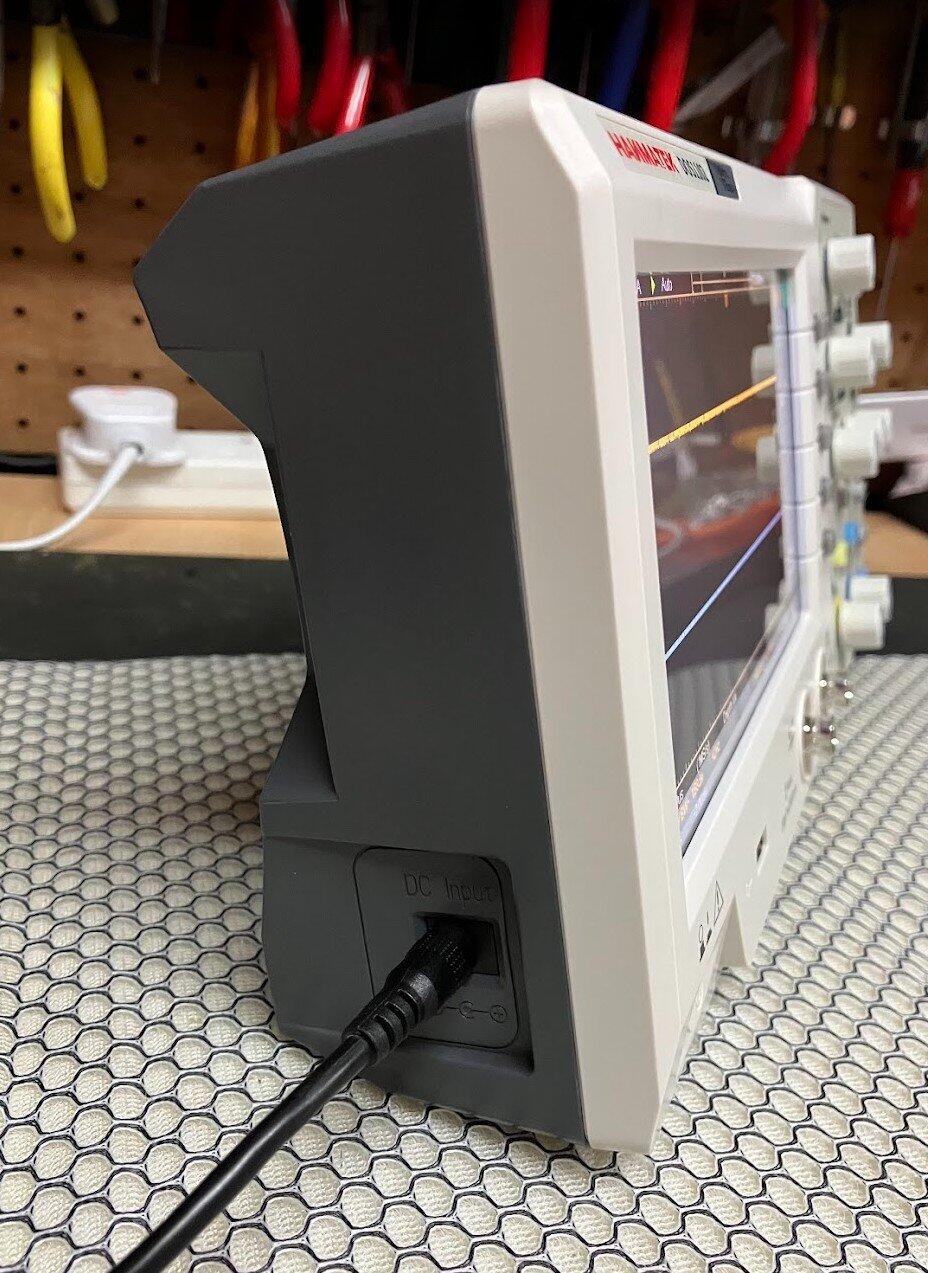
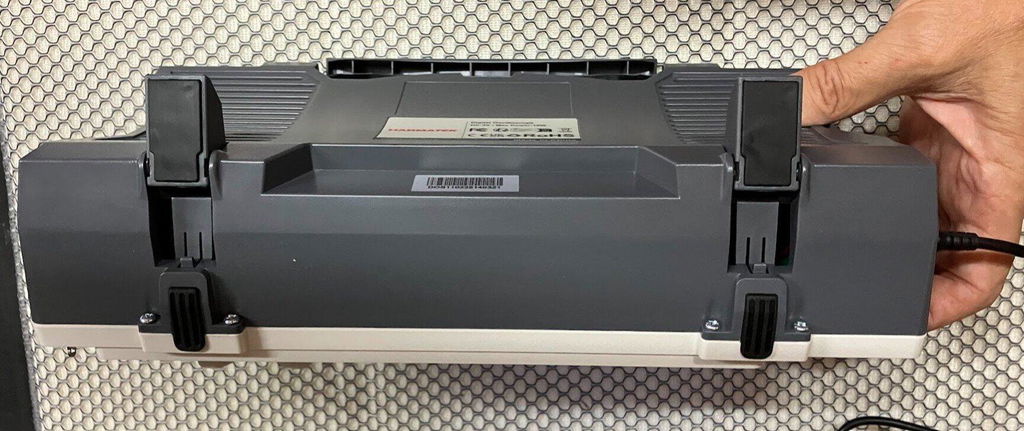
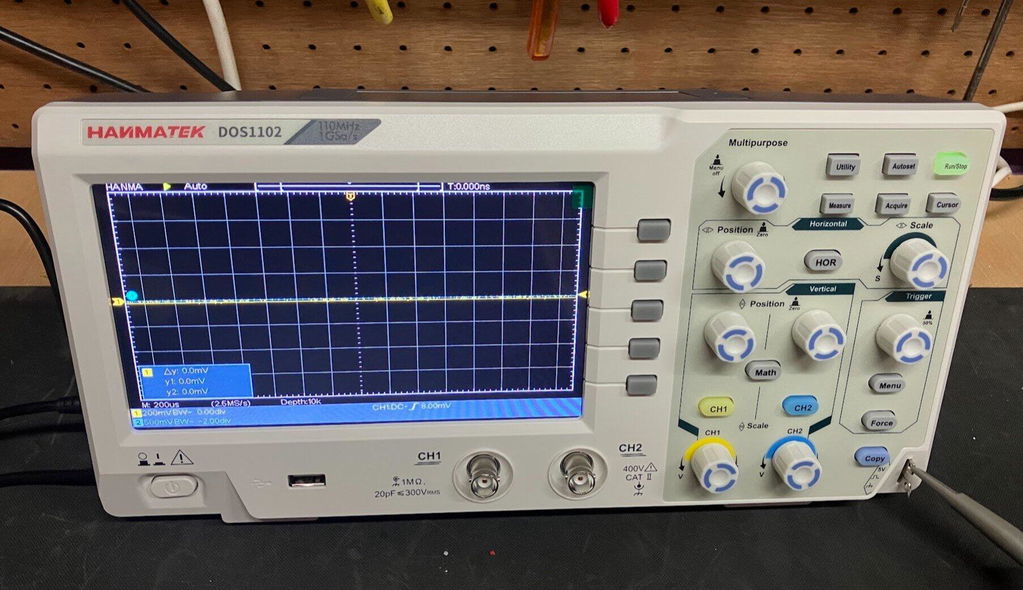
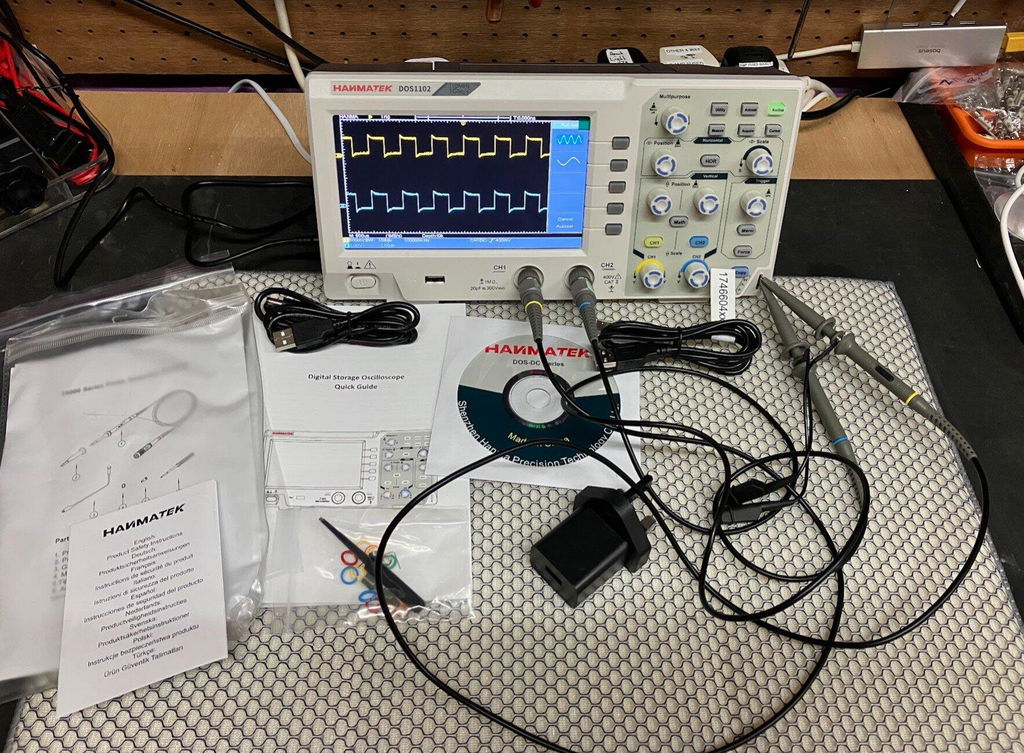
This is the first Oscilloscope I've purchased for home use and so far I really like this scope. Small and light weight, but still has the large 7 inch screen and all the manual knobs and buttons you would use most frequently. Very easy to setup and use. Love that this unit has 110MHz of bandwidth and up to 1GSa/s, and the integrated waveform generator is really nice to have. Came well equipped with probes, BNC cables and power supply. Fantastic deal for $150.
I recently purchased the HANMATEK DOS1102S 110MHz Digital Oscilloscope with built-in AFG function generator, which I brought direct from HANMATEK and after spending a full day putting it through its paces, I have been very impressed with what this compact instrument offers for the price.
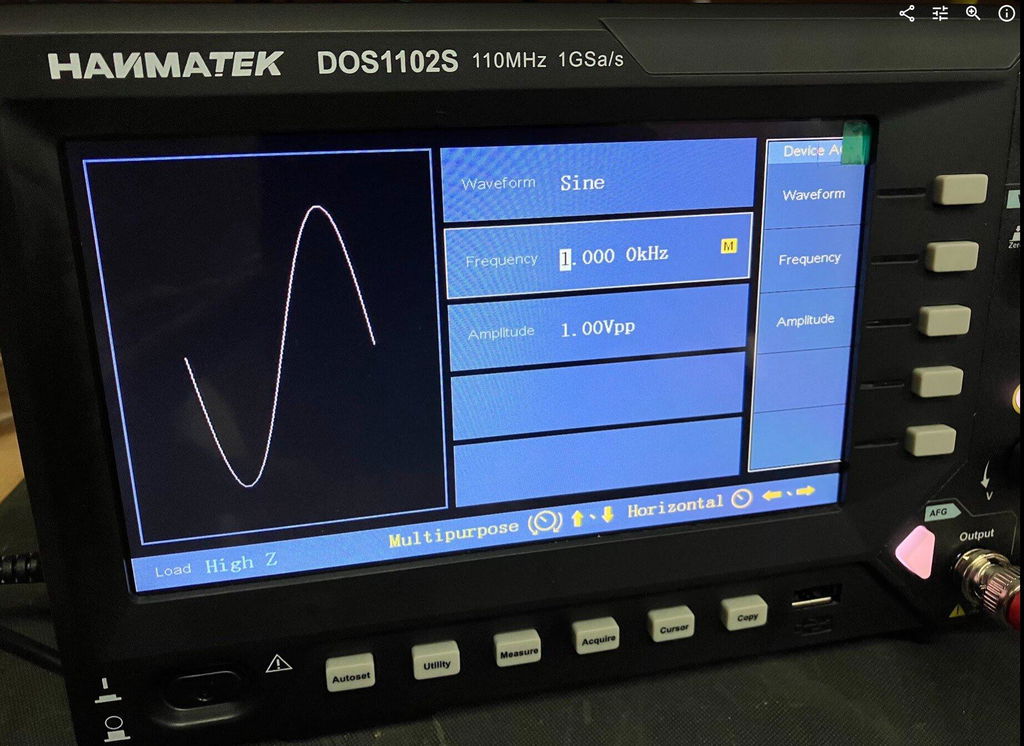
Built-In AFG Function Generator
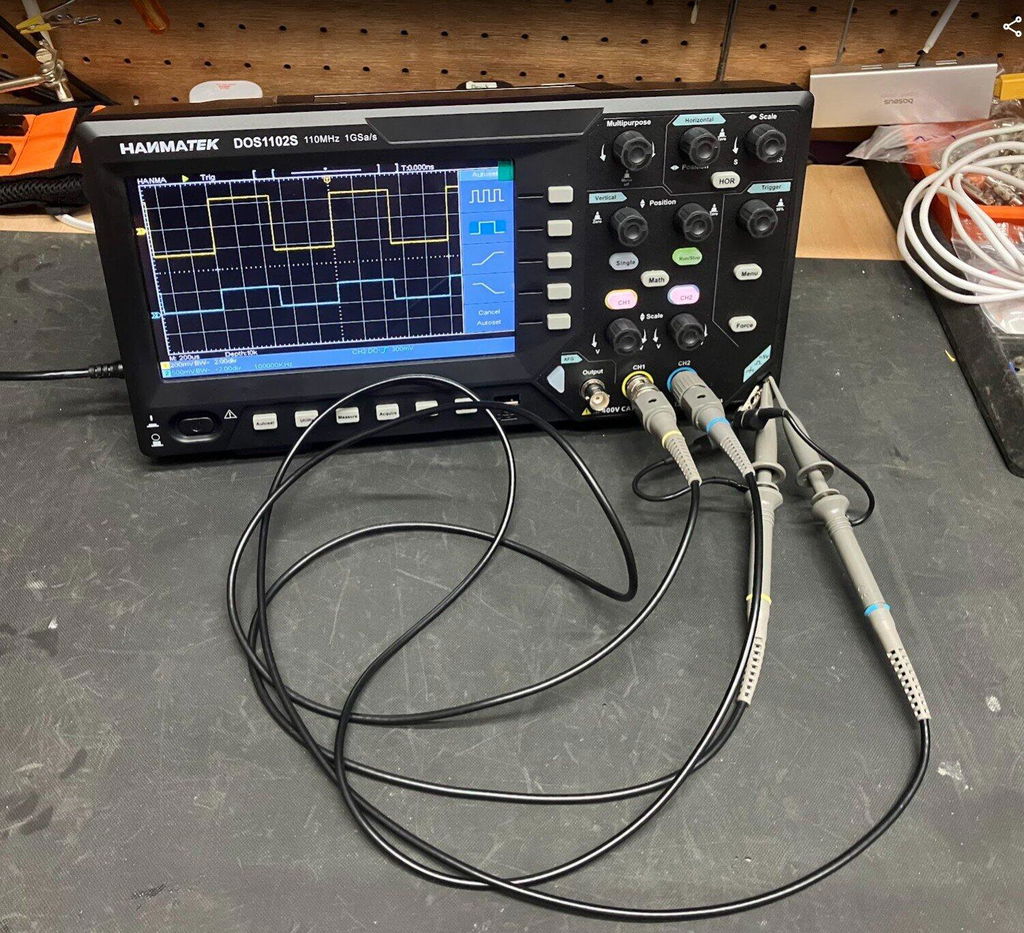
One of the biggest advantages of the DOS1102S is the built-in AFG function generator. Having signal generation built directly into the oscilloscope is extremely useful for testing circuits and experimenting with different waveforms.
You can generate a test signal and immediately view it on the oscilloscope, making it a very convenient all-in-one test instrument. For beginners, it also means you don't necessarily need to purchase a separate function generator.
Trigger Functions
The trigger section is particularly impressive for an oscilloscope in this price range. Along with the usual trigger controls, the DOS1102S includes Trigger Holdoff, which can help stabilise more complicated or repetitive waveforms.
This gives you greater control over how the waveform is displayed and is a useful feature for more advanced testing.
Maths and FFT
The Maths and FFT functions are another useful addition. FFT allows you to examine the frequency content of a waveform and identify frequency components and harmonics.
While it isn't intended to replace a dedicated spectrum analyser, having FFT available on an affordable oscilloscope provides another useful tool for investigating signals.
Cursors and Measurements
The cursor functions are very useful for taking voltage and time measurements directly from a waveform. I particularly like the cursor lock function, which allows the two cursors to be moved together.
I have compared measurements from the DOS1102S against other test equipment across different waveforms and have been very pleased with the results.
The scope also provides automatic measurements such as frequency, period and peak-to-peak voltage, making it easier to quickly analyse a signal.
Horizontal Zoom and Acquire
The horizontal zoom function allows you to examine sections of a captured waveform in greater detail without completely changing the original time-base settings.
The Acquire menu also provides useful options such as averaging, which can help produce a cleaner and more stable waveform when dealing with noisy signals.
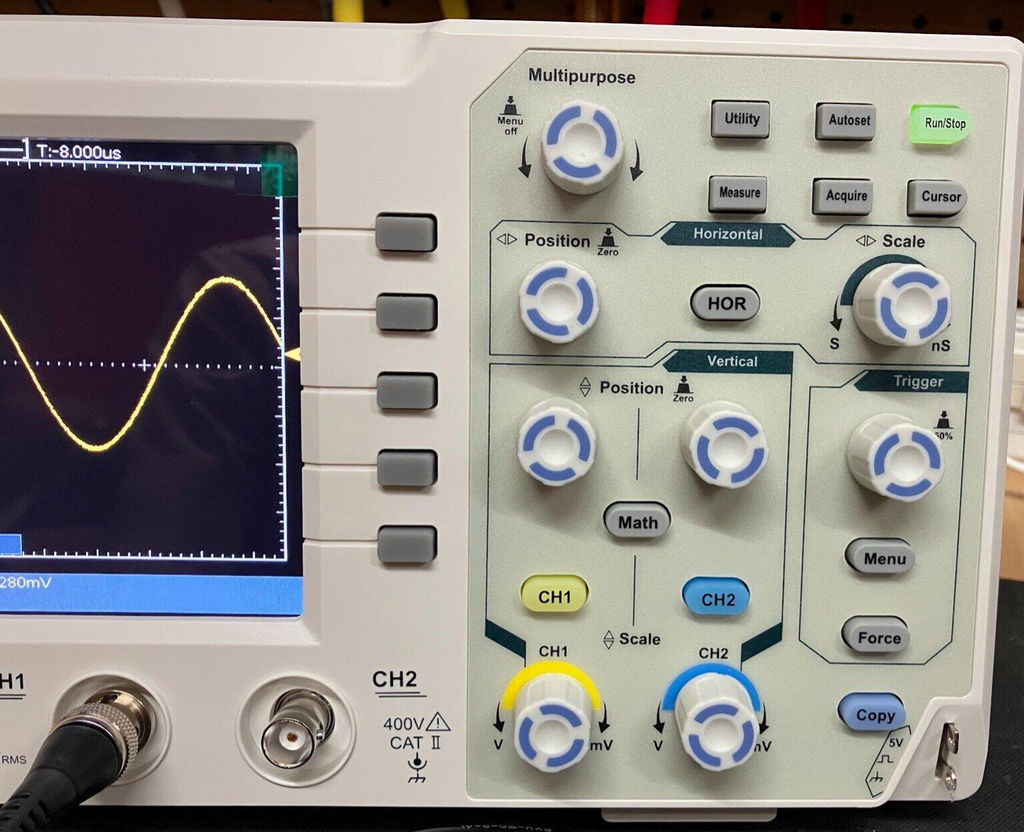
Push-Function Controls
Another feature I like is the push-function control knobs. Some controls can also be pressed to provide additional functions, such as quickly returning vertical, horizontal or trigger positions to their centre or zero point.
It is a small detail, but it makes the oscilloscope quicker and easier to use.
Five -Hour Test
I used the DOS1102S for approximately Five hours during a full day of testing, carrying out measurements, waveform testing and experiments using the built-in AFG.
Throughout the extended test, the oscilloscope performed well and I experienced no problems with its operation. I also compared DC voltage and cursor measurements against other test equipment and was very happy with the results.
Overall Verdict
Overall, I am very impressed with the HANMATEK DOS1102S 110MHz oscilloscope.
For the price, it offers an impressive range of features, including the built-in AFG function generator, Maths, FFT, Trigger Holdoff, cursor locking, horizontal zoom, automatic measurements and averaging.
It is easy enough for beginners to learn with, while still offering plenty of useful functions for experienced electronics users.
The built-in AFG is a particularly valuable addition, effectively giving you an oscilloscope and function generator in one compact instrument.
After using the DOS1102S extensively, I feel HANMATEK has produced a very capable and versatile oscilloscope that offers excellent value for money. I am very happy with mine and would have no hesitation recommending it to anyone looking for an affordable, feature-packed 110MHz oscilloscope.
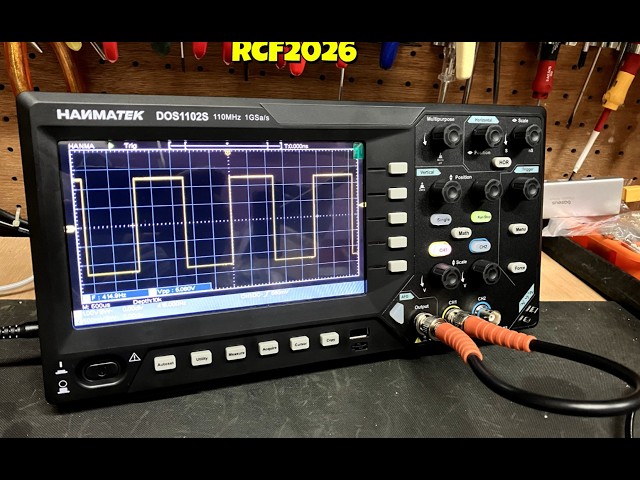
HANMATEK DOS1102 110MHz Digital Oscilloscope, and after spending a full day putting it through its paces, I have to say I am very impressed with what this compact oscilloscope offers for the price. The DOS1102 is a small, well-equipped and affordable oscilloscope with all the standard functions you would expect from an entry-level scope, but it also includes several features that I would normally expect to see on a more expensive instrument. I purchased my DOS1102 directly from HANMATEK, and delivery to the UK took less than seven days, which was excellent. The scope is compact and feels well built. Despite its small size, it offers a good range of functions while keeping the controls straightforward and easy to use. Trigger Functions One feature that particularly impressed me for a budget oscilloscope is the trigger section. Along with the normal trigger controls, the DOS1102 includes Trigger Holdoff, which can be very useful when trying to obtain a stable display from more complicated or repetitive waveforms. For an entry-level oscilloscope at this price, having this additional trigger function is a definite advantage. Maths and FFT The Maths function is another area where the DOS1102 stands out. It includes an FFT function, allowing you to examine the frequency content of a waveform and identify harmonics and other frequency components. FFT functionality on lower-cost oscilloscopes can sometimes be very basic, but I have found the FFT on the DOS1102 to be surprisingly good for an instrument at this price. Cursor Measurements The cursor functions are also very useful. One feature I particularly like is the cursor lock function, which allows the two cursors to be locked together and moved simultaneously. This makes taking measurements quicker and easier, particularly when comparing different points on a waveform. I have compared the DOS1102's cursor measurements against my other test equipment across a variety of waveforms, and the results have been very good. Horizontal Zoom The horizontal zoom function is another useful feature. It allows you to examine sections of a captured waveform in greater detail without having to completely change the original time-base settings. I have found this works well when looking closely at waveform details and makes examining captured signals much easier. Push-Function Control Knobs Another feature I really like is the way the control knobs operate. Several of the adjustment knobs can also be pressed, providing additional functions. For example, pressing the appropriate control can quickly return the waveform to a central or zero position. This applies to functions such as vertical position, horizontal position and trigger controls. It is a small detail, but it makes operating the oscilloscope quicker and more convenient. Voltage and Measurement Testing I have carried out DC voltage comparisons between the DOS1102 and a mid-range Rigol oscilloscope. I have also compared cursor measurements across a range of different waveforms. The DOS1102 compared very well with the Rigol during my testing. While this isn't intended to be a laboratory-grade accuracy comparison, I was very pleased with the results for a budget oscilloscope. Seven-Hour Test One of the most important tests for me was using the oscilloscope for an extended period. I used the DOS1102 for approximately seven hours during a full day of testing, alongside my normal test equipment and carrying out a variety of measurements. Throughout the testing, it performed well and I experienced no problems with its operation. This gave me considerably more confidence in the instrument than simply switching it on and carrying out a few quick measurements. Who Is It Suitable For ? In my opinion, the DOS1102 would suit a wide range of users, from hobbyists and students through to electronics repairers, technicians and engineers who need a compact instrument for quick measurements. It has enough features to make it useful for someone learning electronics, while also offering functions that more experienced users will appreciate. Overall Verdict Overall, I am very happy with the HANMATEK DOS1102. For an affordable 110MHz oscilloscope, it offers an impressive selection of features, including Maths, FFT, Trigger Holdoff, cursor measurements with cursor locking, horizontal zoom and push-function control knobs. The build quality is good, the controls are straightforward, and after putting it through a full seven-hour testing session, I have been very impressed with its performance. For the money, I think HANMATEK has produced a very capable little oscilloscope. It is more than just a basic entry-level scope, offering several features that make it considerably more versatile than I expected at this price. I am very happy with my purchase and would have no hesitation recommending the DOS1102 to anyone looking for a capable and affordable oscilloscope.
precise,Good price, easy to use


Dejar un comentario